The Spiritual Post

The word spiritual is a rather loose rubric for this post which encompasses women philosophers, traditions of mysticism and wandering minstrels. None of these is entirely exclusive of the other yet they are different ways of pursuing knowledge or the divine.

But older still is the evidence of the Brihadaranyaka Upanishad, where Maitreyi has been addressed as Brahmavadini. The same Upanishad also mentions Gargi, who had participated in the philosophical conference convened by Janaka. We find a reference in the Mahabharata of Sulabha of the Upanishadic times, who was well versed in Sankhya and Yoga. So does Bhavabhuti vividly describe how Atreyi wandered from ashrama to ashrama in search of spiritual knowledge. [X]

Sunlight made visible
the whole length of a sky,
movement of wind,
leaf, flower, all six colours
on tree, bush and creeper:
all this
is the day’s worship. [X] [X]

Thera Sariputta replied that she should first become a bhikkhuni; so she became a bhikkhuni, by the name of Theri Kundalakesi. Within a few days, she became an arahat. [X]

There is a long tradition of women as philosophers or simply as having an affinity to a spiritual life or mysticism in India. Gargi is an example of the former, many of the medieval Bhakti poets like Meera, Banhinabai and Lal Dedh examples of the latter.  Further the ordaining of nuns was common to both Jainism and Buddhism. Like their male counterparts, many were laywomen who took to the faith, e.g. Kundalakesi.  Additionally see Sufism and women.  See also [X] And [X].


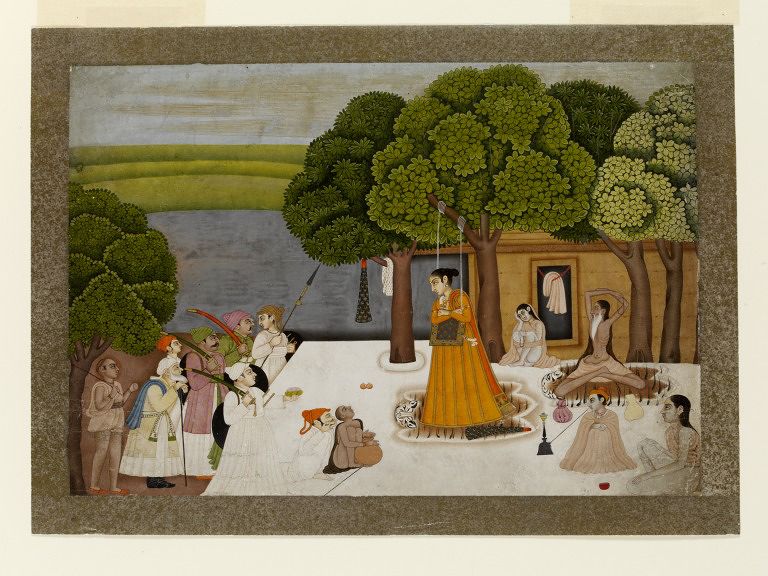
y8In the pictures today: 1) A profusion of 17th-18th century miniature paintings (see pics 13 that date back to 1680-1770) feature yoginis. Like most of the genre, they are often pictured wandering in a landscape, playing music, receiving visitors and the like. And very often they are pictured with animal companions, like dogs. A number of them also feature the swing which seems to be associated with yoginis in these paintings.

2) ) There are many movies based on the devotional saints, Others capture the tension between domestic life and the ascetic life. In the pics: a) Meera [X] b) the 1950 Jogan c) an episode from Bharat Ek Khoj with Mita Vashisht as Suvasini, a princess who is unable to marry Chandragupta Maurya and becomes a bhikkuni, and d) Anandamath where Geeta Bali plays Shanti, who dresses as a male ascetic to fight the British.

3) Deccan art, which has a slightly different take from its northern counterparts, also has the yogini has subject matter  [X] [X] [X]. Yogini with Mynah (1603-1604) is perhaps the most well known. The second pic is as recreated by Pushpamala (2000-2004).

“I have become a Baul. / I dance well, sing well. / I have even gotten a few disciples. / I have become a Baul. / I don’t do Baul dharma-karma. / Never gone to a guru. / I don’t like the sādhu [holy man] community. / Why? I am my own guru.”  [X]

4) Wandering minstrels, syncretic mystics, fakirs – the Bauls of Bengal have been extensively written about and documented. The peak of the tradition was in the 19th century/early 20th century.  A majority of practitioners are men but there are women too, some from the tradition [X] [X] and some who are drawn to its musical traditions [X] [X]. In popular iconography they appear as part of a couple as in pic 1 (the cover jacket of a study on Baul women), always in saffron and more often than not with the ektara. See also gift dolls. Similarly in Hindi cinema: Devdas, Pyaasa etc.But modern singers/practitioners appear solo as in pic 2. (also Kangalini Sufia).

As the pictures show, there is no definitive norm regarding the wearing of saffron. Saffron is however common, as is white. And dark clothing and other muted tones feature. Very rarely as in pic 2, there is little clothing.

Other paintings: Group of female ascetics; yogini; a Jaina nun; Three Ladies visiting a yogini; A Deccan yogini; yogini with disciples; Hat yogini; Mirabai.

For a brief review of women as gurus i.e. as spiritual teachers or precepts vs traditions of mysticism and bhakti see [X].

______*________

Mardi is away but she was in my thoughts when I wrote this post.
Posted in 17th century, 18th century, 19th century, 20th century, Ancient India, Culture, Early 20th Century, Hinduism, History, Indian Cinema, Indian Dress, Indian Singers, Indian Women, Late 19th century, Medieval India, miniature paintings, Paintings, vintage art | Tagged , , , , , , , , , | 1 Comment

2014

newyeargreet

I have moved back closer to home in India. It will be awhile before I get back to Australia and I already miss it. But I look forward to a few – hopefully – new things this year.

Happy New Year, everyone!

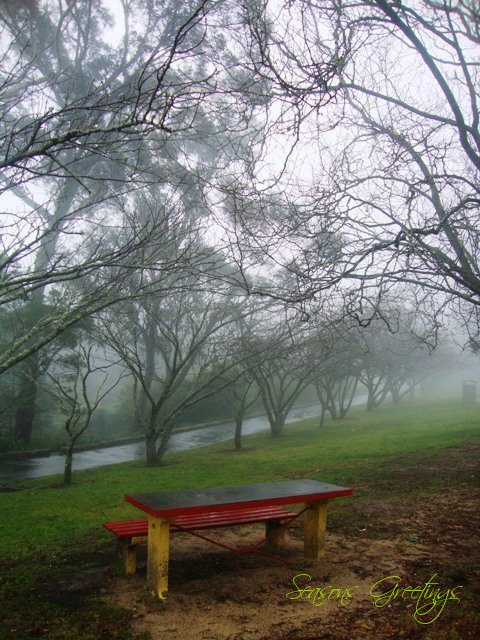
Notes: This picture taken in Katoomba, I love the mountains.

Posted in Personal | Tagged , | 3 Comments

Hairstyles: 1951: Tamil Nadu

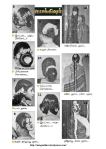
Hairstyles of the 1950s. 1951 to be precise, this is from a Diwali Special edition of Ananda Vikatan. Almost all styles you will note use flowers or jewels for ornamentation. Click to view full size.

The translations of the captions below.  Of the commonly used terms Kondai=bun, Rettai=double, Pinnal=braid, Jadai=hairstyle, seems to refer to types of plaits

1) Malayala Kondai (Kerala style)
2) Pushpa Valai (Flower Net)
3) Kodali Pushpa Kondai (i think kodali is an axe or spear but may be wrong).
4) Alli Chorukku (Wrap and tie)
5) Rettai Pushpa Pichoda (this seems to be a two plaits coiled and the flowers are added on, Pichoda refers to hair being put up)
6) Pirimanai Kondai (Pirimanai=ring)
7) Bob Thalai (that is a very liberal interpretation of a bob!)
8) Shurul Thazampu Jadai (Rolled/Curled flower in hair, thazhampu=screwpine/kewda/ketaki)
9) Shurul Pinnal (wound around braid)
10) Madras Kondai
11) Rettai Saada Pichoda
12) Ennai Jadai (hair decorated post an “oil bath”, a common practice in South India, usually requires the braiding of a small portion of hair to keep loose hair away from the face)
13) Vaira Jadai (Pin puram aka back view); Vaira=jewels/diamonds
14) Thazhampu Kamala Jadai (kamala=lotus, may refer to the pattern on the hairstyle?)
15) Rettai Jadai
16) Careful Careless Jadai (Jagridai Ajagridai Jadai)-I think this means both ordered and disordered
17) Rettai Pinnal
18) Vaira Jadai (Front view)
19) Anju Thalai Nagam (5 headed snake)
20) Pushpa Vangi Jadai (vangi is curved, based on the arm ornament)

_________________________________________________________

Many thanks to Raghu – who is one half of sangeethas – for providing me with this document, I hope I haven’t mislabelled the numbers! He informs me that styles 1 and 18 are modelled by the Travancore sisters. And thanks are due to my aunt who helped me with translations, I got stuck at several points:)

Posted in 1950s, fashion, Flowers, Hair, Indian Dress, Indian fashion, Magazine, Tamil, vintage fashion | Tagged , , , , , , , , , , , , | Leave a comment

The Christmas Post

Miniature paintings of the 18th century and early nineteenth century sometimes contain Christian themes.  Often these were commissioned by Europeans, the palette and figures are reflective of prevalent Indian styles with some modifications.

Oudh offers some examples of paintings of The Annunciation [X] [X] [X]. A number of paintings are attributed to Mir Kalan Khan.

See also Company paintings.

19th century painting of Madonna and Child with a melding of styles. And a later version by Angelo da Fonseca (around mid 20th century) which is distinctly Indian. More of da Fonseca’s work here.

A bit late in sending out these wishes but hope you had a Merry Christmas! And wishing you all a Happy New Year!

Posted in 18th century, 19th century, Christianity, Colonial, Culture, Early 20th Century, Indian Dress, Paintings, Sari, Sari Blouse, vintage art, Vintage Dress | Tagged , , , , , , | 6 Comments

The 1940s Post

The late 1940s was a time of somewhat boxy, padded blouses.  This blouse on the actress and dancer Suryakumari for example is almost like a man’s shirt (or perhaps more correctly a pyjama top).  As can be seen from the second pic, it is teamed with a bordered handloom sari. The translucent head covering seems an addition – these used to be common say around the 1890s and 1910s as the sari was evolving but perhaps not as late as the 1940s. The movie is 1948’s Samsara Nowka.

The elegantly dressed actress with Greer Garson, in a personal flickr album and in a 1960s style chudidar-kurta. And also in a silk sari teamed with a brocade blouse.

Posted in 1940s, 20th century, Cinema, Dancer, Early 20th Century, Indian Cinema, Indian fashion, Sari, Sari Blouse, Singer, South India, South Indian Cinema, Vintage Blouse, vintage fashion | Tagged , , , , , , , , | 2 Comments

The Indian Mod Post

Typically in the first half of an Indian movie you would have a Westernised heroine before the “curse of the second half” hit and out came the saris. And of course vamps were allowed to wear Western clothing all the time! Most of these clothes are similar to contemporaneous fashions in the West, albeit a few years behind at times.

In the late 50s and 60s: Slacks, skivvies. high waisted trousers, pedal pushers, the occasional scarf. The actresses: Mala Sinha, Shashikala, Madhubala, Shakila.

Posted in 1950s, 1960s, Actor, Bollywood, Indian Cinema, Indian fashion, Indian Women, Old Bollywood, Vintage, Vintage Blouse, Vintage Dress, vintage fashion | Tagged , , , , , , , , | Leave a comment

The Veil Post

wp1VEIL: avagunthana, niririgi, nirangika, mukhapata, sirovastra, yavanika.

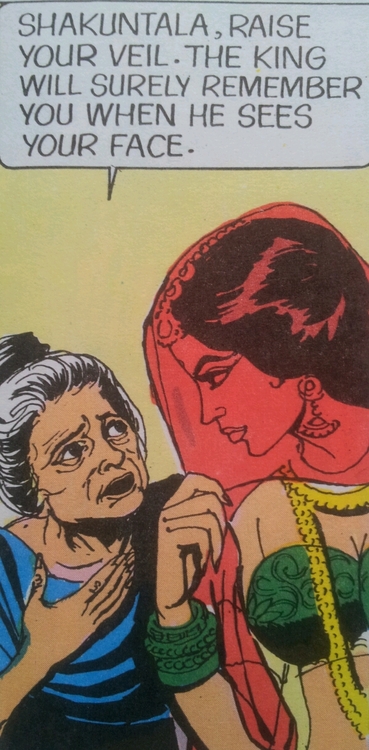
Veiling is mentioned in Ancient Indian texts by any of the above names, a primary source being Kalidas who mentions the avagunthana in several places.  However, the practice does not appear to be intended for segregation, at several points in the texts women discard or lift a veil in public. The upper part of the sari itself could be used for veiling and sometimes it was used perhaps as a fashion piece or arranged over a hairstyle. Or, as is also the case in modern India, it was a part of bridal costume. More often than not it was a translucent piece of cloth.

Most historians hold that compulsory veiling arrived with Islamic rule in India but state that there is not always an exact correlation with region and population. In general purdah or ghoonghat was observed in the North and the practice fell away in other regions of India.

In the pics: Shakuntala in the court of Dushyanta (ACK); Dia Mirza; from the Life magazine photo archive; Ranjeeta in Laila Majnu.

Posted in Ancient India, Asia, Costume, Culture, historical costume, History, Indian Dress, Indian fashion, Indian History, Indian Women, Islamic Dress | Tagged , , , , , , , , , , | Leave a comment

The Diaspora Post

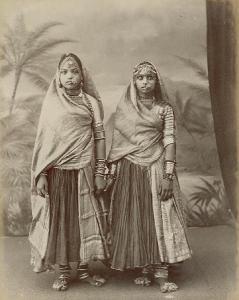
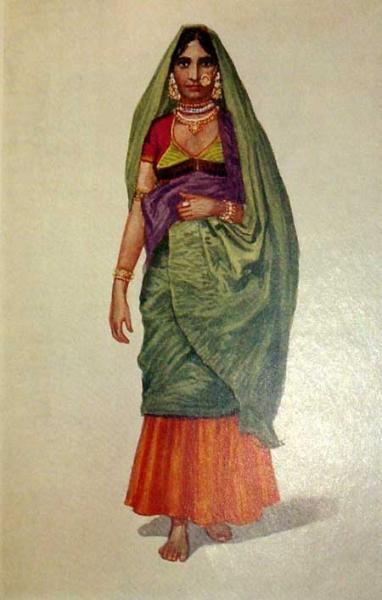
The heavy silver jewellery and skirts of Indian communities from Central and Western India are reflected in early photographs of immigrants to the West Indies. Early immigrants were often indentured labour from the then United Provinces and Eastern India. [X] [X] [X]

The first two pictures are taken in Bombay [X] [X] while the last two pictures are of Trinidadian women of Indian origin.

See also Dhurandhar’s watercolour and a portrait of folk dancers in Delhi.

Posted in 1880s, 1890s, 1900s, 1910s, 19th century, British Raj, Colonial, Costume, Culture, Diaspora, fashion, History, Immigration, India, Indian Dress, Indian fashion, Indian History, Late 19th century, Vintage, Vintage Dress, Women | Tagged , , , , , , , , , , , , | Leave a comment

Puff Sleeve

The puff sleeve blouse. Always popular in almost every decade of the 20th century, particularly for young women. Judging from photographs I have seen, the simpler version (unlike the exaggerated sleeves of previous decades) was kind of de rigeur in the 40s (MS Subbulakshmi loved them if the photographs are any indication).

In the pics: Postcard of a Prabhu woman; MS Subbulakshmi; Aishwarya Rai; Nayantara;  Aarabi Veeraraghavan (Swarna Rethas); Konkona Sen Sharma

Posted in 1930s, 1940s, 1950s, 1960s, 20th century, 21st century, Actor, Colonial, Contemporary, Early 20th Century, fashion, Indian Cinema, Indian Dress, Indian fashion, Indian Women, Sari, Sari Blouse, Sets, Vintage Blouse, vintage fashion | Tagged , , , , , , , , | 6 Comments

Midweek Post- 3

In the closing decades of the nineteenth century in a land already thronging with all manner of gods and goddesses there surfaced a novel deity of nation and country who at some moments in the subsequent years seemed to tower over them all. Invoked in English as “Mother India” and most usually in most Indian languages as “Bharat Mata” (literally “India Mother”), she was over time imagined as the substantial embodiment of national territory – its inviolable essence, its shining beacon of hope and liberation – and also as a powerful rallying symbol in it’s long hard struggle for independence from the modern world’s largest empire.The Goddess and the Nation: Mapping Mother India, Sumathi Ramaswamy

wp1Most representations of Mother India are similar to Ravi Varma’s paintings of  goddesses, a woman in a sari juxtaposed against  a map of India and often with symbols of Shakti like the tiger or trident. In early artwork she is often present along with national leaders. [X] [X]. There are exceptions, most notably Abanindranath’s early painting of the country as a goddess.

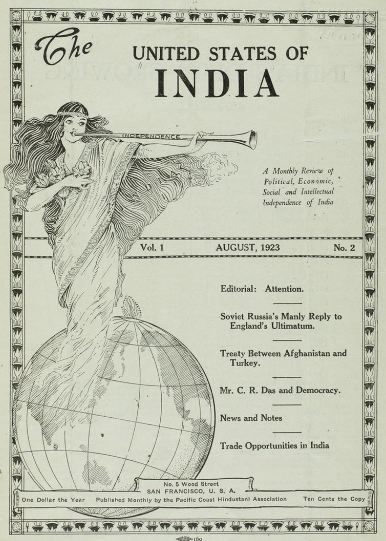
There are a few other exceptions to this in the early 20th century. Decidedly the jauntiest of “Bharat Matas” is the one on the cover of the publications of the Gadar Party, [X] [X].  Arguably the figure is not a goddess given the founder of the party was an atheist, nevertheless the illustration does evoke representations of the era where a woman embodied the spirit of an independent country. The party was based in the US which perhaps also accounts for the illustration, which is part goddess, part modern Indian woman.

As to fashion notes, note the headband which came into vogue around the 1910s.

Posted in 1910s, 1920s, Art, British Raj, Colonial, Early 20th Century, Flapper, Goddess, History, Illustration, Independence, India, Indian History, Sari, Sari Blouse, vintage art, Women | Tagged , , , , , , , , , , | 2 Comments