Shanta Hublikar

39shanta

In the sequence above, we notice that, even in parody, Kesar and Moti manage to find a private mode for communicating desire for each other. Though the lyrics might deride silly love songs from Chandidas and Achhut Kanya, Moti’s wit and Kesar’s erotic playfulness in the course of this performance realize the subjective possibilities of the romantic duet. We must recall that prior to this scene, Moti has been afraid to venture into public space with Kesar – a fact that pains her greatly. But here for a moment, in full public view, these social interactions are suspended. The policeman and the prostitute sing together, exchange joyful looks, and perform little intimate gestures to give us a glimpse of a couple-form whose time has yet to come. [X]

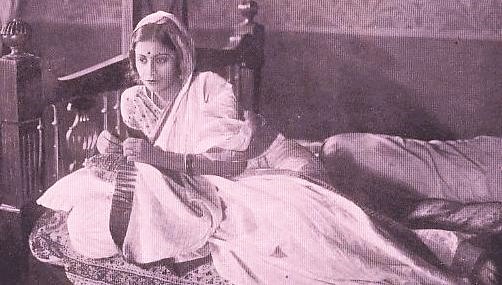
Shanta Hublikar was an actress of the 1930s and 40s, one of a clutch of “educated girls” in the movies, who is best known for her performance in Manoos/Aadmi (1939).

The song referred to is Premi Premnagar Mein Jaayen (Lovers go to the city of Love) which parodies songs from Chandidas and Achhut Kanya. The sequence opens with a film picturisation of an anglicised couple singing before Kesar and Moti take over. Such song sequences were a staple in films from Bombay Talkies and New Theatres which to Shantaram were unrealistic and anglicised.

Apart from the song above, Kashala udyachi baat (Why Talk of Yesterday) from the movie brings together several regional Indian types, clearly differentiating each in the sequence.

Though differentiating itself from the other studios in being authentically Indian, Manoos/Aadmi provides a glamourised version, there are a few pretty saris in the film that suggest the imported saris of the period as well as fashionable blouse styles and finger waved hair.

Posted in 1930s, Costumes in Cinema, Early 20th Century, fashion, film costumes, Indian Cinema, Indian Dress, Indian fashion, Indian Women, Marathi cinema, retro cinema, retro fashion, Sari, Sari Blouse, Vintage Blouse, vintage sari | Tagged , , , , , , | Leave a comment

Dream Girls and Boys

The iconic Tamil writer Kalki once described her as ‘Kollum Vizhiyaal’ — one who could kill with her eyes! [X]

Thyagaraja also had a very good stage presence sporting long hair and earrings. [X]

Around the time that video cassettes became popular in India I spent a good amount of time with my grandparents.  They were teenagers in the 40s but given the times had not seen many famous films of the decade.  The video shop had not so good prints of many of these Tamil films which delighted them no end. So I ended up binge watching with them in the weekends. I love these films for a number of reasons but I wouldn’t exactly recommend them because they are very much of the time.

Many of these films starred TR Rajakumari, even with the bad prints you could see why she was a “Dream Girl” and captivated an entire generation of young men with her somewhat heavy-lidded gaze. In Haridas, where she is pretty glamorous in a negative role, her “flying kiss” was a bit of a sensation and many a college lad probably went to the movies just for that moment.

Many films also starred MK Thyagaraja Bhagvathar who was a favourite of my grandparents. Like KL Saigal in the North, he was a star known for his singing.  It wasn’t his singing alone that captivated audiences, according to my grandmother “even married women would buy postcards with his picture and kiss it all day long” (1940s Tamil fangirls!). My grandfather had once seen him and  proclaimed him “golden skinned and wearing brilliant diamond earrings”. Some of the hyperbole may be due to my grandfather being an impressionable boy at the time but along with the curly locks this was in accordance with male beauty standards of early 20th century Tamil Nadu. It may not be apparent to a modern audience but it was the kind of looks sought after for the mythologicals and historicals MKT often starred in.

The 30s and 40s are not very popular when it comes to Indian cinema but they set up a lot of the tropes we see in cinema in later decades. Which is why I love them. 40 songs per film and all:)

Posted in 1930s, 1940s, Cinema, Early 20th Century, Family, film costumes, Indian Aesthetics, Indian Cinema, Indian men, Indian Women, Tamil Cinema, vintage cinema, Vintage Men, vintage style, Women | Tagged , , , , , , , , | Leave a comment

Bombay Stars

zubeida

k1

We returned from abroad via Bombay. I admit to the ostentatious glamour of the film world there and the intoxication and heady glamour that accompanies it. I also admit to the dearth of deeper imagination or an ascetic dedication to work. But having admitted these, one cannot but admire the tireless effort of actors in Bombay to maintain their bodies. A beautiful body is an asset, to feed the heart while starving the eye is almost impossible…Of course such admiration of physical beauty might appear excessive, still, a beautiful woman or a handsome man will always attract the eye. Bombay’s stars are so captivating because they do not shy away from giving their utmost to keep their looks. Exercise, swimming, riding, dancing and yoga fall within the essential activities of their daily lives. I like this vitality very much. The artistes of Bengal should give more attention to this aspect. My Homage to All, Kanan Devi.

Excerpt from Kanan Devi’s autobiography. Kanan herself in her youth had a lot of physical activities as part of her schedule, perhaps here she is emphasising the glamour that has always been attached to the Bombay film industry due to its approach to appearance as opposed to Bengali cinema.

Her autobiography, My Homage to All, is fairly detailed and provides glimpses of her life as an actress and then as a producer. Parts of it are quite frank e.g. her recounting of sexual harassment on the sets or the attraction she felt towards her future husband.

There has been a recent biography of hers (by Mekhala Sengupta) which fills in the gaps in the autobio and is on my reading list.

Pic 1: Zubeida (X) Pic 2: Kanan Devi

PS: I get what Kanan is saying but my heart still belongs to Bengali aesthetics:)

Posted in 1930s, 1950s, Bengal, Bengali cinema, Bollywood, Cinema, Early 20th Century, fashion, India, Indian Cinema, Indian Singers, Indian Women, Regional cinema, retro cinema, vintage cinema, vintage sari, Women | Tagged , , , , , , , , | Leave a comment

On Colour

The most common colors on the market are the kind you cannot name, the not quite blues, not quite grays and the not quite yellows that are used only for background and referred to as neutral colors, camouflage, “civilized colors,” or secondary colors. Amid these secondary colors, there are splashes of enigmatic brilliance and coy allure, like the sun of another world shining on one’s body. But I always feel that even these splashes are never enough, like Van Gogh, who always bemoaned that his colors were not strong enough, until he painted sunflowers suffused in the intense sunlight of southern France and was finally compelled to pile colors on top of one another in such staggering amounts that layers of oil paint began to protrude from the canvas, transforming painting into a kind of sculpture. Written on Water, Eileen Chang.

I can’t wear these wishy-washy English colours with my sarees. Kamaladevi Chattopadhyay.

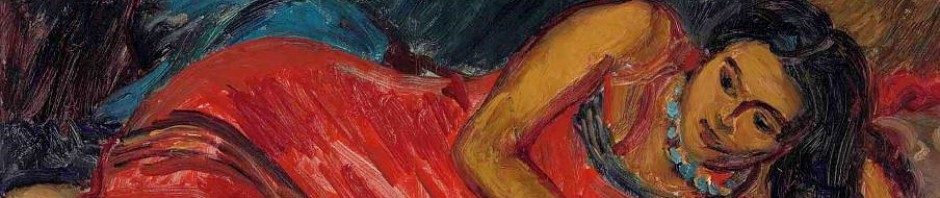
In the pics: Melancholy Courtesan, Kamaladevi Chattopadhay, Sardar Akhtar, Paoli Dam.

Returning to India the first thing your eyes drink in is the colours in the market, a change from racks and racks of civilised and fashionable “neutrals” in many parts of the world. But the Indian love affair with colours is not a simple matter of a love of bright colours or a fixation on certain colours (Pink is the Navy Blue of India!).

Of course we have colours that dominate since they are auspicious (e.g. red. green, yellow). And we have a history of colours thatwere considered classic or fashionable (e.g. MS Blue, Chandrakala aka the midnight blue-black of Paithanis, the red and white checks of Orissa’s pasapalli). But the market is rarely restricted to a few colours, both colour and pattern are varied and combined in many different ways.

Having said that the simplest kind of sari worn in India up until the polyester explosion and the use of synthetic dyes was off white or what may be called a sandalwood colour.  However in almost all parts of India such a sari would have a coloured border and its pallu or free end would have at least a few woven motifs.  Further it could be worn with a printed or embroidered blouse (or even a petticoat) to dress it up a bit. And almost always ornaments or bright blooms set off such saris. But India’s rich dyeing history also meant that our woven and printed cloth used colour abundantly and well.

In cultures that used to use colour extensively (e.g. hanboks), it was often employed in a regulated and symbolic manner.  Modern culture which often draws on Western aesthetics strictly regulates colour  – as an e.g. a single colour dominates the entire life cycle of a fashion trend as shown in The Devil Wears Prada.

For the most part the Indian use of colour is however freer than elsewhere in  the world. Partly this is because our weaves can range from the simple off white to the satrangi (7 colour) leheriya to the shaded weaves like ganga-jamuna (rivers) or dhoop-chaon (light and shadow) to much more. Further you can play with colour in parts of the sari e.g. the border, the pleats, the pallu.

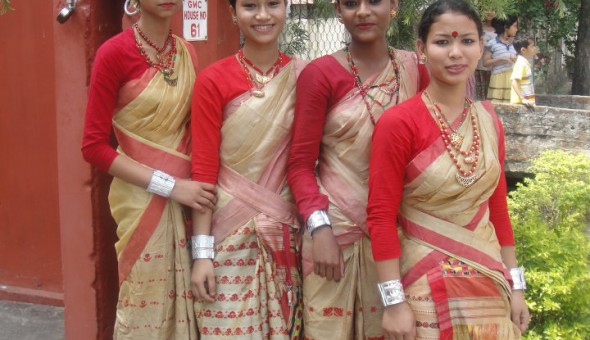
Saris can also have further additions as with Assam’s mekhela chadar where borders are sold separately or as with the current border styles for sari. As an e.g. a few months ago I was in a slightly downmarket part of Mumbai. Polyester saris, most from Surat mills, are sold on the pavement for as little as Rs 100.  These saris come in many patterns and colours. Alongside are sold sari borders embellished with velvet, sequins, zari and so on. Each woman can therefore create her own sari deciding on the patterns and colours pleasing to her eye.

A further individualisation of the garment of course comes through the blouse which can be matched or contrasted as desired by the wearer. An additional colour effect therefore takes place.

Similar variations can be seen in the three piece garments we use like the chudidar-kurta, the salwar kameez or the ghaghra choli. You can play with colour in each component of the attire and in the way you bring it together. Further such combinations are not restricted by the requirement of pure colour or colour blocking, prints in various colours are freely mixed.

So in a way we cannot be reduced to a single colour like pink, perhaps that is best left to Western fashion aesthetics. Sometimes we cannot have enough and pile it on like van Gogh’s sunflowers to dazzling effect, sometimes we rely on our folk art that often uses a satrangi palette (red, green, yellow, purple, orange, dark blue, and white) combining it in different ways.  Whichever route we choose our garments require us to bring together disparate elements harmoniously hence colour persists in India as opposed to neutrals. There are no specific rules here, no Colour Theory 101…..but every Indian woman also knows the rules and  how colours and patterns can be made to come together:).

PS: Not to exclude men – there are splendid examples of the use of colour in male costumes in India – but in post-Independence India it is not that common.  Where they exist they tend to be traditional wear or “tapori” styles so it is a little hard to break down the components.
PPS: Eileen Chang is one of the most astute writers on clothing – her essay quoted here is an ode to colours and also Japanese fabrics.
Posted in 1750s, 18th century, 1930s, 1940s, 20th century, 21st century, Actor, colour, Contemporary Style, Costume, Courtesan, Culture, fashion, Fashion Quote, Folk, Indian Aesthetics, Indian Costume, Indian Dress, Indian fashion, Indian Textiles, Indian Women, natural dye, Prints, Sari, Sari Blouse, Vintage | Tagged , , , , , , , , , | 2 Comments

Short Sari

a

Sharkeswari Agha received a B.A., M.A., and LL.B. from the University of Allahabad; then she completed her Master’s degree in Education at U-M in 1930. In India, she later served as the head of the Teacher Training Department of Crosthwaite College for Women. [Source]

The lower part of a sari (or in its three piece avatar, the ghaghra or mekhla) usually falls below the ankles. While ubiquitous in our times, there is also a case for it being favoured in times past – see for e.g. the sari in this 1570 Deccan painting. Nevertheless other lengths have also been around – especially with the kaccha styles – though in the 20th century above ankle, mid-calf or above knee styles tended to be rural/tribal styles.

An exception is the late 1910s to early 1930s when mid-calf or above ankle lengths seem to have been an urban style. Though I have seen references to its local wear which seem to indicate it was an oddity, in most images I have seen this seems to be  a “when abroad” style adapted to the dress silhouettes of the 20s and for stockings and shoes, especially Mary-Janes. Today’s pic also has examples of this.

I have covered this before – see here and here

Now and then we have contemporary versions, a recent one I saw paired the sari with oxfords. A pity though that the modern 6-yard sari has become such a definitive style that commenters at the site do not seem to be aware that variations in sari drapes is not a distortion of a “classic drape”.

Posted in 1920s, Education, Girls, Indian Dress, Indian fashion, Indian Women, Sari, Sari Blouse, sari drape, sari history, Vintage, Vintage Blouse, vintage sari | Tagged , , , , , , , , , | 2 Comments

In the 1960s

I had a query awhile ago on styles for students and young women in the 1960s. While I answered that privately I thought a few points from it might be interesting to some of you.

For comparison screencaps (top) are of Sharmila Tagore in Waqt and An Evening in Paris (1965 and 1967) and (bottom) of young women who feature in the documentary I am 20 (1967). There is of course a difference between “filmi” styles and real life but a consistent theme is seen.

Given that churidars with short, fitted kurtas/tunics and flimsy dupattas is so common in this decade I would guess a fair few students would have worn it.

If wearing a saree, blouses were quite brief in this decade and often sleeveless. Sometimes you have details, ribbon ties in the back for e.g.

The ¾ sleeve blouse was also around especially in the early part of the decade and would likely have a wide neck.

No hard and fast rule here but pastel plain saris were popular – often with embroidered or painted borders. These – often seen in films – were probably more of a stylish/special occasion thing. The day saree would have been handloom cotton or prints as seen in the screencaps from the documentary as well as the movies (X, X).

All this is summer clothing of course. You could throw on a coat or cardigan and change to a silk sari for the winter.

If the last column of pics presages the blouse styles of the 1970s, parts of the documentary also show lingering influences of the 1950s. In the documentary there is also a fair sprinkling of 60s shifts for young women as well as the skirt and blouse for students. And of course rural costumes which are quite different from the urban styles here,

Posted in 1960s, Actor, Bollywood, churidar kurta, Costumes in Cinema, fashion, film costumes, Films Division, Hairstyles, India, Indian Cinema, Indian Costume, Indian Dress, Indian fashion, Indian Women, retro, retro cinema, retro fashion, retro hair, Sari, Sari Blouse, sari history, Vintage Blouse, vintage cinema, Vintage Dress, vintage fashion, vintage hair, vintage sari | Tagged , , , , , , , , , , , , , | Leave a comment

Art and Fashion

I came across Uma Damle’s interpretation of Hemen Majumdar paintings the other day. Her site also has her take on Raja Ravi Varma’s works.

This slideshow requires JavaScript.

That got me into doing a few posts of spot the artwork in today’s fashion and styles.

a1a2

The girls, on these occasions, put on their best dress, generally a white  “saree” with a broad red border. They tastefully arrange flowers in their hair and plumes of the long breast feathers of the paddy-bird. The Kols of Chotta Nagpur (1867).

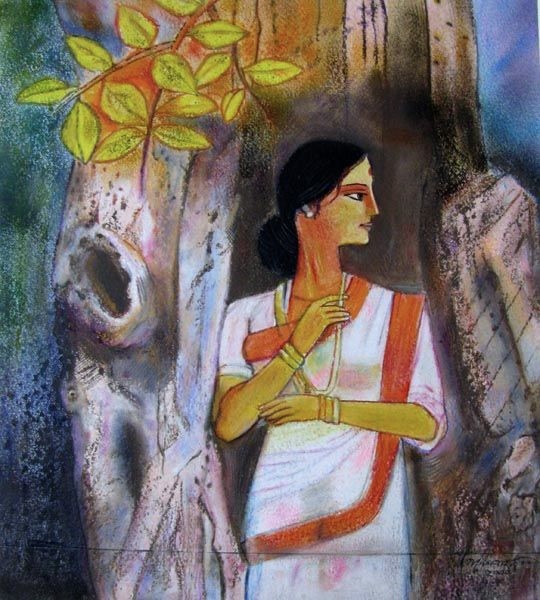
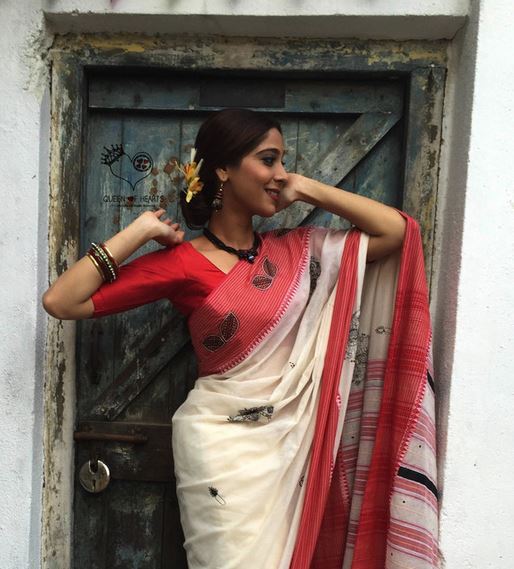
For e.g. the classic white sari, red border which is worn even today. Though strongly associated with Bengal it is very much a recurring theme in the east of the country.

Pic 1: Ganesh Pyne Pic 2: via qohindia.

This slideshow requires JavaScript.

Or finding the artwork of Jamini Roy and Hemen Mazumdar (albeit a copy) in Raw Mango saris.

Her fair complexion burgeoned out of the bright green halo of her muslin dupatta (on Khurshid Jan, Umrao Jaan Ada).

Diaphanous dupattas may be on the wane (dupattas themselves being worn lesser and lesser) but they are around too. Albeit the pic I have shown is nearly two decades old:) In the pics,  Portrait of an Indian Princess, Elizabeth Brunner and Aishwarya Rai in Hum Dil De Chuke Sanam.

This slideshow requires JavaScript.

सजी-सँवरी मधु
रेशमी-नीली साडी मेँ मधु
कान के मोती, काकुलों में मधु
खिलती हुई मधु
सिन्दूरी बिन्दी मेँ खूब दमकती हुई मधु*
From the 1975 short story “Madad” by Ila Dalmiya.

Lastly, blue sari + red blouse is very common even now but I have gone with a 1950s version as well as a vintage sari since I felt they also went with the quote. The first pic is a Raja Ravi Varma painting, the second is Leela Chitnis in 1942 and the third pic is from a piece on women wearing their mother’s saris.

*loose translation below:
Saji-savnri Madhu (Bedecked Madhu)
Reshmi-neeli sadi mein Madhu (In a blue silk sari, Madhu)
Kaan ke moti, kaakulon mein Madhu (Pearls in her ears, with curls, Madhu)
Khilti hui Madhu (Blooming Madhu)
Sinduri bindi mein khub damakti hui Madhu (Shining brightly in a red bindi, Madhu)

Posted in 1920s, 1930s, 1940s, 1950s, 19th century, 20th century, Art, art recreation, Bengal, bindi, contemporary fashion, Contemporary Style, costumes in art, Culture, Early 20th Century, fashion, indian art, Indian Dress, Indian fashion, Indian Textiles, Indian Women, Late 19th century, Paintings, Sari, Sari Blouse, Sets, vintage art, Vintage Blouse, vintage costume, vintage fashion, vintage sari, women in art | Tagged , , , , , , , , , , , , , , , , | Leave a comment

The 70s in a single pic

I chanced upon this pic on ebay and in it are all the glorious 70s trends!

1971india

First up its prints, prints, prints. The maxis* – at least I think they are maxis, the construction of the lower part is interesting. The short tunic with an outsize collar worn over trousers (which are still a little narrow like the 60s and yet to cross over into bell-bottom territory). Cap sleeve blouses for saris, the casual drape of the sari. Handkerchief clutched in hand. The wristwatch. And all that white footwear. 1971 looks good!

*If you are on to a good thing, might as well duplicate it:)

Posted in 1970s, fashion, Girls, Indian Dress, Indian fashion, Indian Women, late 20th century, Photography, retro, retro fashion, Sari, Sari Blouse, Vintage, Vintage Blouse, Vintage Dress, vintage fashion, vintage photography, vintage sari, Women | Tagged , , , , , , , , , , , | 2 Comments

Love

wp1

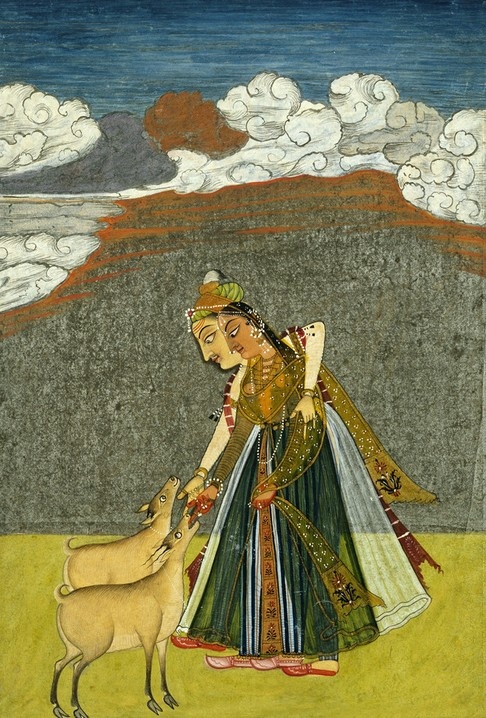
I am still in the process of doing 18th/19th cent style posts on tumblr. Before I compile it into a master post, a mid 18th century, Basholi painting of a couple feeding deer.

Miniature paintings often feature women of varying complexions. Yet it is still rare to find the woman to be darker hued in paintings featuring couples.

I should have probably posted this 19/4 since it was likely the day once dedicated to the festival of Kama.

Posted in 18th century, Art, churidar kameez, Costume, costumes in art, Culture, fashion, historical art, historical costume, historical fashions, indian art, Indian Costume, Indian Women, mid 18th century, miniature paintings, Pahari paintings, Paintings, regional styles, women in art | Tagged , , , , , , , , , , | 2 Comments

The Last of Spring

s

Expectedly has a floral theme.

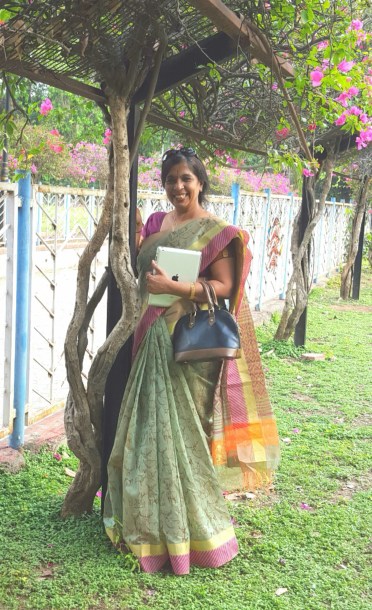
My cousin Sujata who is a habitual sari wearer and looks pretty glorious in it.

Taken on a Rang Panchami day @ the Empress Garden in Pune. The celebrations – by a private party who had hired the garden – began at dusk, passers by were encouraged to join. While a little colour was used, flower petals were preferred for play. Marigold is not exactly a spring flower but is pretty much all season and also is the colour of an Indian spring.

The ladies in the second pic were there to help with the dinner that followed.

This slideshow requires JavaScript.

A popular festival was celebrated in spring known as the ashokapushpaprachayika, or the gathering of ashoka flowers, when young women collected ashoka flowers, decked themselves with gorgeous clothes and inserted orange-scarlet bunches of its flowers in their glossy jet-black hair. [X]

Before proceeding to the temple the Mahratta women gathered from two trees, which were flowering somewhat below, each a fine truss of blossom, and inserted it in her hair at the back of the head… As they moved about in groups it is impossible to imagine a more delightful effect than the rich scarlet bunches of flowers presented on their fine glossy jet-black hair. [X]

My Mumbai place is surrounded by Ashoka (Saraca asoca) trees. Towards the end of February they start blooming, in March the trees are covered with bright orange blossoms and by April the flowers being to wither presenting almost a blackened and burnt look as the summer takes hold.

So much is the familiarity with the False Ashoka (Polyalthia longifolia) by now that few people are aware of the “real“ Ashoka. Even our gardener refuses to accept that this is the Ashoka of the Ramayana and Sanskrit literature and thinks of it as a Ixora variant!

Next spring I need to organise, if not the ashokapushpaprachayika, at least an Ashoka appreciation walk:)

Posted in Ancient India, Contemporary, contemporary fashion, Culture, fashion, Flora, Flowers, Hinduism, indian festivals, Indian Women, Personal, Photography | Tagged , , , , , , , , | 2 Comments