Travancore Sisters

t1

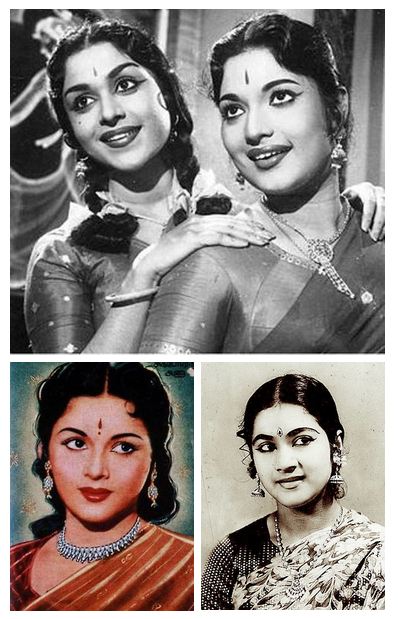
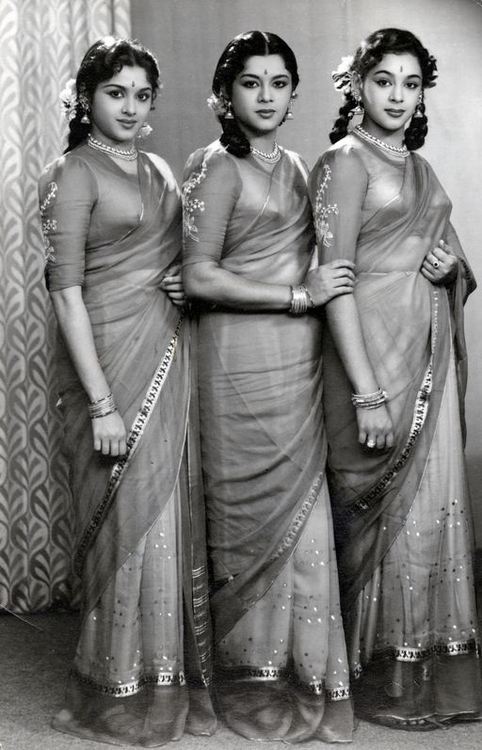
The Travancore Sisters were a famous dancing trio and one of them, Padmini, was a major star in South Indian cinema and also acted in Hindi films.

Betsy Woodman’s family lived next door to the sisters and her blog is full of fascinating details about both expat life in India in the 50s (her mother also learnt dance while in India) and the everyday lives of the sisters. The picture here is from her family album and appears thanks to her.  I love the matched nature of the outfits, the little embroidery details on the blouses. And am wondering if the brassiere (really an inner bodice) is handmade as was quite common back then.

Used by permission of the Woodman family – source here.

PS: The sisters dancing in an early film.

Posted in 1950s, Actor, Dancer, Indian Cinema, Sari, Sari Blouse, Vintage Blouse | Tagged , , , , , , , | 2 Comments

Down South

south

A brief photoessay on the fashions prevalent in the south of India.

And a bit on the practice of kolam/rangoli.

Posted in 1950s, 1960s, 19th century, Sari, Sari Blouse, South India, Vintage, Vintage Blouse | Tagged , , , , , | 2 Comments

The Bhopal Post

fb1


fb2


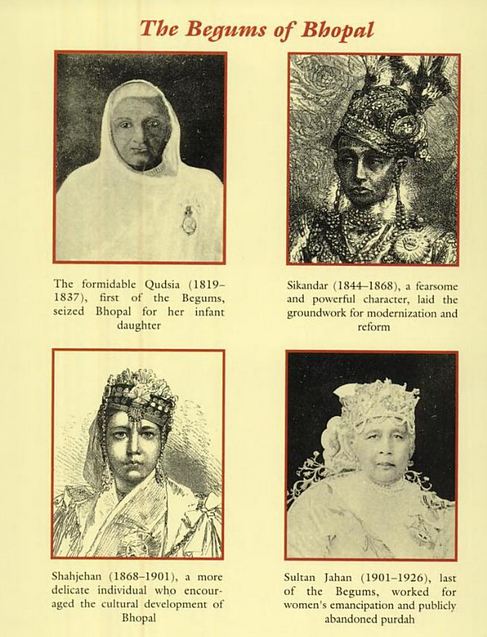
Between 1819 and 1926, Bhopal was ruled by an unbroken line of 4 women, the Nawab Begums of Bhopal.

Bhopal had a distinctive culture with Turkish, Persian and Northern Indian Islamic influences.  Bhopali dress consisted of a Turkish-style long and flowing kurta/tunic that flared in a circle from a tight fitting waist (known as the bhopali/turki/pishwas and akin to the anarkali) often bordered with gold and silver. The bottom half appears to be wide pantaloons, Peshawari paijamas or tight chudidars depending upon the decade.  Perhaps the most distinctive part was the dupatta that measured about 5 meters and was draped across the body and over the shoulder.

Some of the Nawab Begums of course followed their own rules.  Louis Rousselet for e.g. describes the Nawab Begum Sikandar thus:

The Begum is a woman of about 50 years of age. Her thin face, lighted up by a pair of intelligent eyes, expresses such a singular amount of energy that one must be aware of it beforehand in order to realize that a woman is standing before you. The costume itself aids the illusion: tight fitting pantaloons, an embroidered jacket, and a poniard at the belt, have, as a whole, anything but a feminine appearance. 

Sources: [X] [X] [X] [X] [X]

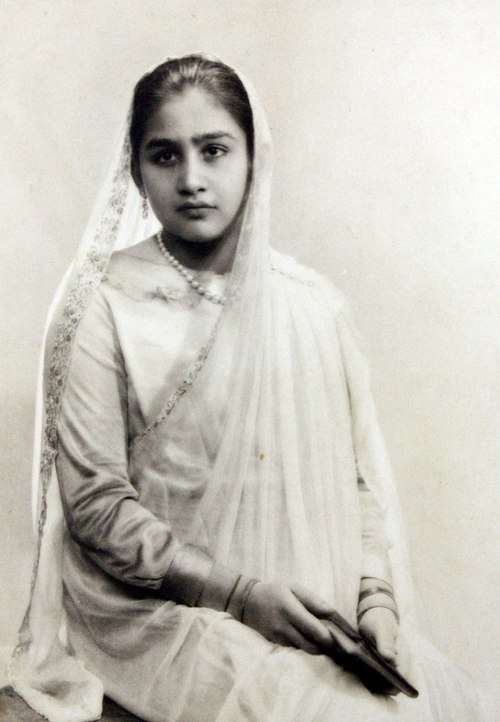
Hamidullah Khan was the last Nawab of Bhopal.  His eldest daughter, Abida Sultan, was the heiress apparent and ran the state until she moved to Pakistan.

Here she is in a long sleeved soft blouse with collars typical of the 1910s/1920s. Though she was to later abandon this for shorter hair and often more masculine attire.

Post independence, her sister Sajida Sultan (in a modern context perhaps better known as Saif Ali Kahn’s grandmother:-)) was titular ruler of the state.
Posted in 19th century, 20th century, Islamic Dress, Royalty, Vintage Dress, Women | Tagged , , , , , , , | Leave a comment

The 1960s post

Posted in 1960s, Cinema, fashion, Sari, Sari Blouse, Vintage | Tagged , , , , , , , , | Leave a comment

The Science/Medicine Post

This slideshow requires JavaScript.

Indeed, in the early twentieth century, the press loved nothing more than featuring women medical students from around the world in their native costumes.

A few posts at tumblr on women in medicine/science in the period from the 1880s-1940s.  More often than not, in the early days the sari prevailed and the photographs reveal a sober and professional attire. These are the precusors of the kind of sari/blouse that became prevalent in workplaces in India.


Posted in Medicine, Science, Vintage, Vintage Dress, Women | Tagged , , , , , , , , , , , , | Leave a comment

The Birds Post-2

bird5 (280x438)


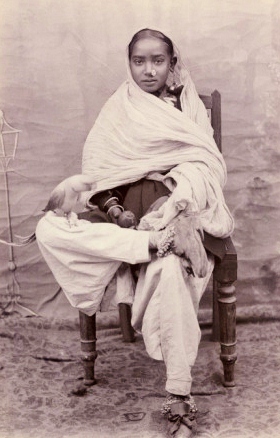
Courtesan, possibly late 19th century.  Accessories: A Bird. And Attitude.

The ensemble is a loose style of salwar-kameez with what looks like a short kameez/tunic.  Up close she has interesting shoes with bow ties. And anklets. And a substantial nose-ring.

Plus a piece of fruit for the parrot.

bird2


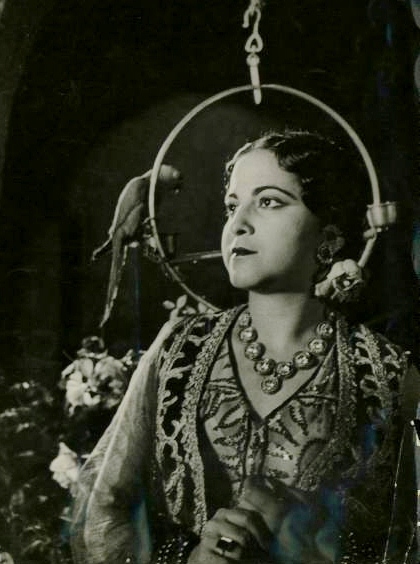
Studio portrait of woman with bird. Possibly 1930s.

The dress suggests a historical and is probably some form of salwar-kameezwith an embroidered waistcoat.  And there are a few pieces of substantial jewellery.

bird8 (532x402)


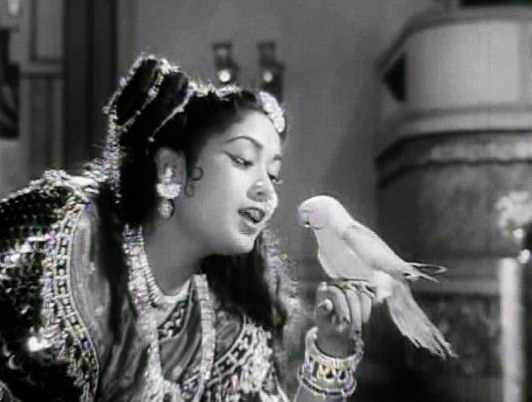
Possibly from a film on a Tamil epic featuring the “confession of love to a parrot”.  The attire seems to be 1950s Tamil mythological. If any one can ID the actress, let me know!

bird4


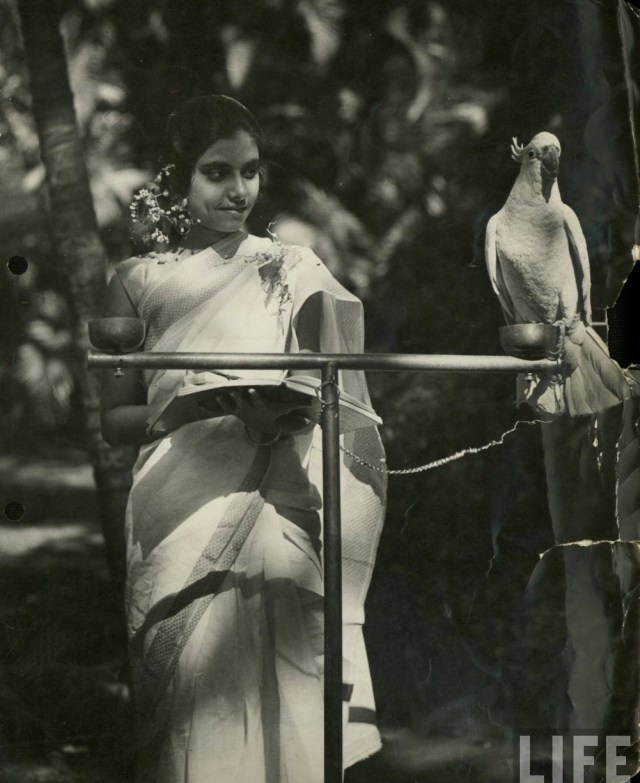
Life Magazine’s photograph of a lady with a cockatoo features a simple sari with a sleeveless blouse and is possibly from the 1950s.  The brooch is a little surprising and like a hat accessory. And there are some elaborate flowers on the hair.

Posted in 1930s, 1950s, 19th century, Birds, Vintage Dress, Women | Tagged , , , , , , , , | Leave a comment

The Birds Post-1


This slideshow requires JavaScript.

Birds appear a great deal in Indian art. They often talk, often they are messengers of love. And parrots are a particular favourite.

Today’s post has women in varying attire in different times and their birds.  The first sculpture is from Belur (Shukhabhashini or a woman in conversation with a parrot). The second and fourth paintings are miniatures, the latter in the Bundi style.  The third picture is the Kalighat style, the fifth is by T. Vaikuntam.  The last but one by B. Prabha.

Last picture thanks to Somenath Mukhopadhyay.

Posted in Birds, India, Vintage, Vintage Dress, Women | Tagged , , , , , , , | 2 Comments

The Couples Post

This slideshow requires JavaScript.

Paintings of Couples

1. Tanjore painting

2. Watercolour by B.K. Mitra (Sr. Artist of Gita Press Gorakhpur United Province)

3. Lady Holding a Lotus (Abanindranath Tagore)

The last is from a vampire story, perhaps apt for our post Twilight age:)

More here.

Merry Christmas and Happy New Year!

Posted in Art, Early 20th Century, Paintings, Sari, Sari Blouse, Vintage Blouse | Tagged , , , , , , | 1 Comment

The Monsoon Post Contd.

pacf011_abhisarika_nayika (500x399)

The abhisarika nayika is a heroine who sets out to meet her lover, heedless of the consequences.  Often depicted walking in the rain with snakes out and about.

The nayika says:

I know it is now time to part.
To part the wind, the clouds,
to part the rain and walk through
on my desire, clear as lightning, forked.

And yet, wrapped in cloud, gripping
the rain, I hesitate.
It’s the rain in my veins that rises red,
steadily, in my throat.
This thrum that grows.

The night is dark.
The lightning so fierce.

0001

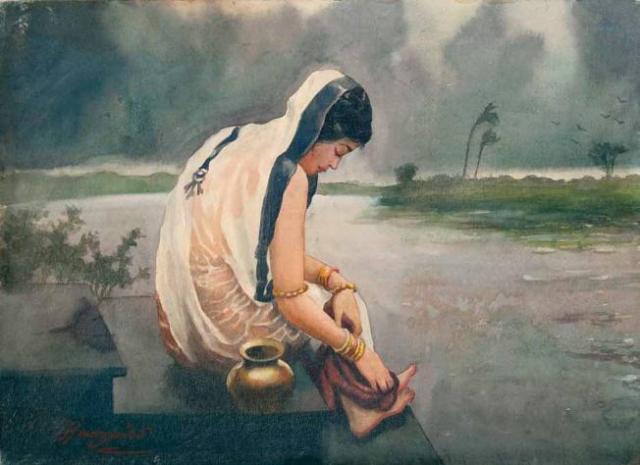
Hemendranath Mazumdar, Barsha (The Monsoon). Illustrated in Shilpi: An Illustrated Journal of Fine Arts, 1929

Pic sources at tumblr.

Posted in 18th century, 1920s, Paintings, Sari, Vintage | Tagged , , , , , , , , , , | Leave a comment

The Monsoon Post

Untitled

madhu

A bodice soaked in cooling water,

play-bracelets made of lotus stems,

ear ornaments made of acacia flowers,

pearl necklaces of jasmine;

these and their bodies wet with sandal paste

are the magic used by fawn eyed damsels

which needs nor spell nor magic circle

to resurrect the God of Love

(Rajasekhara translated by Daniel H H Ingalls Sr)

Rain. River. Water. Thin saris and blouses drenched in water and clinging to limbs.  The stuff of eroticism peculiar to India.

A few posts on women and water today here.

Posted in 1950s, 1960s, 1980s, India, Old Bollywood, Sari, Sari Blouse, Vintage, Women | Tagged , , , , , , , , , , | 2 Comments