Sharara/Gharara

This slideshow requires JavaScript.

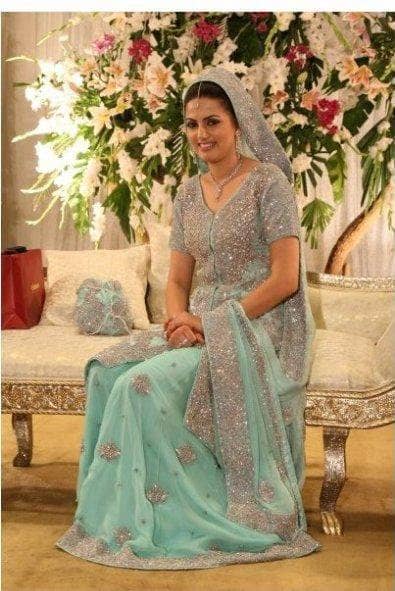
The sharara and the gharara are lower garments that are like flared pants. While a variety of such garments were in use in India in the 18th and 19th century, some of the examples shown here were fairly common wear in the 1940s-50s and often seen in movies that had a North Indian milieu. Now they seem to be part of contemporary wedding ensembles in Pakistan and also seem to be reappearing in India (including in a sari form).

There seems to be a bit of a lively discussion regarding the differences between the two (for the record for my generation the sharara was the bifurcated version that fell straight and looked liked a skirt (as in pic 3 and 5) while the gharara was fitted till somewhere above the knee (or has a band sort of thing) and then flared (pic 2 and 6) :))

Pic 1: The Bahu Begum of Avadh (18th cent.), Pic 2: The actresses of Dard (1947); Pic 3: Nimmi Pic 4: Still from Mere Mehboob (1963) Pic 5: Contemporary Pakistani Wedding Sharara  and Pic 6: Contemporary Tarun Tahiliani Gharara

Posted in 18th century, 1940s, 1950s, Costume, Early 20th Century, Islamic Dress, Vintage, Vintage Dress, vintage fashion, Women | Tagged , , , , , , , | Leave a comment

The 18th Century Hunt

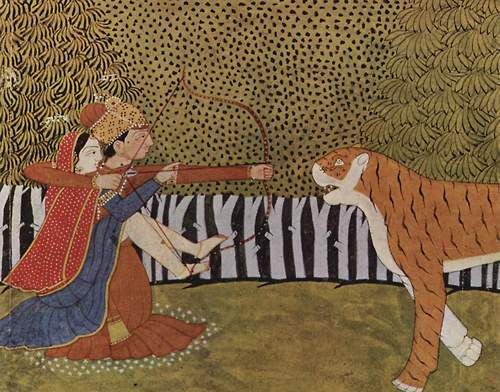
a1a2Note that in pic 1 (dated about 1775), the couple appear to be forest dwellers.  In most paintings women wear a short skirt of leaves or peacock feathers to indicate the forest setting. But the jewellery here may indicate a court lady. Such scenes seem to be commonly portrayed in the late 18th century.

Pic 2 (dated about 1799) is an illustration from Madhumalati, a Sufi Romance and much more in line with courtly paintings with the woman wearing a  long skirt and shawl ensemble.  The woman here also seems to have a less active role.  The scene depicts a tiger disturbing the lovers (Chand and Roopmala in one ref, Manohar and Madhumalati in another).


Posted in 1700s, 1790s, 18th century, 700s, Culture, hunt, Illustration, Indian men, Indian Women, Medieval India, miniature paintings, Royalty, vintae art, vintage art, vintage fashion | Tagged , , , , , , , , , , | Leave a comment

Odds and Ends

Notes from Singapore

15 August 1936 and Olympic Gold.

Jewellery for a Pretty Girl

Lipstick Ladies

and my favourite: the waist brooch for a sari.


Posted in 1930s, 1950s, 1960s, Indian Women, Jewellery, Sari, Sari Blouse, Vintage Dress, vintage fashion, Women | Tagged , , , , , , , , , | Leave a comment

Africans in India

This slideshow requires JavaScript.

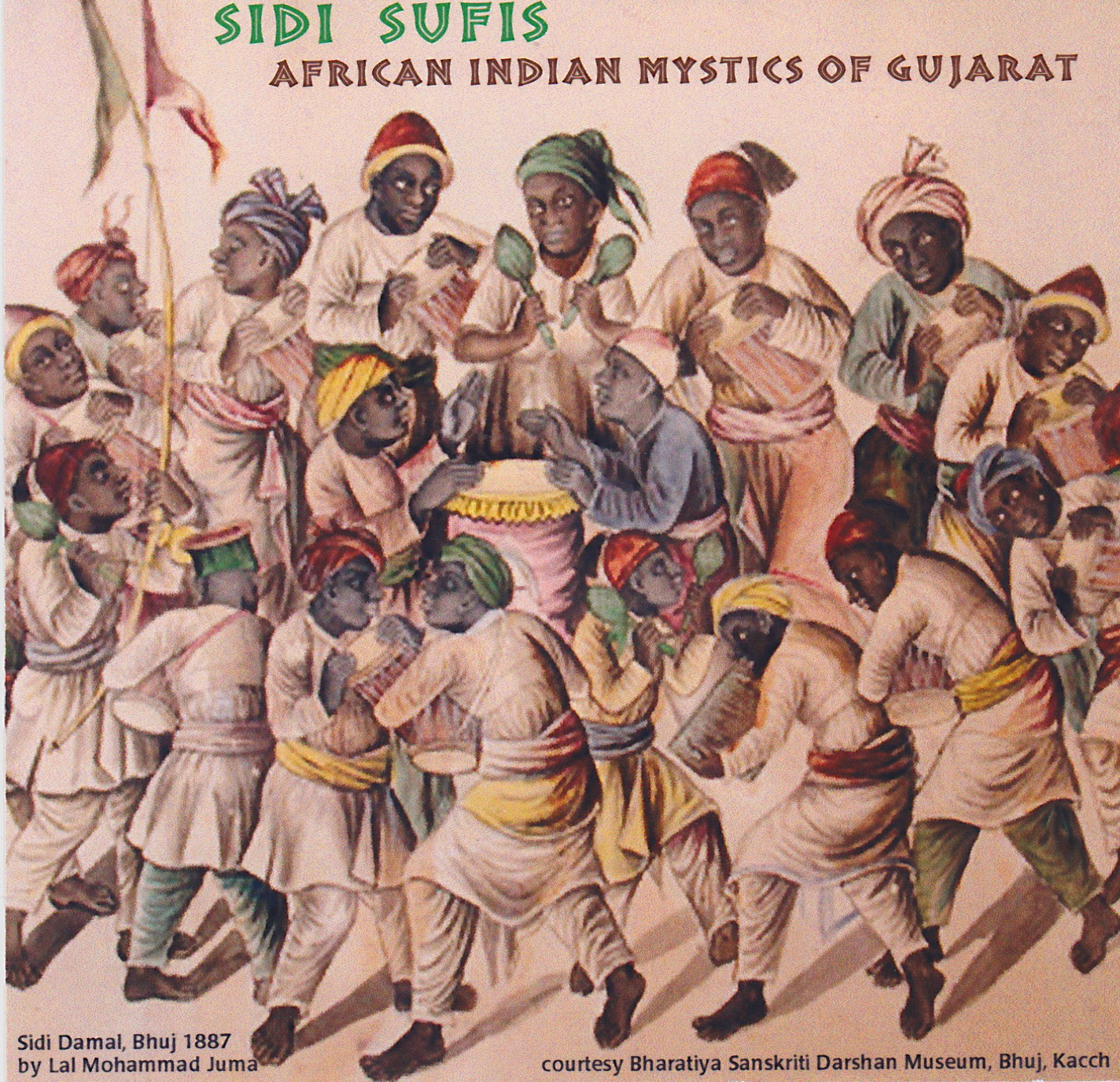
Given proximity, its not very surprising that there has been an African presence in India from very early on.  Pakistan for e.g. has a large number of people of African origin, as does Gujarat (the Siddis).

As early as in the 13th century, Africans in India had a political presence. Apart from ruling small principalities in Janjira and Sachin, it was in medieval Deccan that they had a powerful role as military commanders and prime ministers , e.g. Malik Ambar in Ahmednagar and Ikhlas Khan in Bijapur (both from Ethiopia).  Ikhlas Khan in particular, linked as he was to the Adil Shahis, was much painted. See also [X] [X] and [X].  Pic 3 is of a lyre player, an instrument not commonly played in India but apparently common in East Africa.

The dress is similar to portraits of the time of male rulers, the jama (long tunic), shawl (worn Deccani manner), a sash/belt and tight trousers/chudidar.

There also appears to be a book on Africans in the Deccan. And also in [X].

Portraits of contemporary Indian Africans, especially the Siddis. Very few have any remaining roots in Africa and attire is very much in keeping with present Indian dress.  A link that discusses amongst other things their musical traditions which have an African influence.

[X], [X], [X], [X]

Posted in 16th Century, Africa, Asia, Costume, History, Indian men, Islamic Dress, Men, Politics | Tagged , , , , , , , , , | 1 Comment

The Epic Post

p1

One of the central and much discussed events of the Mahabharata involves the sari – the loss of Draupadi in a game of dice and her disrobing in the royal assembly. Draupadi is in seclusion, her single garment stained with menstrual blood, before being dragged out into the assembly by the second of the Kauravas, Dushasana.

The episode in itself recurs over time in India’s art, film [X] [X] and literature. Also [X] [X] The early versions of Mahabhrata, while clear that Draupadi is humiliated in court and has none to defend her, are not clear on the divine intervention of Krishna or whether a disrobing took place [X] [X]. However, the tale as presently told in India and the version that is best known has Draupadi’s sari endlessly unfolding due to Krishna so she is never publicly disrobed

This particular episode is also frequently retold in Indonesia and is the subject of a recent movie as well as illustrations.

In Mahasweta Devi’s Breast Stories, the eponymous heroine of Draupadi, a tribal woman and a rebel, faces up to her abusers and remains “publicly naked at her own insistence”.

p2

Adorned with golden ornaments, and arrayed in yellow silk, Sita appeared in the air like a flash of lightning.

The divine raiment given to her by the holy Anasuya, with the ornament and the necklace, shone with peculiar radiance…and she threw out her veil in like manner.

Ravana flies off with Sita, who from midair lets fall her wreath of flowers, her golden silk shawl, and her lovely ornaments — the last retrieved by five monkeys on a mountain peak.

The central event of the Ramayana is the abduction of Sita by Ravana, his subsequent fight with Jatayu, followed by Sita’s captivity in Lanka.  Most texts mention Sita wearing golden silk (though this is the period of exile and Sita is commonly portrayed in simpler clothes, also pic 1)  when abducted by Ravana.  In all versions she rips a portion of the cloth, ties her ornaments in it and throws it to the ground. 

A number of paintings depict the fight between Ravana and Jatayu and sometimes detail the throwing of the garment and jewels.

Pic 2 by Raja Ravi Varma, Pic 3 Kalighat, Pic 4 a wayang illustration.

Posted in Ancient India, Asia, Cinema, Costume, Culture, Epics, Hinduism, History, Indian Dress, Women | Tagged , , , , , , , , , , | Leave a comment

The Girdle Post

This slideshow requires JavaScript.

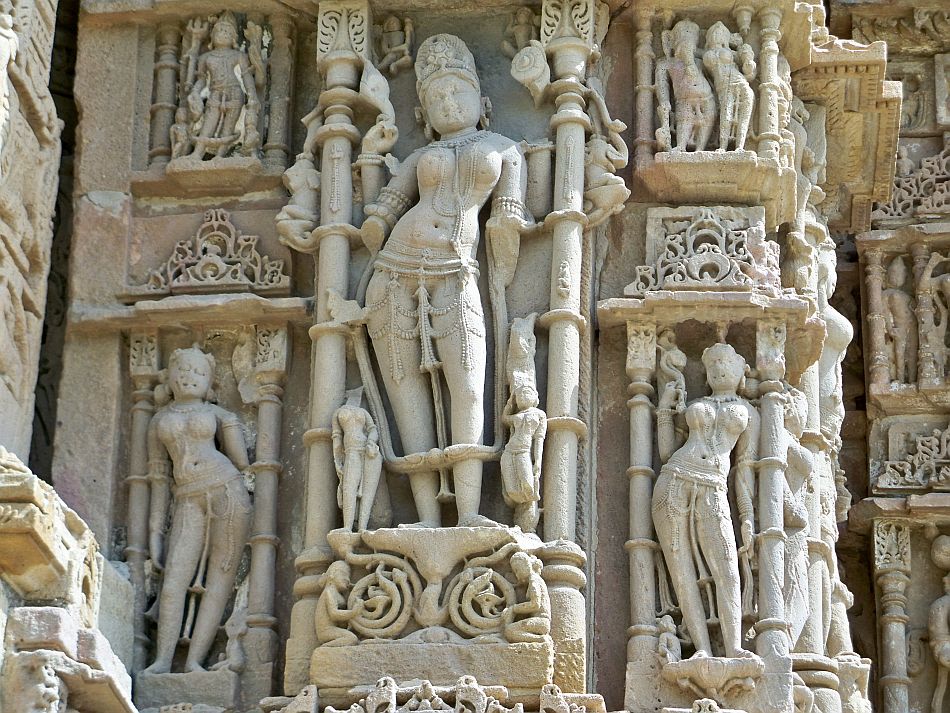
Girdles have been in use in India for a very long time, since possibly the early chalcolithic age.

The kanci aka girdle, is often a broad golden belt used to secure the sari to the waist, to which are often added medallions, loops, tassels and bells. In early sculptures there are often multiple layers. As also in this pic of the actress Simi.

Examples of simple belts/girdles used to secure the sari at the waist below. The more common regional terms for the kanci are kayabandh/kamar bandh in the north, oddiyanam in Tamil Nadu. where it is commonly used in dance costumes, mekhala etc.

Pics: 1. A painting of a dancer by MV Dhurandhar 2) A Lala Deen Dayal photograph. 3. TP Rajalakshmi [X] 4) Balasaraswati photographed by Marilyn Silverstone.

Posted in Indian Dress, Indian Women, irdle, Jewellery, kanci, lt, ndia, Vintage, vintage fashion, Women | Tagged , , , , , , , , | 2 Comments

The Parsis Post

This slideshow requires JavaScript.

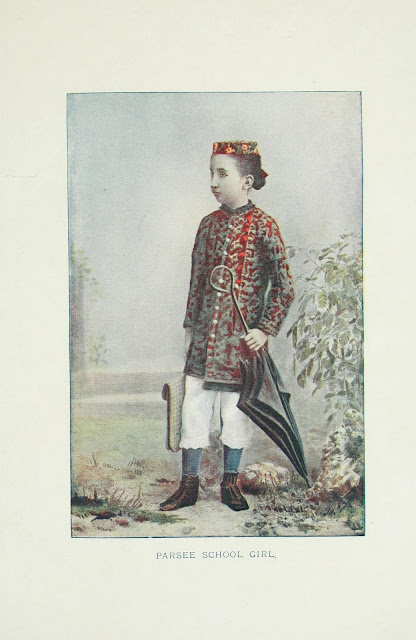
I mentioned in previous posts that Jnanadanandini was influenced by the blouse and sari style of Parsi women in Bombay. Here are a few examples.  Most have “ribbon border” sari with motifs on the ribbon is quite common in Parsi dressing styles of the late 19th century and the early 20th century.  There was a Chinese influence in clothing at this time e.g. in gara saris). The blouse is high and modest in keeping with the period.

Source: The Parsis, 1902.  Also another example. This one is from 1890. The blouse has a Victorian influence. The cap is often seen in Parsi girls of the time (it was commonly worn at one point). A 1923 picture, the sari drape seems opposite to that usually worn but the blouse are as always full and richly embroidered. Other examples include Raja Ravi Varma’s The Parsee Lady (probably late 19th century) and Pestonji E. Bomanji’s 1914 painting of a Parsi woman have the women wearing a similar kind of sari/blouse/pearls combo.

Posted in British Raj, Colonial, Dress Reform, Early 20th Century, Edwardian, fashion, Indian Dress, Late 19th century, Paintings, Sari, Sari Blouse, Victorian, Vintage, Vintage Blouse, vintage fashion, Women | Tagged , , , , , , , , , | 4 Comments

The Art School Post

wp1wp2

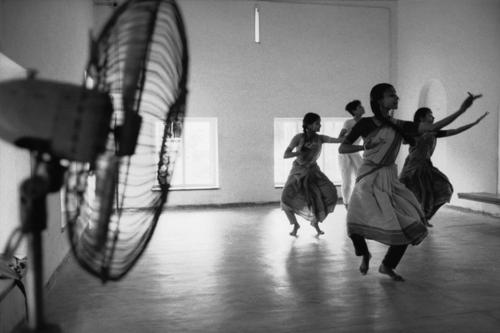
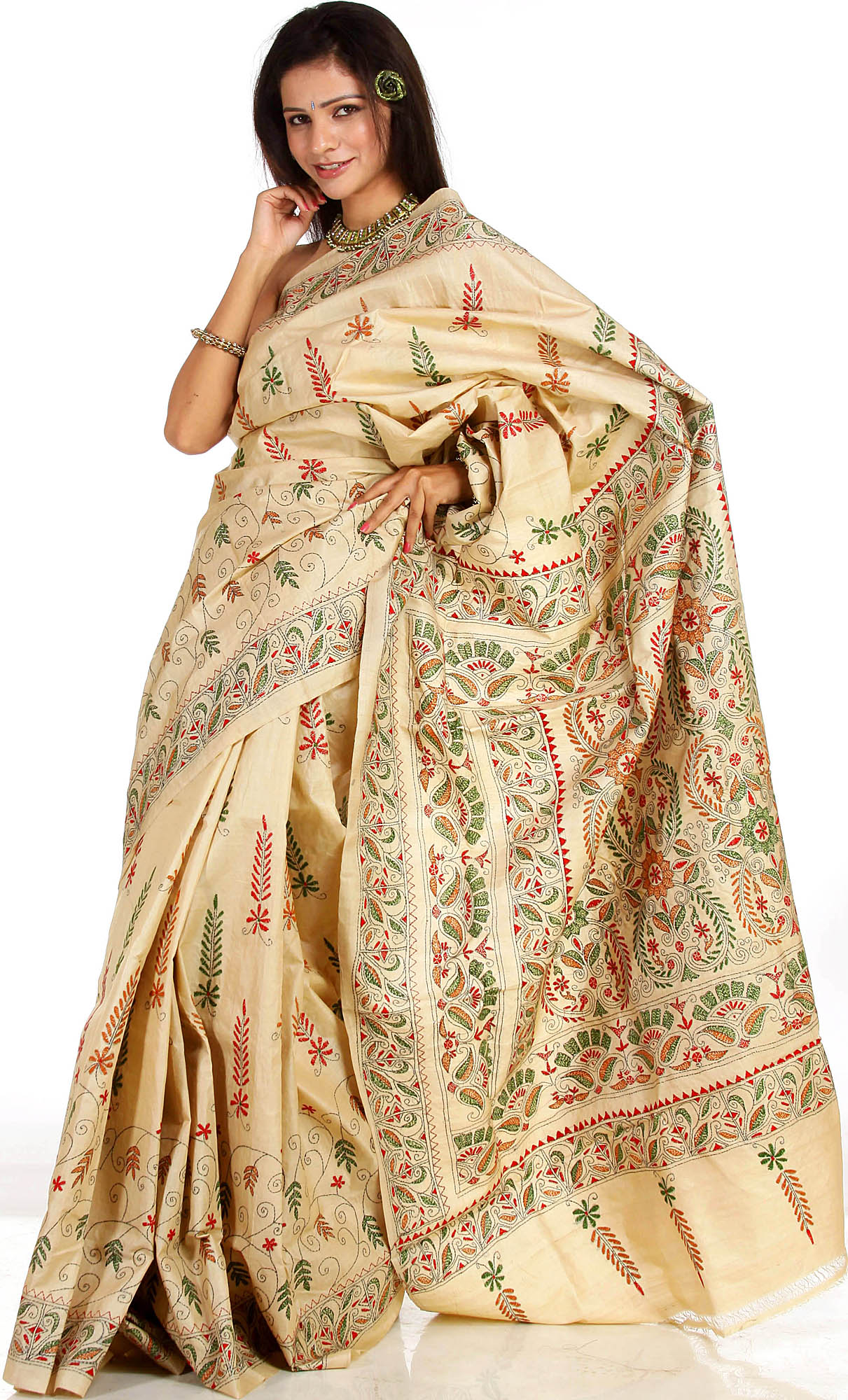
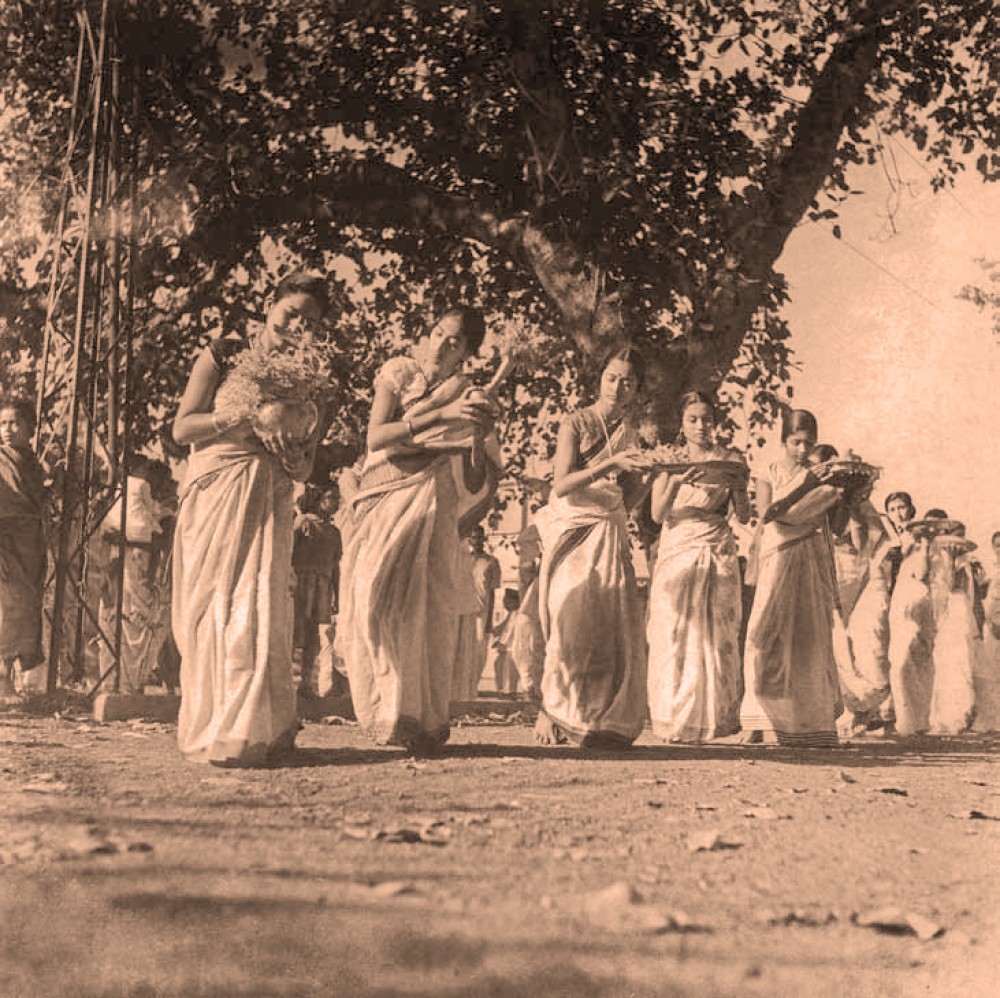
Two of early 20th century art/dance schools in India, Santiniketan/Viswa Bharati and Kalakshetra were not just involved with a revival of Indian dance and art traditions but were also responsible for a new kind of aesthetic.  Khadi, so intregal to the freedom movement, was homespun cloth worn by India’s poor – a symbol of spartan simplicity and an eschewing of luxury. The art schools on the other hand were involved with the revival or reinterpretation of textile traditions, even as they discarded western dress and goods and embraced swadeshi. Both schools were responsible for certain sari styles. Kalakshetra lent its name to saris that were based on existing textile traditions in South India though some of the patterns were new.  On the other hand batik (possibly introduced in India due to the South East Asian influence) and kaantha (a type of stitch that had hinterto been used to make quilts) saris were popularised by Santiniketan.

More details at tumblr for Santiniketan and Kalakshetra.

Pic 1: Girls Dancing, Santiniketan, Early 20th century (Photographer: Shambhu Shaha). Also see [X] [X] [X]

Pic 2: Kalakshetra 1987, John Vink.

Posted in 1920s, 1930s, 1980s, Art, Asia, Bengal, Culture, Dance, Early 20th Century, Education, Girls, Indian Dress, Indian History, Indian Women, Sari, Sari Blouse, vintage fashion | Tagged , , , , , , , , , , , , | 1 Comment

The Independence Post

This slideshow requires JavaScript.

fb3One of the most significant influencers of the way we dress in India was the freedom movement, in particular Gandhi’s thoughts on the moral dimension of clothing, the quest for an authentic Indianness and clothing as a unifier of India’s diverse castes and religious groups.  Central to this was use of khadi, even though or perhaps because khadi was gradually getting displaced even in India’s villages.  Women in the movement discarded their jewels, the hitherto fine clothing*  (for which Indians had always had a preference) for home spun khadi. If you spun it yourself on a simple spinning wheel, the charkha, all the better).  In Saraladevi’s words one decided to be “simple and common only”.  Purely as a clothing choice it feels like elegant slumming, the borrowing of the clothes of India’s poor by an urban elite  – were it not situated in a particular decade, that leading to India’s independence.

Most of the quotes on tumblr are taken from Emma Tarlo’s essays which covers a number of issues and the evolution of a clothing philosophy which stressed simplicity and restraint and was the visual symbol of a soon to be independent India free of its colonial past. It also covers the efforts prior to this, especially in Bengal, in the late 19th century towards an authentic, national attire.

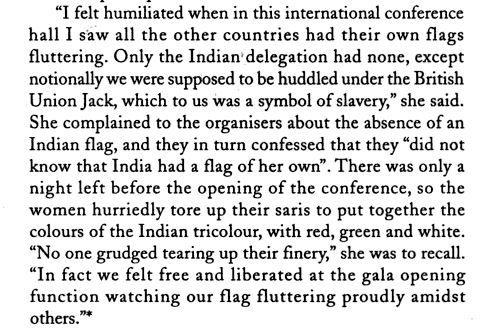
You can follow the tags on tumblr as always. Text extract from Kamaladevi Chattopadhyay: The Romantic Rebel

*Some women didn’t and cartoons of the period have men in the swadeshi movement defeated by the wife’s insistence on not following suit and retaining their fineries and jewels.

Posted in 1930s, 1940s, British Raj, Colonial, Dress Reform, Early 20th Century, History, Independence, India, Indian Dress, Indian Women, Men, Politics, Sari, Sari Blouse, Tumblr, Vintage | Tagged , , , , , , , , , , , | 3 Comments

The Village Post

z1

Achhut Kanya was directed by Franz Osten and shot in the Bombay Talkies studio on Europeanized sets of a typical Indian village. It has been cloned times without number ever since in Hindi films.The Indian village, in its romanticized image of pretty girls in ethnic outfits, carrying water pots and laughing together, has since then been central to all rural plots. Encyclopaedia of Hindi Cinema

“No village girl ever has such eyebrows as Devika Rani wears in the movie and her coiffure and costume towards the end are far too rich and elaborate to be in character” (The Times of India, 24 July 1936, quoted in Encyclopaedia of Hindi Cinema)

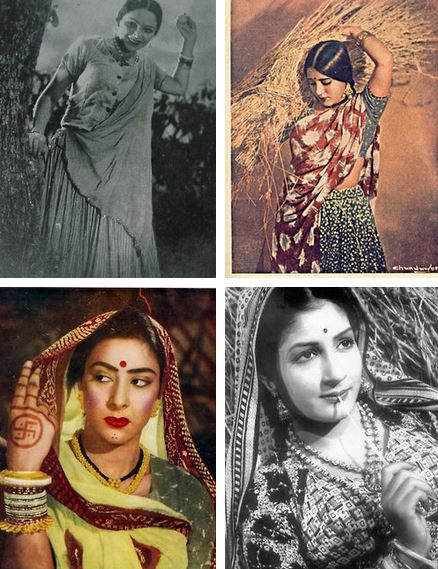
The village girl aka “gaon ki gori” in Indian cinema retains a semblance of rural clothing, more often than not a coarse cotton ghaghra with a mismatched or contrast printed cotton choli (there are of course regional variants).  From Achhut Kanya onwards the costume has been glamourised for the screen and actresses appear in full make up.  The look has been fairly consistent across decades, see for example here and here.

Stills today: 1) Devika Rani in Achhut Kanya, 1936 2) The iconic poster of Kisan Kanya i.e. Farmer Girl 3) Nargis in the…er..mother of all rural films Mother India 4) unknown

z2

He witnessed his mother’s longing for a sari right from the time he had been a child. It was shameful! A woman, in whose house saris were woven for the entire world, could not afford even an inexpensive Banarasi sari for herself, she spent all her life in cotton dhotis. Song of the Loom, Abdul Bismillah

Even market places in rural towns have replaced the cotton saris with the multicolored, cheap synthetic or polyester saris. [X]

Indian cinema also offered another view of the village in movies like Do Bigha Zamin (still 1), Mother India, Paar (still 2) and Pather Panchali (still 3). All movies deal with themes of poverty, inequality, endurance and struggle. And are fairly realistic in terms of costumes.

As the extract from Song of the Loom shows, the poor in villages could not afford more than simple bordered coarse cotton saris, even when they wove a better quality of cloth for the market.  This in turn gave way to printed cottons. And in our time to synthetic saris (as in the last still from Welcome to Sajjanpur).
Posted in Bollywood, Early 20th Century, fashion, History, Indian Cinema, Indian Dress, Old Bollywood, Rural, Sari, Sari Blouse, Village, Vintage | Tagged , , , , , , , , , | 4 Comments