
Still from Mahanagar. I think this is the interview scene or perhaps a scene at the office. And that’s the workaday blouse as we know it (though this might be changing).

Still from Mahanagar. I think this is the interview scene or perhaps a scene at the office. And that’s the workaday blouse as we know it (though this might be changing).

11 April 1960 – Travellers in Air India’s new Boeing 707s from London to Bombay will soon be attended by hostesses wearing saris. Here is 22 year old Indian Air hostess from Bombay Savi Multani in one of the saris which are to to be worn by air hostesses when the new Boeing service starts shortly. The sari is lime green with jade and banana tones of the decor of the aircraft. On left in normal Air India hostess uniform is Vicky Emerson, also from Bombay.
I didn’t realise the saree was not “normal” 🙂
The collared blouse is still around in 1960. And the national carrier would have many changes in uniform but the saree itself more or less remained as the uniform of choice.


Amrita Sher-Gil’s “Child Wife”
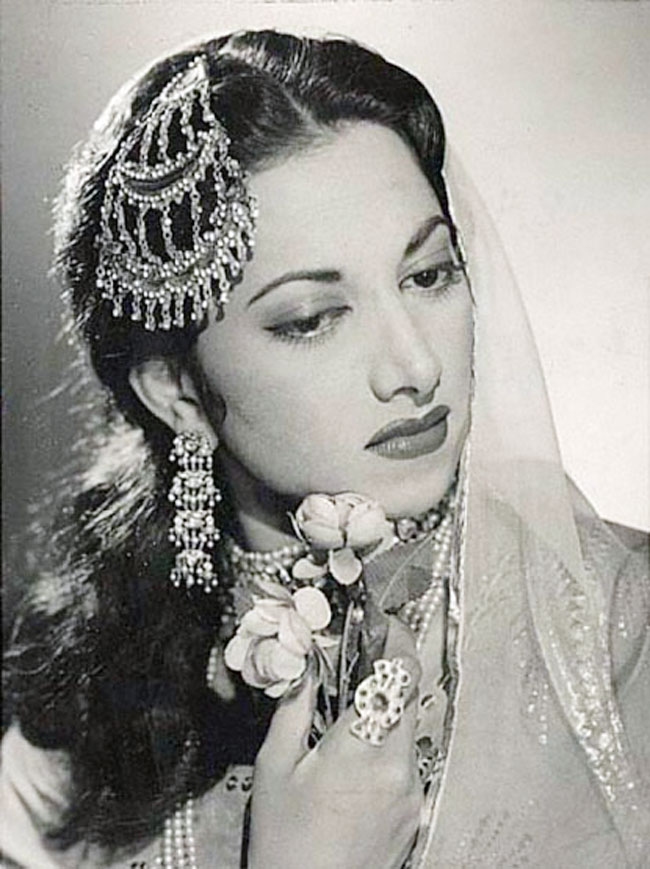
And those pieces of asymetrically aligned hair jewellery.
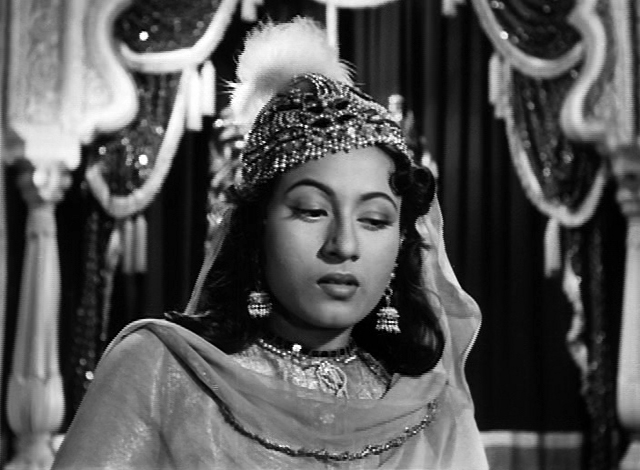
And some of the discarded influences – like jaunty caps – need to come back.
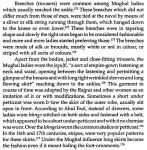
A saree break.
The previous modifier of dress – especially in North India – was of course Islamic rule. There is a great deal of variation within this from fitted tunics to serious trouser flares. These styles live on – the description here of an empire gown seems to correspond for e.g. to modern “Anarkalis”.
All of it involves a great degree of diaphanous layering bringing to mind the sweet liquefaction of a Herrick poem.
Still from Junoon.

In the 70s. A knotted choli is distinctly modern for the time.

A look at beauty queens today.
Reita Faria in the sleeveless blouse and the sari drape of the 60s which left the upper part of the garment loose over the arm.
An article on her here.

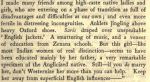
Since I started this blog, I have come across an astonishingly large number of “British Raj” romances. A few of these deal with “inter-racial” romances which were generally taboo subject matter. One of these is Lilamani. Apart from it being an Empire sort of project of the East and West, will they ever meet, how should they meet etc. kind it also has a lot of descriptions of sarees. However Ms Diver seems to be as harsh as Tagore on girls who were too “Westernised” as the book extract shows.
Lilamani on the other hand knows how to dress well (per the author) and here on the book cover she has a cute little blouse and a pallu neatly pinned to hair.
The novel is at the link below:
 Vintage Indian Clothing