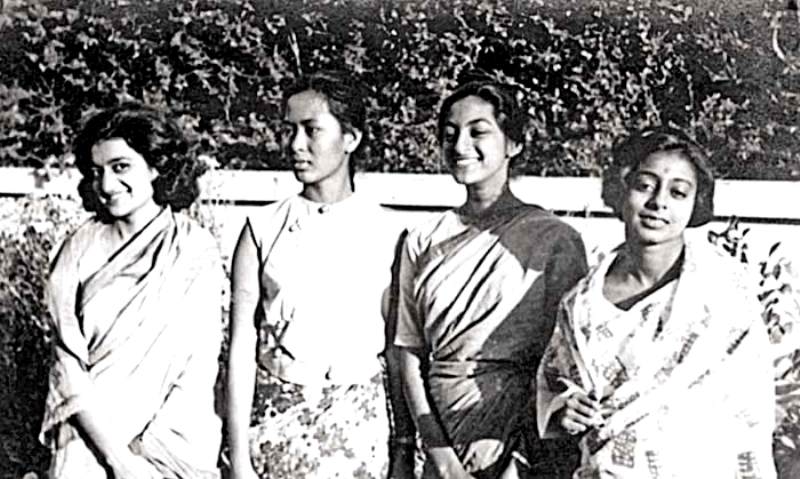
For my posts on dress reform in Bengal, I have taken a good deal from Malavika Karlekar’s articles. In this picture taken in 1964, Ms Karlekar is on the right. And in the sarong/longyi and blouse is a girl called Aung San Suu Kyi.
For my posts on dress reform in Bengal, I have taken a good deal from Malavika Karlekar’s articles. In this picture taken in 1964, Ms Karlekar is on the right. And in the sarong/longyi and blouse is a girl called Aung San Suu Kyi.

The writer MK Binodini Devi (also Manipur royalty) with her sister MK Tombasina, both in the striped phanek. Puff sleeve blouses for young women are fairly common at the time (possibly late 1930s/early 1940s).
Her mother’s attire in 1922 while also a sarong+blouse looks a little different.
Another example of the attire on the Maharani of Tripura.
[X]
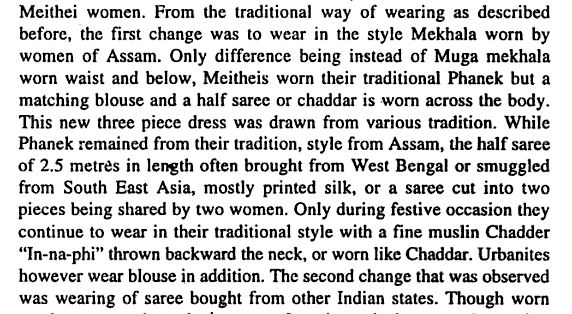
A look at Manipur in North-East India.
The phanek is like the sarong and was traditionally worn without a blouse, above the breast. Eventually it was worn as a tubular skirt/sarong with the blouse and a piece of cloth draped across the upper part of the body, the changes resulting from Assamese and Bengali attire. Apart from the upper cloth, the attire is quite similar to that in many parts of South-East Asia.
Note: Meiteis are the majority ethnic group in Manipur.
[X]
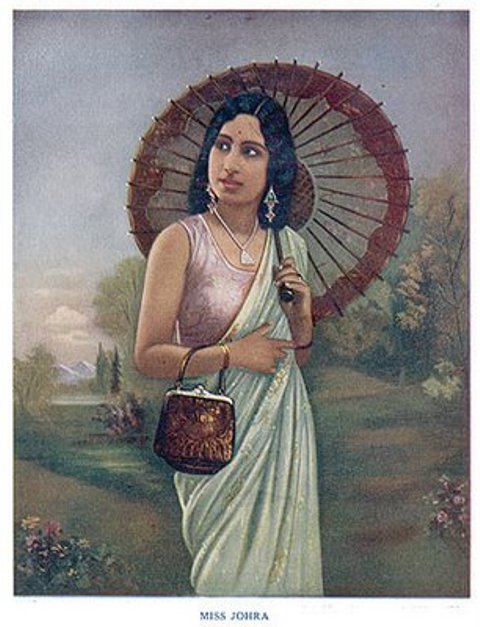
Also from the 1930s Miss Johra (likely she was a Miss Zohra). The umbrella as an accessory was perhaps Burmese in origin (the country was then a part of British India).
A brief write up on the modern girl of the 30s here.

A previous post of mine mentioned the movie Miss 1933, its modern heroine Miss Gohar and its trendsetting fashions (sunglasses!, driving a car! umbrellas!). I couldn’t find any images though and suddenly there it was, thanks to Sparrow Online.
They really loved sleeveless blouses and arm bands in the 30s.
PS: Elsewhere another Miss 1933 was a lot more pensive in a year when fairy-princes were thin on the ground🙂
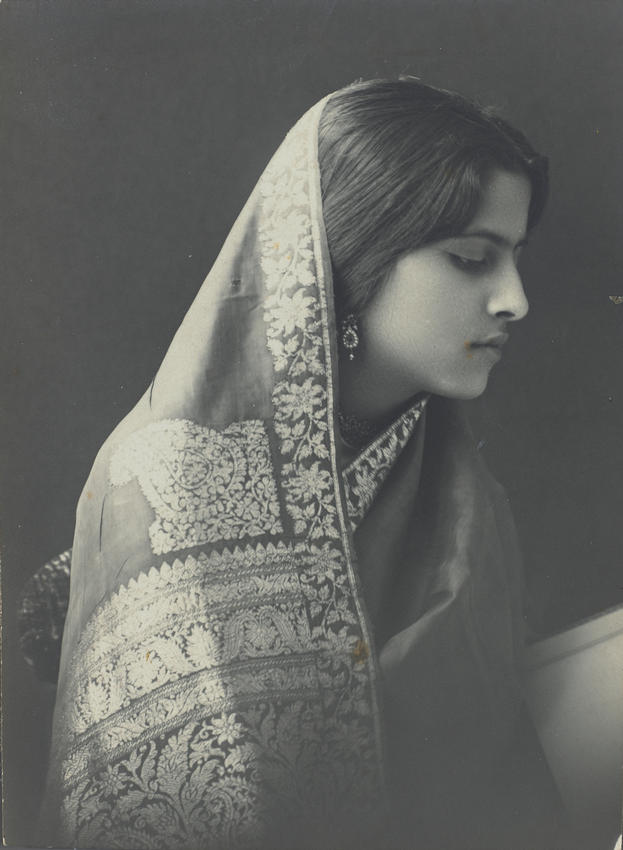
Attia Hosain’s wedding trousseau also appeared to include sarees if this picture is any indication.
The practice of covering the head in the early decades of the 20th century makes it difficult to spot the kind of blouse but that is a very pretty sari (embroidered? chikan?)
[X]

The Saif-Kareena wedding….here is the posed studio photo and the wedding dress.
Which has similarities in style with Attia Hossain’s wedding dress of 1933. Though described as a saree, it’s more likely a “wedding joda” with a heavy skirt. Also I think I have mentioned my love of those hair ornaments before:)
A little bit on Attia Hosain here and a review of her novel, Sunlight on a Broken Column, here.
[X]
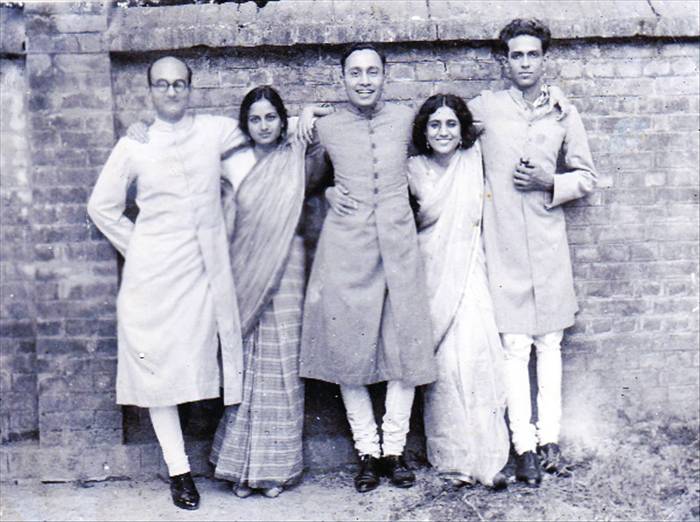

If Rokeya wrote in a humorous vein, Rashid Jahan was a writer who was part of the Progressive Writers Movement, a fiery feminist, a doctor and a contributor toAngarey.
The photographs are from an article on her husband, Rashid Jahan is the woman on the right in the first picture. The pictures are not dated but given that Rashid Jahan died in 1952, they are probably from the 30s/40s.
If the pictures are any indication, this is how young Muslim intellectuals of the time dressed. In a way the saree/blouse ensembles are not that different from what you would see in “progressive”middle class women right up to the 80s (bar the fact that there is no attempt to “”match” saree and blouse.
[X]
This gallery contains 4 photos.
Though Rashid Jahan and Attia Hosain were from Uttar Pradesh, as Pran Nevile’sbook on life in pre-partition Lahore indicates, the upper classes in the North of India (given this was the 1930s I guess Nevile is referring to Lahoris as … Continue reading
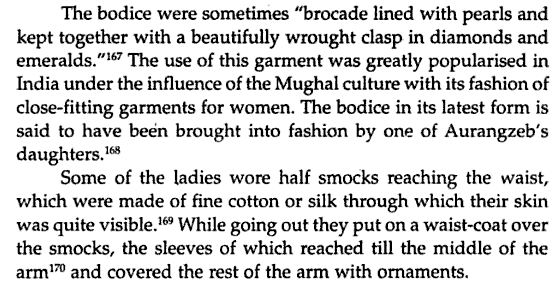
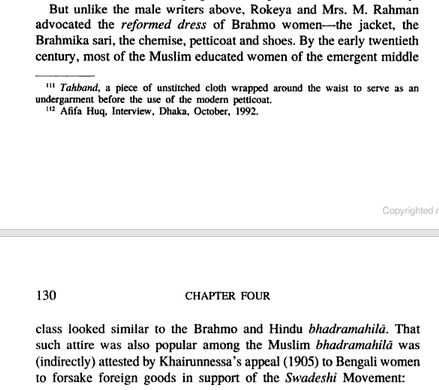
I mentioned Rokeya Begum in an earlier post as wearing a Brahmika saree. As these excerpts from Sonia Amin’s book indicate, both Hindu and Muslim women in Bengal moving from the private sphere into the public sphere were evolving a new kind of attire.
Rokeya Begum is best known for her short story on a feminist utopia, Sultana’s Dream. I see that she has been dubbed a sci-fi writer🙂
bhadramahila: closest translation would be respectable woman/gentlewoman
 Vintage Indian Clothing
