Tumblring

Its easy to post on tumblr, far more difficult to compose a wordpress post, hence the hiatus.

Costumes in Deccan Paintings. There is a freshness and vigour to Deccan paintings and it’s always interesting to stumble across them.

Dancing Ladies: Yamini Krishnamurthy and Mrinalini Sarabhai.

Kiss Curl

Kashmiri Women

Posted in Early 20th Century, Indian Cinema, Indian Dress, Indian fashion, Indian History, Indian Women, Medieval India | Tagged , , , , , , | 2 Comments

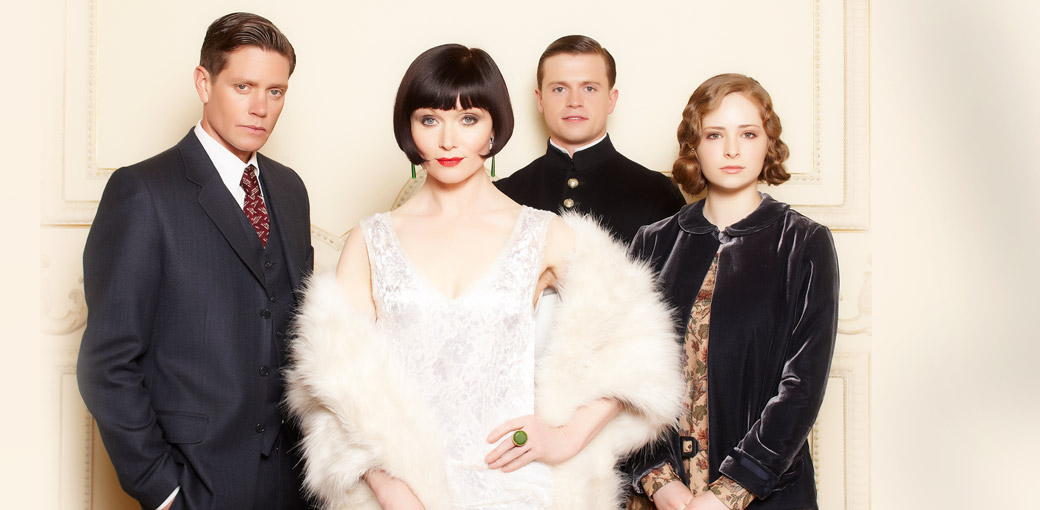
Phryne Fisher

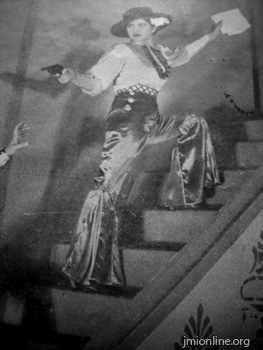
missFisher1And speaking of kick ass ladies, one of the few TV shows I watch both uninterruptedly and uncritically is Miss Fisher’s Murder Mysteries (i.e. I am a fangirl so please don’t take the post as an endorsement to immediately rush out and watch the series!).  Miss Fisher aka Phryne is a gold pistol toting female PI in 1920s Melbourne – though she uses the gun judiciously and relies more on her wit and brains.  The TV series is quite toned down in comparison to what Phryne gets up to in the novels but TV is a different beast. Despite the changes the TV series works. Add to the mix the requisite Lestrade figure (Jack Robinson) , though he is a cop with brains who has a nice line in quiet sarcasm and a good deal of sexual tension with Miss Fisher, Phryne’s sensible companion, Dot, her beau Hugh and a whole assortment of other sharply drawn characters and it makes for perfect Friday night viewing.

One of the chief drawcards of the series is Phryne’s fabulous wardrobe (Phryne is also a woman who can accessorise). Normally I am not a fan of cut up saris but I didn’t mind the one they attempted on the show (they source now and then from India). While it is Phryne’s clothes that draw the viewer, the series is also fairly spot on with regard to more working class and modest clothing as far as I can see.  Its a visual feast and it is not surprising that a costume exhibition has followed. Now if only they had an episode with some fabulous maharani like Indira Devi:)

Posted in 1920s, Australia, Early 20th Century, Female PI, Vintage, vintage fashion, Women | Tagged , , , , , , , , , , , , | 4 Comments

Hiatus

I am moving so next post will be a while coming.

In the meantime, to round out the kickass ladies posts I had one earlier:

The Rani of Jhansi

Polo Playing Ladies of the 17th century

Posted in Costume, Culture, History, Indian History, Indian Women, Islamic Dress, Medieval India, miniature paintings, Sport, Women, Women Rulers | Tagged , , , , , , | Leave a comment

The Tamil Historical Post

t5The illustrations for Tamil periodicals have a long history and some illustrators are nearly as well known as the writers. A number of serialised stories are historical romances (think Chola empirePallavas) and the drawings are fairly vivid in recreating an era, albeit in a stylised, romanticised form [e,g, XX].

In this illustration an elegant three piece costume, loads of jewellery including the vanki or arm band and the chandra-surya for the hair.  And the side knot which is a characteristic Tamilian hair arrangement (though I am not sure which particular era it belongs to).

Covers of a few Tamil historical novels. Kalki was the forerunner of the genre, pic 1 is of his novel Parthiban Kanavu. Pic 4 is a novel set in the reign of the Cholas by Sujatha. Pics 2 and 3 are covers of books by the author Sandilyan whose subject matter is varied, Pic 3 for example is of the novel Yavana Rani i.e. Greek Queen. Pic 2 is of the novel Rajamuthirai (The King’s Seal). Unfortunately it appears they are quite difficult to translate.

Lots of pretty women sporting some complicated updos…the men aren’t too bad either : all wavy locks, neat moustaches and bare upper bodies:)

Vyjayanthimala in the film version of Parthiban Kanavu (Parthiban’s Dream, X, X, X). The costumes are quite similar to the previous illustrations here, including as it happens a nose stud on one side of the nose and a nose ring on the other:)

The actress unsurprisingly was featured in more than one historical drama, given her classical beauty and background in dance.

Posted in 20th century, Ancient India, Costume, Early 20th Century, fashion, Hair, History, Illustration, India, Indian Cinema, Indian Dress, Indian fashion, Indian History, Indian men, Indian Women, Jewellery, Love, Novels, Period Drama, Romance, Royalty, Sari, Sari Blouse, Tamil, Tamil Cinema, Vintage, Women | Tagged , , , , , , , , , , , , , , , | 3 Comments

The Nose Ring Post

The bullaku/bulak or nolok – i.e. a ring that requires nasal septum piercing. Common in some parts of India up until the 19th century, it is now used in dance forms like Bharatanatyam albeit in a clip on screw on form.

Posted in India, Indian Dress, Indian fashion, Indian Women, Jewellery, vintage fashion, Women | Tagged , , , , , , | Leave a comment

Weekend

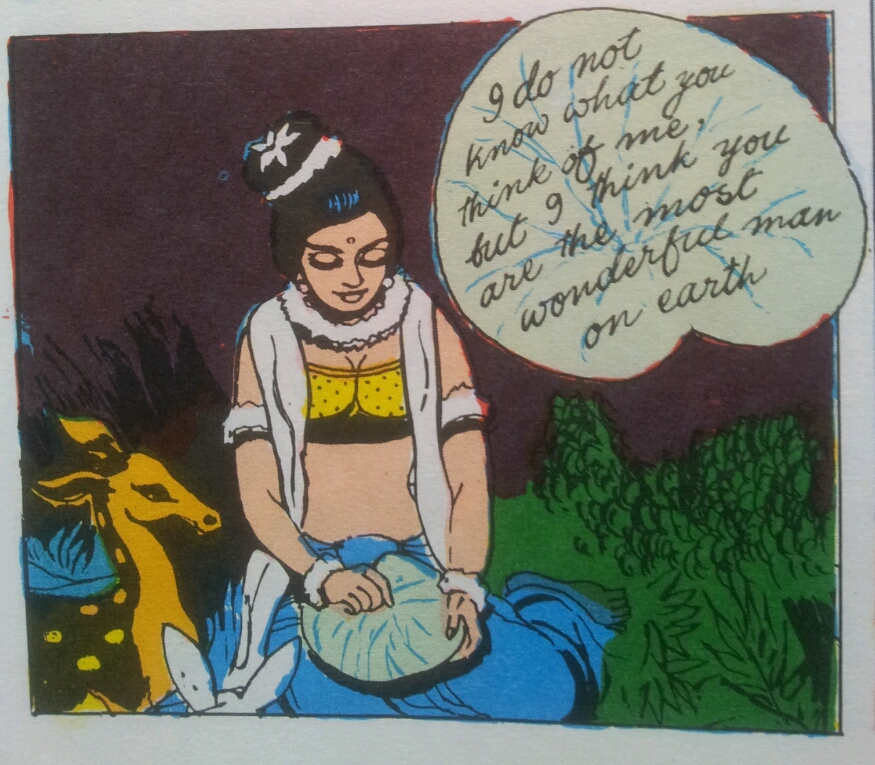
shakuntalaI do not know what you think of me, but I think you are the most wonderful man on earthShakuntala*, Amar Chitra Katha.

Its the weekend. Wear your best kanchuki (bodice). Shower some love on the pet deer. And write a love letter.

*Apparently the second comic of the series, first published 1971.

Posted in Ancient India, Comics, Costume, Illustration, Indian Dress, Mythology, Romance, Sanskrit Drama, Sari, Women | Tagged , , , , , | 2 Comments

1940s-1960s

This slideshow requires JavaScript.

A brief look at fashions on film.

1, The 1940s.

Noor Jahan in Anmol Ghadi (1946).

This kind of square neck blouse was popular in the late 40s and continued to be so in the early 50s. The sequinned sari of course has never fallen out of favour though it may no longer be a French chiffon. Though this particular flower/starburst design is often seen in the 40s/early 50s. And Noor Jahan loved her bling:)

2. The 1950s

Flower printed saris (nylons? chiffons? hard to tell).  On Suraiya, the sari material is used to make a matching blouse. On Shyama, a square neck blouse with a kind of sculpted stand up collar.

3. Late 1960s

The colour matched scoop neck blouse, the handloom saree (here a dhakai saree), the print sari and occasionally trousers and shirt.Sunglasses optional.

Stills from Aranyer Din Ratri.

Posted in 1940s, 1950s, 1960s, Actor, Cinema, Costume, Culture, Early 20th Century, fashion, Indian Cinema, Indian Dress, Indian Women, Movies, Old Bollywood, Sari, Sari Blouse, Sets, Vintage Blouse, Vintage Dress | Tagged , , , , , , , , , , , , , , , , , , | 2 Comments

Circus!

gemini circus 1989

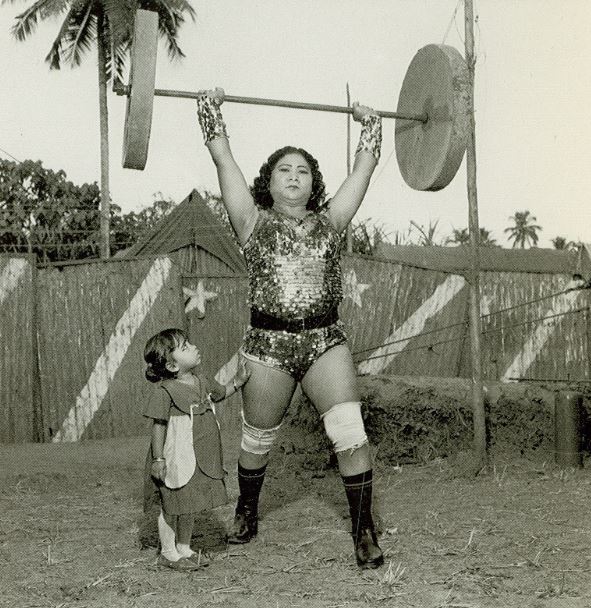
Shavanaas Begum with Her Three-year-old Daughter, Parveen, Great Gemini Circus, Perintalmanna, India, 1989. Mary Ellen Mark

I guess you could call her a strong role model! Have a good weekend!

[X]


Posted in 1980s, Circus, India, ircus, Strong Lady, Vintage, Women | Tagged , , , , , , | 2 Comments

Stunt Queens of the 1930s

hurricane hansafb1

Next evening we too saw her as she sat in front of the Well of Death, looking bored, chain smoking Scissors cigarettes.  She wore a “birjis”* of shining blue satin, and her heavily painted face looked weirdly blue in the bright lights. But those who knew declared that Miss Nadia of Hunterwali fame was not a patch on Miss Zohra Derby, the Female Desperado. A ferocious looking man, also in blue satin “birjis” sat next to her, twirling his waxed moustaches.  A motorbike roared at the back.

After some minutes Miss Zohra Derby and her ferocious companion entered the Well of Death on their motorbikes and went roaring round and round. The well shook and wavered and it was all very frightening. Qurratulain Hyder, Memories of an Indian Childhood, The Sound of Falling Leaves.

Satin, Shorts, Breeches, Boots, Masks, Guns, Knives, Whips, Duelling, Swashbuckling. There must have been something in the water because the 1930s in India appears to be the decade of badass ladies in India, to use contemporary slang. The undisputed stunt queen of the decade was Fearless Nadia (Australian by birth) but judging by the film titles and stills of the decade, more than one actress was taking on the bad guys single-handedly-and stylishly. The titles are instructive: Hunterwali, Hurricane Hansa, Challenge, Daku ki Ladki, Deccan Queen – you can see a few stills at this site, And as the extract from Hyder’s book shows, stage and pit shows featured female “desperados”:)

Pics today: Hurricane Hansa (also see: [X] [X]); Screen capture from Bhumika, in the movie Smita Patil is a 1930s actress who first stars in an action film; Jewish actress Pramila in Bijli; and Gohar Karnataki in Guru Ghantal.

*possibly breeches
Posted in 1930s, Actor, Cinema, Early 20th Century, Feminism, Indian Cinema, Indian Women, Old Bollywood, Vintage Dress, Women | Tagged , , , , , , , , , , | 4 Comments

Gandhi Jayanti

This slideshow requires JavaScript.

In the Bombay Presidency, the use of printed textiles was concentrated in the Gujarat districts, where women tended to wear clothing with patterns that covered the whole cloth….Even as late as 1938, more than 1500 artisans, using stamps that they altered from year to year as styles evolved, participated in the calico-printing industry of Ahmedabad. Small Town Capitalism in Western India: Artisans, Merchants and the making of the Informal Economy, 1870-1960, Douglas E. Haynes.

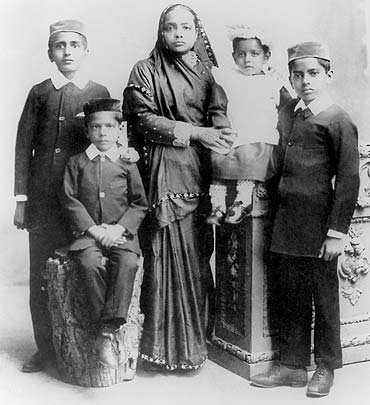
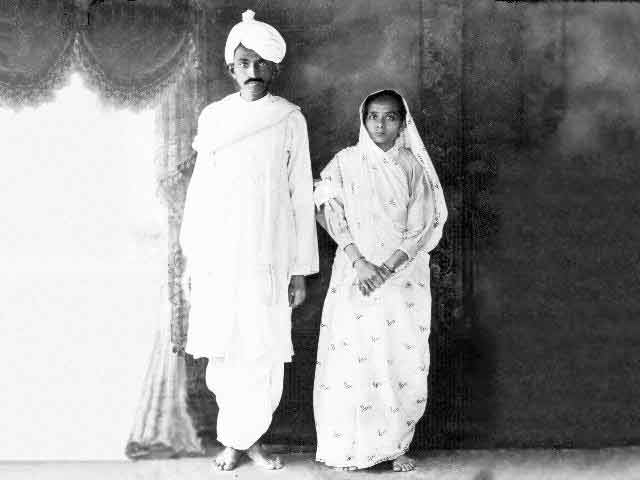
The Making of the Mahatma is a 1996 bilingual film that covers Gandhi’s years in South Africa. It also touches on his family life, Gandhi was – to put it mildly – not the best of husbands. Prior to the South Africa move, the family was outfitted in what was modern Indian for the time. This meant a Parsi style bordered sari for Kasturba. But a number of pictures also show Kasturba in printed saris. Block printing was common in Gujarat (and Rajasthan) as were lighter colours as opposed to the handlooms of neighbouring Maharashtra. In the movie, no doubt based on existing photographs, both kind of saris are seen.  As well as the voluminous blouses popular at the time (Gandhi and Kasturba returned to India in 1915).  Note also the gloves at the time of arrival in South Africa (1893).

Gandhi himself changes from completely Western attire as a barrister newly returned from Britain to the adoption of a few elements (headgear was the usual mode of doing this, in the last pic of 3 men the headgear is Muslim, Parsi and Gandhi’s Kathiawar turban) to his final adoption of completely Indian attire on his return to India.

Posted in Colonial, Costume, Early 20th Century, Family, Independence, Indian Dress, Indian History, Late 19th century, South Africa, Vintage Dress | Tagged , , , , , , , , | 2 Comments