The Bangles Post

vbang1


Soon after, a woman came in, with a large basket full of churees for the arms (bracelets), which were made of rings of glass, ornamented with beads. Every body at the wedding, from the Begam to the youngest slave, had churees put on their arms; I was also decorated. These rings are extremely small; to put them on requires considerable art, it being necessary to mull the hand, and render it very pliant, before it can pass through so very small a circumference as that of the churee. (From Fanny Parkes’ very entertaining early 19th century book Pilgrim in search of the Picturesque).

The use of glass bangles probably dates back to medieval times though of late they have been replaced by metal bangles, especially in the metros (a bit on child labour practices in the glass bangle industry).  And a bit on Sarojin Naidu and her poem on bangles.
Posted in Jewellery, Vintage, Women | Tagged , , , , , | 3 Comments

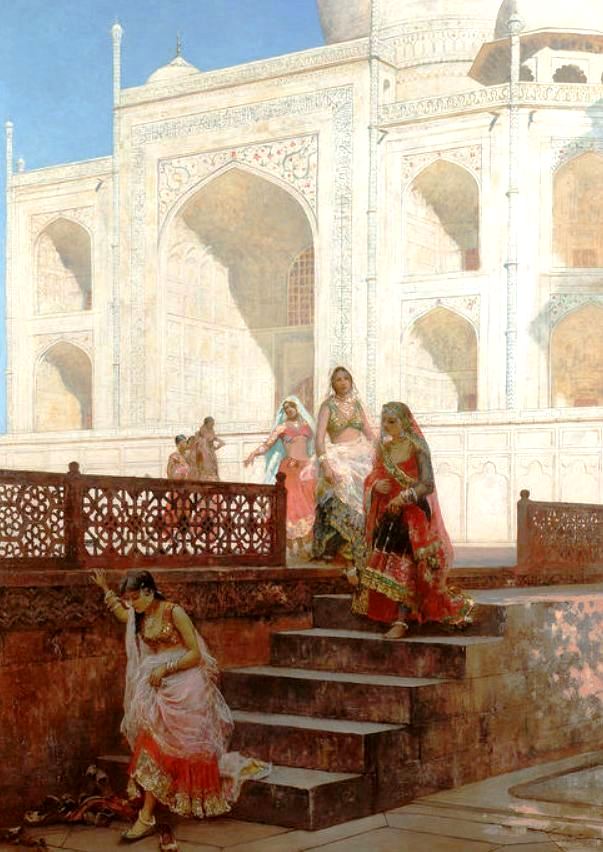
The Nautch Post

vnautch

Ongoing posts on Indian dance, particularly in the 19th/early 20th century.

This painting is Edwin Lord Weeks’  Nautch Girls emerging from the Taj Mahal. Weeks’  paintings of India have a number of quotidian details and I particularly like this one.

Posted in 1880s, 19th century, British Raj, Colonial, Costume, Courtesan, Dance, Dancer, Early 20th Century, Paintings, Vintage, Women | Tagged , , , , , , | Leave a comment

Holi

holi

And Holi is past but any day is good enough to enjoy Chughtai’s painting of Radha and Krishna playing Holi.

Posted in 1950s, Paintings, Pakistani Artists | Tagged , , , | Leave a comment

The 70s Post

z

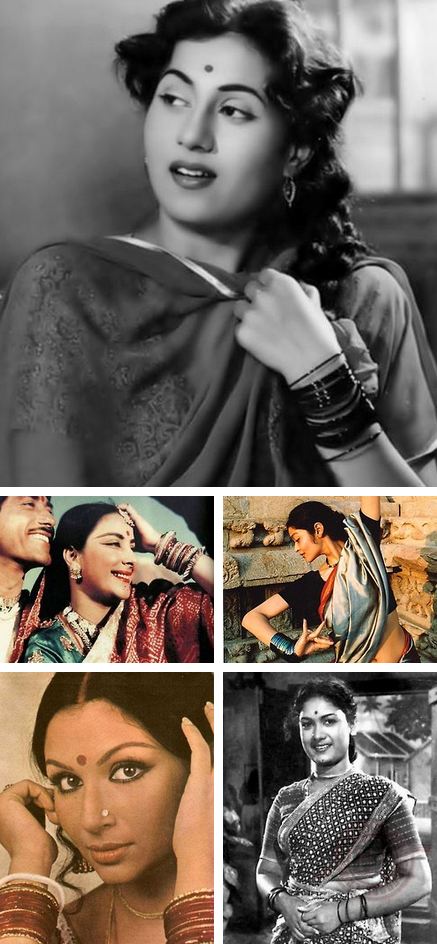
A little bit on the 70s-era of Khatau Terene, Bombay Dyeing Polyester, 70s prints and little matchy blouses made of rubia or 2 by 2 fabric.

And a bit on the middle of the road cinema and its fashions in the decade.

Posted in 1970s, fashion, Indian Cinema, Sari, Sari Blouse, Vintage, Women | Tagged , , , , , | Leave a comment

The Royalty Post

z

The Maharaja of Indore came to the studio to be photographed, also in Western clothes-sack suit and formal evening dress. He was young, tall and very elegant“ 

Cartier wearing aesthete, photographed by Man Ray (a particularly fruitful photo session) and Bassanopainted by Bernard Boutet De Monvel  (he also painted the Maharaja’s equally elegant wife) and owner of an Art Deco residence – I think its safe to say that Yeshwantrao Holkar II (surely someone so posh must have had a nickname!) was a poster boy for Indian elegance in the 1920s.

The painting is one of few portraits of Indian royalty I like -Yeshwantrao is wearing traditional clothing (the headgear was typical of Marathas, I think it is called the Shindeshahi/Sindeshai) but the jewellery and clothes are understated and the colours not in the least bit overwhelming (the Holkar colours were I think white and red).

Posted in 1920s, British Raj, India, Indian men, Paintings, Photography, Royalty, Vintage | Tagged , , , , , , | 2 Comments

The Tilaka Post

z

On the tilaka/bindi/the red dot. I wish I had proper referencing for this but it is a bit difficult since there are stray lines here and there in texts which discuss costume on the whole or the odd artwork and nothing substantive.

And the much more ubiquitous sandalwood mark in Ancient India and its presence elswwhere

Posted in Ancient India, Culture, Hinduism, India, Vintage, Women | Tagged , , , , , | Leave a comment

The South Africa Post

z3 z1


As with many diasporas, the clothing of South African Indians harks back to India and also takes in local influences.  A few pictures here.  In the photographs here there is a distinct Gujarati influence (some of Stern‘s paintings in the set below seem to be of women who are of Gujarati Muslim origin). The first photograph is of a bride – probably taken in the 60s – again the sari is very evocative of tie n dye saris in Gujarat (also note the swastika markings on the hands which are probably henna).

Posted in 1960s, Diaspora, South Africa, Vintage Dress, Women | Tagged , , , , , | Leave a comment

Regional Dress in the 1920s

z1

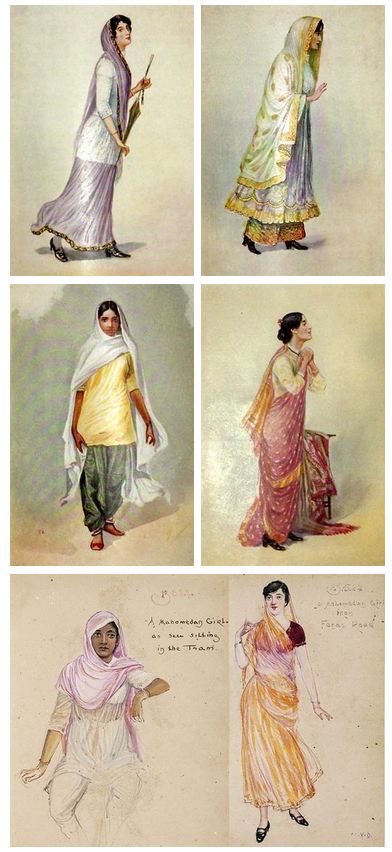
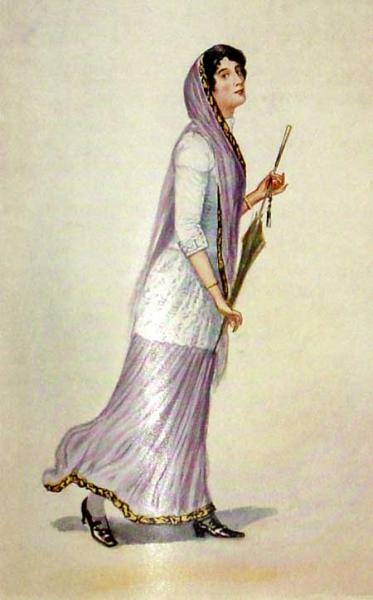
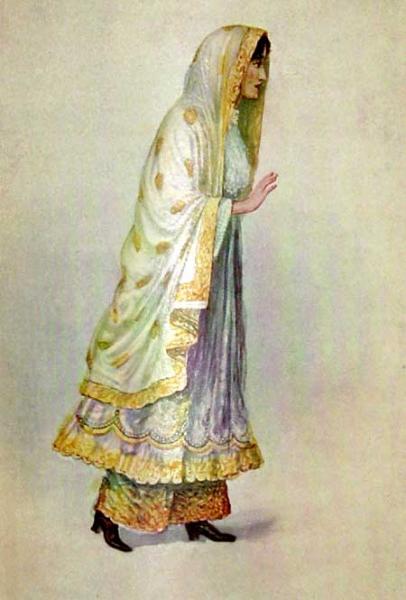
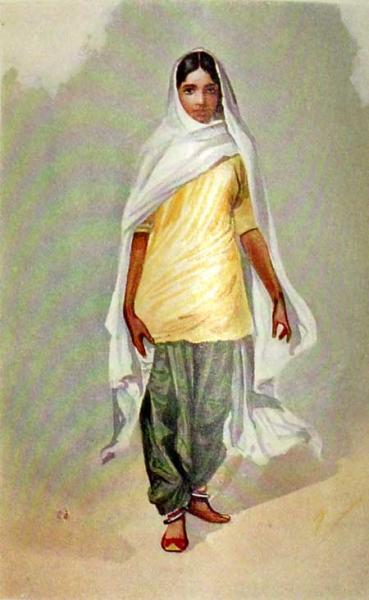
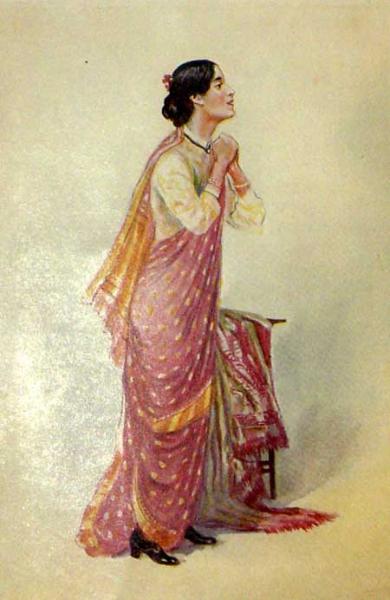
From MV Dhurandhar’s set of watercolours from the 1920s. It pretty much covers the diverse costumes of communities at the time and you can see a number of regional variations at play.

This set largely has attire worn in Bombay and Gujarat (ParsiKhoja (a little bit on them here), a dyer girl in Ahmedabad (hence the simplicity of her dress), and aPathare Prabhu lady (excuse the rambling wiki entry).  The other two are sketches that Dhurandhar made of “Mahomedan” girls in the then Bombay in the early 1920s.

The everyday kurta/tunic seems to be rather short in this decade (though the Khoja outfit is fairly voluminous and you can find longer lengths in the watercolours of northern dress). 1 and 6 are saris worn Parsi style (the long sudren of 1 is replaced by a tinyblouse in the watercolour entitled Mahomedan Girl on Foras Road), Pic 4 is the nine yard Maharashtrian sari. Pic 1 and 4 have long and sleeved blouses (perhaps the sleeveless blouse only became popular by the 30s?). And the closed kind of Western footwear appears so much in the early 20th century.

Posted in 1920s, Art, Colonial, Early 20th Century, Vintage, Vintage Blouse, Vintage Dress, Women | Tagged , , , , , , , | Leave a comment

International Women’s Day

fb1


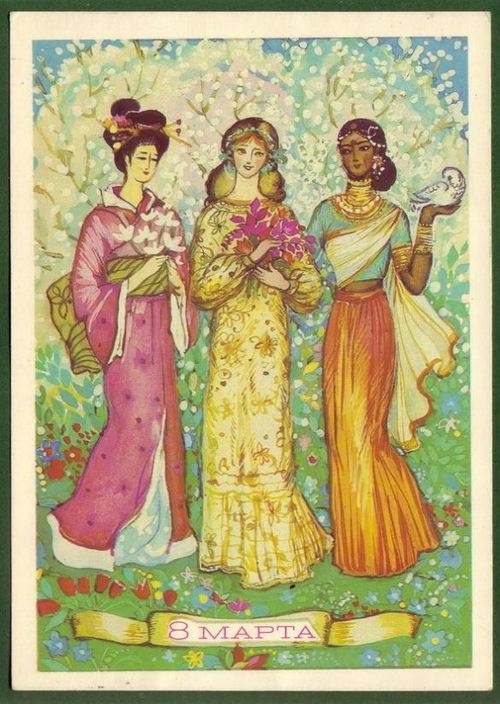
Russia appears to have an International Women’s Day that is also Mother’s Day.  On the other hand of late Mother’s day seems to fall in  November there.

This is a 1986 postcard commemorating the day (they seem to have had a number of these multination postcards).

Posted in 1980s, Postcards, Vintage, Vintage Dress, Women | Tagged , , , , , , , , | Leave a comment

Bits n Pieces

I have been fairly active of late on tumblr (mainly because I have a good degree of material). These are just short posts so I will post only the links:

Ellis Dungan and Meera

Temple Visit

Hemendranath Mazumdar’s 1930s painting

Sadhana channeling her inner Hepburn

Abdur Rahman Chughtai’s paintings

Blouse Cutting

Women novelists in the 1930s

Posted in Tumblr | Tagged , , , , , | Leave a comment