The Parsis Post

This slideshow requires JavaScript.

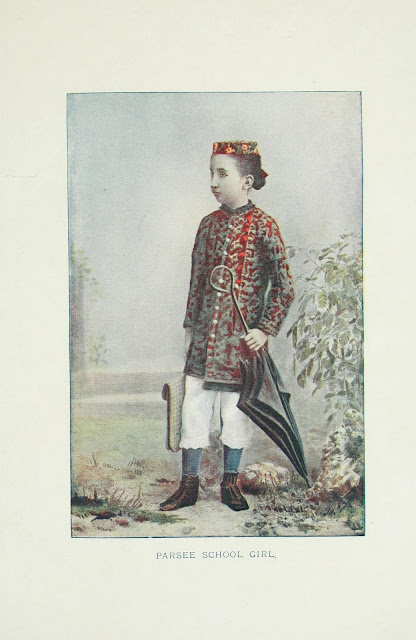
I mentioned in previous posts that Jnanadanandini was influenced by the blouse and sari style of Parsi women in Bombay. Here are a few examples.  Most have “ribbon border” sari with motifs on the ribbon is quite common in Parsi dressing styles of the late 19th century and the early 20th century.  There was a Chinese influence in clothing at this time e.g. in gara saris). The blouse is high and modest in keeping with the period.

Source: The Parsis, 1902.  Also another example. This one is from 1890. The blouse has a Victorian influence. The cap is often seen in Parsi girls of the time (it was commonly worn at one point). A 1923 picture, the sari drape seems opposite to that usually worn but the blouse are as always full and richly embroidered. Other examples include Raja Ravi Varma’s The Parsee Lady (probably late 19th century) and Pestonji E. Bomanji’s 1914 painting of a Parsi woman have the women wearing a similar kind of sari/blouse/pearls combo.

Posted in British Raj, Colonial, Dress Reform, Early 20th Century, Edwardian, fashion, Indian Dress, Late 19th century, Paintings, Sari, Sari Blouse, Victorian, Vintage, Vintage Blouse, vintage fashion, Women | Tagged , , , , , , , , , | 4 Comments

Break

Apologies for having been away so long. The process of moving meant I wasn’t able to juggle tumblr and wordpress.

Posted in Uncategorized | Leave a comment

The Art School Post

wp1wp2

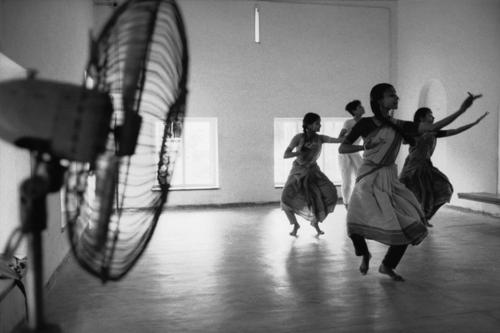
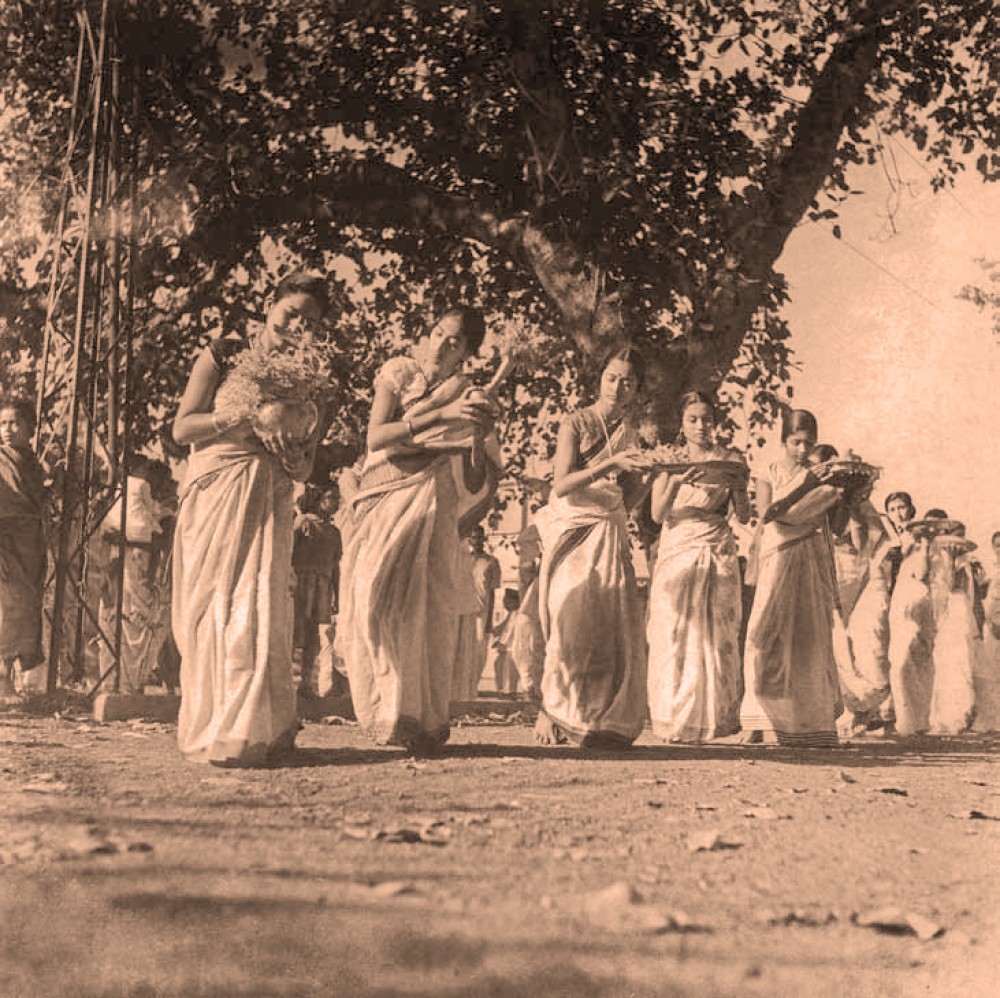
Two of early 20th century art/dance schools in India, Santiniketan/Viswa Bharati and Kalakshetra were not just involved with a revival of Indian dance and art traditions but were also responsible for a new kind of aesthetic.  Khadi, so intregal to the freedom movement, was homespun cloth worn by India’s poor – a symbol of spartan simplicity and an eschewing of luxury. The art schools on the other hand were involved with the revival or reinterpretation of textile traditions, even as they discarded western dress and goods and embraced swadeshi. Both schools were responsible for certain sari styles. Kalakshetra lent its name to saris that were based on existing textile traditions in South India though some of the patterns were new.  On the other hand batik (possibly introduced in India due to the South East Asian influence) and kaantha (a type of stitch that had hinterto been used to make quilts) saris were popularised by Santiniketan.

More details at tumblr for Santiniketan and Kalakshetra.

Pic 1: Girls Dancing, Santiniketan, Early 20th century (Photographer: Shambhu Shaha). Also see [X] [X] [X]

Pic 2: Kalakshetra 1987, John Vink.

Posted in 1920s, 1930s, 1980s, Art, Asia, Bengal, Culture, Dance, Early 20th Century, Education, Girls, Indian Dress, Indian History, Indian Women, Sari, Sari Blouse, vintage fashion | Tagged , , , , , , , , , , , , | 1 Comment

The Independence Post

This slideshow requires JavaScript.

fb3One of the most significant influencers of the way we dress in India was the freedom movement, in particular Gandhi’s thoughts on the moral dimension of clothing, the quest for an authentic Indianness and clothing as a unifier of India’s diverse castes and religious groups.  Central to this was use of khadi, even though or perhaps because khadi was gradually getting displaced even in India’s villages.  Women in the movement discarded their jewels, the hitherto fine clothing*  (for which Indians had always had a preference) for home spun khadi. If you spun it yourself on a simple spinning wheel, the charkha, all the better).  In Saraladevi’s words one decided to be “simple and common only”.  Purely as a clothing choice it feels like elegant slumming, the borrowing of the clothes of India’s poor by an urban elite  – were it not situated in a particular decade, that leading to India’s independence.

Most of the quotes on tumblr are taken from Emma Tarlo’s essays which covers a number of issues and the evolution of a clothing philosophy which stressed simplicity and restraint and was the visual symbol of a soon to be independent India free of its colonial past. It also covers the efforts prior to this, especially in Bengal, in the late 19th century towards an authentic, national attire.

You can follow the tags on tumblr as always. Text extract from Kamaladevi Chattopadhyay: The Romantic Rebel

*Some women didn’t and cartoons of the period have men in the swadeshi movement defeated by the wife’s insistence on not following suit and retaining their fineries and jewels.

Posted in 1930s, 1940s, British Raj, Colonial, Dress Reform, Early 20th Century, History, Independence, India, Indian Dress, Indian Women, Men, Politics, Sari, Sari Blouse, Tumblr, Vintage | Tagged , , , , , , , , , , , | 3 Comments

The Village Post

z1

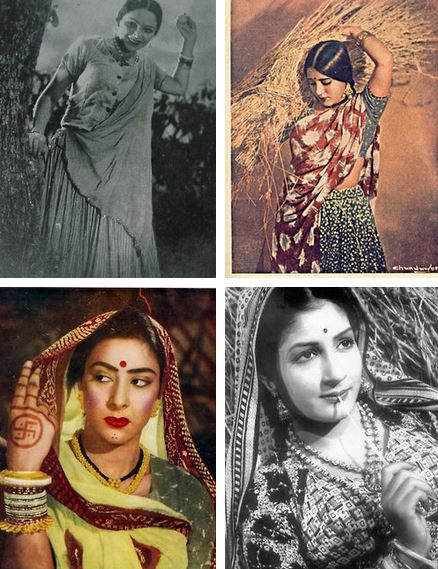
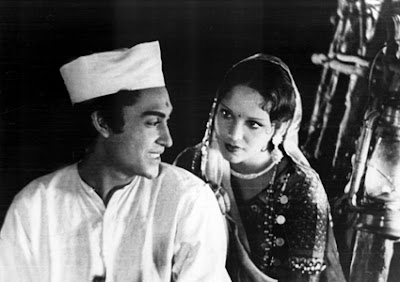
Achhut Kanya was directed by Franz Osten and shot in the Bombay Talkies studio on Europeanized sets of a typical Indian village. It has been cloned times without number ever since in Hindi films.The Indian village, in its romanticized image of pretty girls in ethnic outfits, carrying water pots and laughing together, has since then been central to all rural plots. Encyclopaedia of Hindi Cinema

“No village girl ever has such eyebrows as Devika Rani wears in the movie and her coiffure and costume towards the end are far too rich and elaborate to be in character” (The Times of India, 24 July 1936, quoted in Encyclopaedia of Hindi Cinema)

The village girl aka “gaon ki gori” in Indian cinema retains a semblance of rural clothing, more often than not a coarse cotton ghaghra with a mismatched or contrast printed cotton choli (there are of course regional variants).  From Achhut Kanya onwards the costume has been glamourised for the screen and actresses appear in full make up.  The look has been fairly consistent across decades, see for example here and here.

Stills today: 1) Devika Rani in Achhut Kanya, 1936 2) The iconic poster of Kisan Kanya i.e. Farmer Girl 3) Nargis in the…er..mother of all rural films Mother India 4) unknown

z2

He witnessed his mother’s longing for a sari right from the time he had been a child. It was shameful! A woman, in whose house saris were woven for the entire world, could not afford even an inexpensive Banarasi sari for herself, she spent all her life in cotton dhotis. Song of the Loom, Abdul Bismillah

Even market places in rural towns have replaced the cotton saris with the multicolored, cheap synthetic or polyester saris. [X]

Indian cinema also offered another view of the village in movies like Do Bigha Zamin (still 1), Mother India, Paar (still 2) and Pather Panchali (still 3). All movies deal with themes of poverty, inequality, endurance and struggle. And are fairly realistic in terms of costumes.

As the extract from Song of the Loom shows, the poor in villages could not afford more than simple bordered coarse cotton saris, even when they wove a better quality of cloth for the market.  This in turn gave way to printed cottons. And in our time to synthetic saris (as in the last still from Welcome to Sajjanpur).
Posted in Bollywood, Early 20th Century, fashion, History, Indian Cinema, Indian Dress, Old Bollywood, Rural, Sari, Sari Blouse, Village, Vintage | Tagged , , , , , , , , , | 4 Comments

The Sari School

wp6


And of course you need to know about the many drapes possible at The Sari School.

Posted in Sari, Sari Blouse, Women | Tagged , , , | Leave a comment

Tumblr 3

wp4


Mothers and Daughters-1

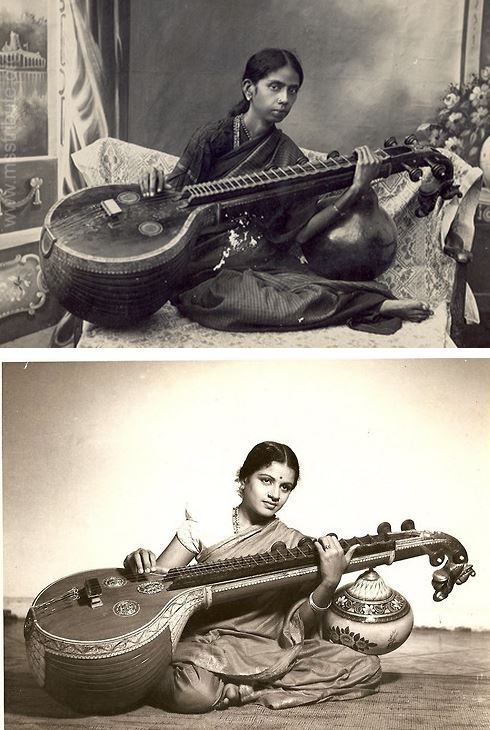
MS Subbulakshmi (MS) was one of India’s most famous and celebrated singers. Her mother, Shanmugavadivu (note that the S in MS is her mother’s name) was a famous veena player. Pic 1 is of her mother, Pic 2 of MS playing her mother’sveena in 1945.

MS really seemed to love puff sleeve blouses, a number of her early photographs have her wearing the style.

Also see here.

Posted in Early 20th Century, fashion, Indian Dress, Indian Singers, Indian Women, Music, Sari, Sari Blouse, Vintage, Women | Tagged , , , , | Leave a comment

Tumblr 2

The ancient style of antariya and utariya to the sari in the 1930s.

Blouse Styles in the 1940s.

Posted in 1930s, Ancient India, Illustration, Sari, Sari Blouse, Vintage, Vintage Blouse, Vintage Dress, Women | Tagged , , , , , , , | Leave a comment

Tumblr 1

This slideshow requires JavaScript.

I have been tied up a bit with a move but tumblr had some queued posts which got posted over the past few weeks. A few sets as usual which I always find useful to demonstrate the persistence of a motif:

In the 50s, stripe/check blouses with transparent saris.

Hookah smokers

Women Reading Books.

Posted in 18th century, 1950s, 19th century, Art, Indian Dress, Islamic Dress, Paintings, Sets, Tumblr, Vintage, Vintage Dress, Women | Tagged , , , , , , , , , , | 2 Comments

The Paintings Post

This gallery contains 3 photos.

In the Gallery: 1.  “An elegant lady stands facing right holding a white floral garland with both hands. She is finely dressed in an olive green pleated sari edged with gold over a crimson underskirt, the end draped over her head like … Continue reading

More Galleries | Tagged , , , , , , , , , , , , | 2 Comments