The Shawl Post

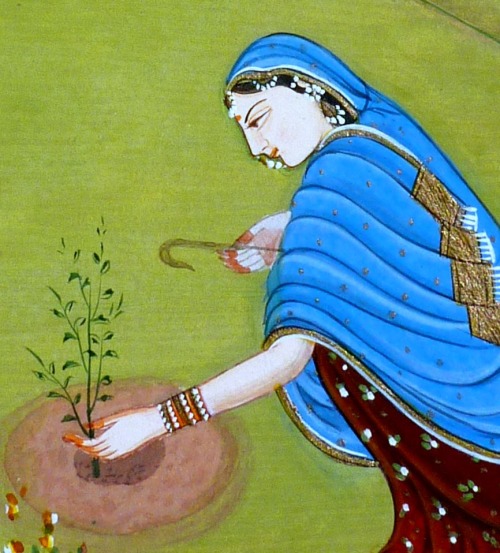
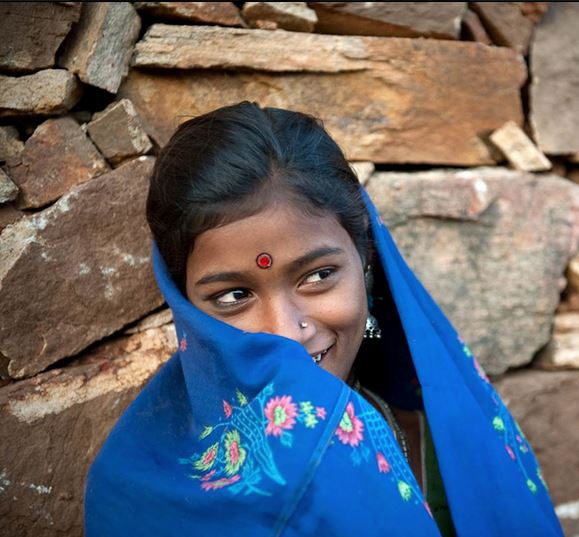
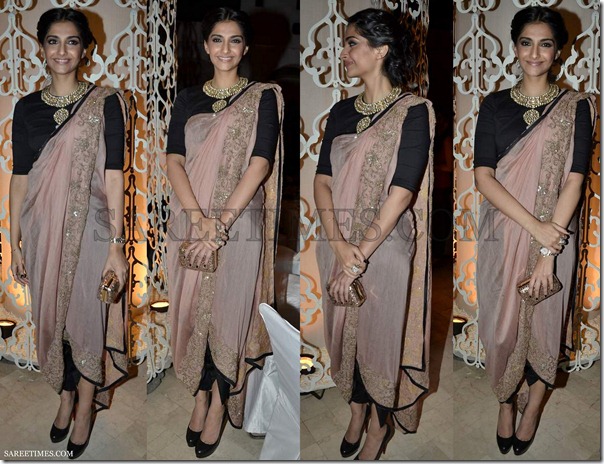
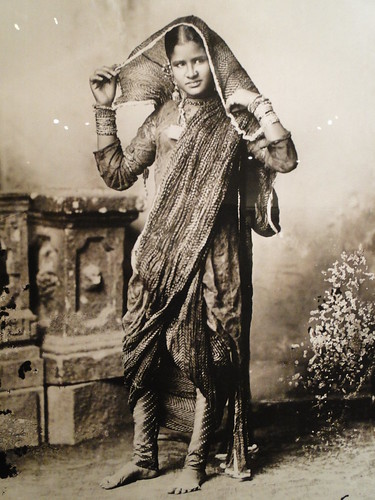
1 2The blue shawl first, a canopy of blue, The Face, Conrad Aiken

Posted in 21st century, Accessories, Asia, Contemporary, Contemporary Style, Costume, Culture, fashion, Girls, historical art, indian art, Indian Dress, Indian fashion, Indian Women, Paintings, Photography, Sets, winterwear, Women | Tagged , , , , , , , , | 2 Comments

The 1940s Film Post

இது, இது, இது எல்லாம் ஜப்பான். எல்லாம் செத்து ஒரு ரூபாய் கூட இருக்காது!

This, this, this, it’s all from Japan. And all together not more than 1 Rupee!

1940s movies can be a bit amateurish to the modern eye but they can be quite fun and as it happens also have a lot of interesting fashion titbits. E.g. this scene from En Manaivi aka My Wife (1942) which has two maids discussing clothes and employers. The maid with a parasol (Lux Padma aka R. Padma) has a generous employer who has provided her with the entire ensemble. All that fashion forwardness is from Japan*. Apart from the parasol, a stylish accessory in the 30s and 40s there is the sari brooch (horizontal pins are popular in the 30s and 40s), the soft collar, slightly puff sleeve blouse (here in satin) and the finger waved hair. All quite stylish in 1942.

The 1 Rupee price tag  for the entire ensemble wasn’t much apparently even for 1942. The other maid is in a local handloom sari worn in a style prevalent at the time (the pallu is folded down the middle and then tucked in – a style called “madi” aka fold) but one that wasn’t fashionable.

The printed sari with a jazzed up border is probably an affordable version of the saris of the 1930s and 1940s.

*In the 30s raw cotton went from India to Japan and finished textile goods were imported from Japan. The war had an impact on this but Japanese goods were still available cheaply during the war years.

Also from En Manaivi (1942).

Note the actress’s bra, this along with a number of accoutrements in many of her scenes mark her as stylish and upper class – she is pretty much the sartorial standout of the movie. The bra and the drape exposing a part of the bust seems quite daring but was fairly common in films of the decade.  And of course if its the 40s the puff sleeve blouse can’t be far away. This sari too is probably Japanese, at any rate the fabric marks it as foreign

Note also the steel cup and saucer for coffee as opposed to steel glasses suggesting a slightly westernised heroine. Flowers in the hair arranged as here were also common in AVM movies of the 1940s.

The 1940s movies seem to favour a slender type in comparison to the fuller silhouette seen in the 1950s.

For a bit on bras go here.

Notes: En Manaivi was an adaptation of a 1916 Marathi play, Govind Ballal Deval’s Sanshay Kallol. This in turn was adapted from Molière’s Sganarelle. The actress in the screencaps (I think MK Meenalochani but I cannot be sure) is playing Revathi aka Célie.

Posted in 1940s, 20th century, Accessories, Actor, Cinema, Culture, Early 20th Century, fashion, Film Costuming, Flowers, Hair, Indian Cinema, Indian Dress, Indian fashion, Indian Women, Japan, Movies, regional styles, retro fashion, Sari, Sari Blouse, sari drape, sari history, Sets, South India, South Indian Cinema, Tamil, Tamil Cinema, Tamil Nadu, Vintage, Vintage Blouse, Vintage Dress, vintage fashion, vintage jewellery, vintage sari, vintage style, Women | Tagged , , , , , , , , , , , , , , , | 12 Comments

2015

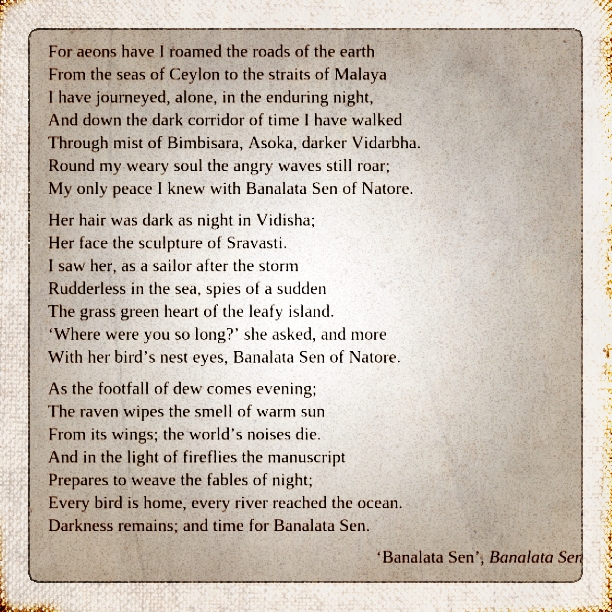
Cheapstamatic-54a2ef8eae3c2Everyone should read Banalata Sen, whether in the original Bengali or translated.

As I mentioned the sari history posts were very time and energy consuming this year.  I might revisit some of the earlier decades as the information on them is quite meagre but for the moment I will let it stand. On the personal front the result of the posts was that I finally bought an embellished jewel sari – a historic first given I rarely even wear zari:)

This blog is still a labour of love. If everyone enjoyed it or took away something from it I am happy. But I do add a request – please do not reproduce the material – especially text – without crediting this blog and me (Anu M)!

On that note as the year closes, thank you for all the appreciation and comments. It feels good and I kind of beat myself up now and then that I do not return it in ample measure. May you all have a wonderful 2015!


Posted in 1930s, Bengal, Early 20th Century, Indian Literature, Literature, Personal, Poetry, Vintage, Women | Tagged , , , , , , , | Leave a comment

On Indian Clothing

The people of Pataliputra* dressed well in flowered muslins embroidered with jewels, and an umbrella was carried by an attendant behind the head of a noble when he went into the road. Kleitarchus, however, found that in other, poorer parts of India, they wore fillets (turbans, no doubt), on their long hair, and robes of plain white muslin or linen. Intercourse Between India and the Western World, H. G. Rawlinson, 1916.

Conclusion to the sari history series which I started in March 2014.

I didn’t quite know what I wanted to blog when I decided to do a decade wise breakdown of the evolution of the modern sari. In the end it took a whole lot of research and time – and I mean a LOT! – because I was pretty much working off very little basic material. It has been tiring but worth it.

Though I started with the 1870s, the posts as a  whole I think are proof that what we as Indians wear reaches way back to the past (the extract describes the Mauryan Empire around the 3rd century BCE) and yet it is not wedded to the past. The forms our clothing adopts is constantly shifting, we are constantly stimulated by the external world and yet we always stay true to our own principles of aesthetics. Elsewhere in the 21st century there may be normcore, a culture where body shape itself is couture and a drift towards the adoption of the principles of male clothing history in the West. In India on the other hand trims, gems, sequins and gold and silver threads bloom in profusion on our fabrics today. This is true even for Indian fashion designed for men.  Our fluid drapery remains even with the most ornate of our clothes. Our clothing is experimental and also recreates our past. At the same time the ordinary, worn beauty of our everyday clothing is also evident on our streets.

One of the problems with the links to the past is that our clothing is termed “traditional”, “timeless”, “eternal” and any number of other adjectives – in itself fine words – but often used to denote a lack of change or forward movement. Though less so in our times – tumblr for e.g. can be a veritable celebration of the world’s clothing history – this immediately makes it what Anne Hollander sweepingly and inaccurately calls the “non-fashion” of the “rest of the world” (one gets the impression she had neither the interest nor the wherewithal to engage in anything outside the Western world). That is Indian clothing is seen as something wholly static whereas the word fashion itself is associated with constantly changing forms of dress and urban culture which are necessarily understood as Western.  Needless to add I found this not to be the case at all. Neither was it – as I had initially thought might be the case – that the change in each decade was merely a question of adapting a Hollywood ruffle to a saree blouse or twirling a Japanese parasol.

The changes in our fashions over a period of 140+ years are in fact many and they mirror a society where many forces come into play in determining what we wear.  The many images I looked at while doing the posts only reinforced this for me while also raising many questions. The nature of blogging has meant that I haven’t provided an indepth analysis. Some day!

What we as Indians wear, what we deem fashionable, the changes with each decade are all defined by us.  It is unique to us of the subcontinent. Our clothing and fashion history is rich and wonderful and of our own making. May that never change.

This is what I learnt this year and I remain eternally curious about the sensibilities that shape our clothing.

*present day Patna in Bihar.

X, X
Posted in 21st century, 3rd century BCE, Ancient India, Asia, Contemporary, Contemporary Style, Costume, Culture, fashion, gems, Girls, historical costume, historical dress, historical fashions, History, India, Indian Dress, Indian fashion, Indian History, Indian men, Indian Textiles, Indian Women, Sari, Sari Blouse, sari drape, sari history, Vintage, vintage costume, vintage style, Women | Tagged , , , , , , , , , , , , , , | Leave a comment

The Christmas Post

wp

Merry Christmas to everyone and happy holidays!

Watercolour by Manishi Dey.

Posted in 1960s, 20th century, Art, Asia, Bengal, Costume, Culture, ghaghra, indian art, Indian Dress, Indian Women, Paintings, regional styles, vintage art, Vintage Dress, vintage sari, Women | Tagged , , , , , , , , , , , | 2 Comments

The Winter Post

wp2Like śiśira, there is an abundance of snow, the sun shines weakly – resembling the moon – and those who can stay indoors, preferably with their lovers*.

It is the season to stay home, curl up alone or with family or someone special and watch bad TV. Well not in Australia but you get the picture 🙂

*Venetia Ansell on the month of hemanta – her blog is all kinds of wonderful and has a great informative rundown of the seasons in Sanskrit literature.

Pic from VAM.

Posted in 1800s, 19th century, Art, Asia, Costume, Culture, dupatta, Early 19th century, fashion, ghaghra, historical costume, historical dress, historical fashions, indian art, Indian Dress, Indian fashion, Indian Illustrators, Love, miniature paintings, Paintings, regional styles, Royalty, vintage art, vintage style, Women | Tagged , , , , , , , , , , | Leave a comment

The Flower Post

Mimi, on your birthday, tell me what should I buy?
A red sari, a silken blouse, a purple petticoat, and a shiuli‘s shade, its flowers dropping, when the night draws to a close. Selected Poems of Buddhadeva Bose

Getting up early in the morning we would go to the inner garden to collect fallen shiuli flowers. The dried flowers were soaked in water, which was then used to dye clothes. The Many Worlds of Sarala Devi: A Diary

The parijat (arisen from the sea) is a sacred tree in India and the subject of many myths, including the story of the churning of the ocean where it appears as one of two trees obtained by the churning (the other being the Kalpavriksha). The characteristic cream petalled, orange stalk flower of the tree is known by various names in India, including prajakta, harsingar, pavazha malli, shefalika and shiuli. Its colour, its night blooming, its scent and the like is a recurring motif in Indian literature.

The parijat is a flower that is collected after it has fallen to the ground. Apart from being strung into garlands, it is also used as a dye, either alone or in admixture with other natural dyes. The colours range from egg yolk yellow to orange.

In the extract from Sarala Devi’s diary, it is a household dye that was often used to colour new saris or “freshen up” old saris.

Images: pic 1 from Char Adhyay, X, X

Extras: Info on the parijat; How to make a parijat rangoli.

wp4Unlike jasmine, the prajakta is not really strung and worn on the hair due to its fragility.  This painting with a prajakta gajra and mang tikka is specially done for me by a friend. So many thanks to Arati Phadke for conceptualising and making this painting! Also note the pearl detail on sari and jewellery:)

Posted in Art, dye, Flowers, harsingar, natural dye, parijat, Sari, Sari Blouse, shiuli, Vintage, Vintage Dress | Tagged , , , , , , , , , , | 2 Comments

Khada Dupatta of the Deccan

The six-yard khada dupatta required a whole nine yards of the heaviest gold borders to include both elaborate edges or pallows, with a particular order of gota masala stitched just so. The gala, the baghli, the aasteen, borders around neck, armholes and arms had to match the one attached to the chowhashia dupatta, a heavy fabric of gold checks, specially woven in Paithan and Banaras. On her wedding day, for the first time, a girl wore a kurti choli with the khada dupatta. The choli, her only undergarment, all handstitched and knotted in front with gorgeously bordered sleeves, over which came the sleeveless kurti with a heavily worked round neckline, provocatively slit in front. The Banaras brocade pyjama was colour coordinated with the kurti choli. The Untold Charminar, Syeda Imam

There seem to be more than a few fusion sari/dhoti sari (X, X, X) ensembles of late – though a lot of them look less sari and more modern take on the Deccani or Hyderabadi khada dupatta. The khada dupatta is as long as a sari but requires a base of a long sleeved tunic or kurti and the pyjama. The way the dupatta is draped seems to vary though a few versions look like the sari drape on the upper part. Lighter, gauzy versions of the dupatta like in pic 3 were also prevalent.

A youtube tutorial on how to drape a khada dupatta, note that the drape differs a bit from today’s pictures.

Pics: Hyderabad girl, Raja Deen Dayal, Chunnu Begum in 1915, Mahal-e-Mubarak in 1915, Soha Ali Khan (link has info on the khada dupatta) and Sonakshi Sinha.

This is possibly the version for a young girl which had a shorter dupatta and was worn with a cap.

Posted in 1910s, dupatta, Indian fashion, regional styles, Salwar Kameez, vintage fashion, vintage style | Tagged , , , , , , , | 2 Comments

The Bengal Sari

The stripes and greens of a Bengal sari.

All prints by Lalu Prasad Shaw.

Posted in Art, Bengal, Contemporary, India, Indian Dress, Indian fashion, Indian Women, Prints, Sari, Sari Blouse | Tagged , , , , , , , , , , | Leave a comment

Navaratna

The navaratna (nine gems) consists of the marakata (emerald), vajra (diamond), mukta (pearl), pushyaraga (topaz), manika (ruby), vidruma (coral), vaidurya (cat’s eye), nila (sapphire), and gomedaka (garnet),  Generally this is set in order in a grid as in pic 1 and each stone corresponds to a planet.  Although the stones can be combined in several different ways as in pics 2 and 3 (late 19th cent.). Regardless of arrangement, it is however usually a piece of jewellery worn to protect the wearer from planetary influences.

Sircar states that the concept of the importance of the number of gems* in India originates with the triratna of Buddhists. The practice of using Navratna in jewellery according to him originates in the late medieval period which is when it is recommended for appeasing the planets.

Regardless of whether or not one believes in the astrology, to the best of my knowledge the use of the navratna in jewellery is specific to the subcontinent.

*the term gems can be applied to actual gems as well as ideas or people, e.g. the nine gems of the Gupta court.

Posted in 18th century, 19th century, antique, gems, Indian fashion, Jewellery, vintage jewellery | Tagged , , , , | Leave a comment