The costumes of Dadar Kirti (1980)

Dadar Kirti  (1980) is based on a Sharadindu Bandyopadhyay  story and is a highly fun, easy watch with a charming ensemble cast doing it justice. While it is not subtitled, a rudimentary knowledge of Bengali is enough to enjoy the movie.  The movie is on youtube – bless Rajshri for not cluttering it with a hundred flashing logos!

The time the movie is set in wasn’t entirely clear to me but the story and treatment is suggestive of early 20th century Bengal. There are a lot of 1980s touches though and the colour palette is of the decade too but for all that I enjoyed the costumes of the film.

First up a veritable  feast of Bengal sarees with specific types for each character.  The look is severe and no-nonsense for brainy Saraswati (Mahua Roychowdhury) and cheerful and sweet for her younger sister Beeni (Debashree Roy).  A lot of “lawyerly” blouses for Saraswati and puff sleeve girlish ones for Beeni.

This slideshow requires JavaScript.

Saris are worn Bengal style for Boudi (Sandhya Roy) – very much a married woman’s attire. Most are daily wear cotton, for a function out comes the Benares! Like me Boudi really loves a frill – even her hand fan has it.

The Bihar style of sari  worn seedha pallu with jacket like blouses and heavy silver jewellery is seen on the family help Phulmatia (Sulata Chowdhury).

This slideshow requires JavaScript.

While Saraswati’s look is a simple and scholarly for the most part, she pulls out all the stops for a “girl-seeing” ceremony at the end of the film with a bright orange Benarasi sari worn with a sea green blouse with paisley print sleeves. Also some beautiful hair ornaments. Boudi wears a Dhakai saree, I think Beeni’s is a Santiniketan print.

Naturally I like Beeni’s red ribbon being a ribbon fan.

I think the white blouse that Boudi is wearing is dotted Swiss cotton, a fabric popular for blouses for several decades but rarely spotted now.
This slideshow requires JavaScript.


dk0

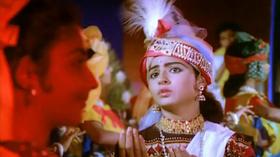
Saraswati is also in a dance drama (Chitrangada) and wears a lovely Manipuri costume (above) – the dance drama can be seen in this video.

This slideshow requires JavaScript.


This slideshow requires JavaScript.

The knitwear is gloriously 80s! There are the shawls of course but that sweater with the embroidery on Saraswati and that crochet jacket on Beeni owe much to the decade. And all those patterned vests for Santu the smart bro (Ayan Banerjee) are also quite 80s. The lead, Kedar (Tapas Paul) has to make do with a bog standard scarf.

I have so much love for Indian woolies post a winter post I did. Not exactly smartly cut coats (though the shawls can give the coats a run for their money) but so colourful and sweet and comfortable looking.

And last up the hoop earrings.  I wore these as a child, my aunts wore them all through the 70s and 80s so I assume they are of the time!

Part of a continuing series on costumes in films.

Posted in 1980s, 20th century, Accessories, Actor, Bengal, Bengali cinema, bindi, Cinema, Costume, Costumes in Cinema, Dancer, Early 20th Century, film costumes, Film Costuming, Girls, Indian Cinema, Indian Costume, Indian Dress, Indian fashion, Indian Textiles, Indian Women, Manipur, Movies, Period Drama, Regional cinema, Regional period drama, regional styles, Sari, Sari Blouse, shawls, Vintage | Tagged , , , , , , , , , , , , , , , , | Leave a comment

Holi

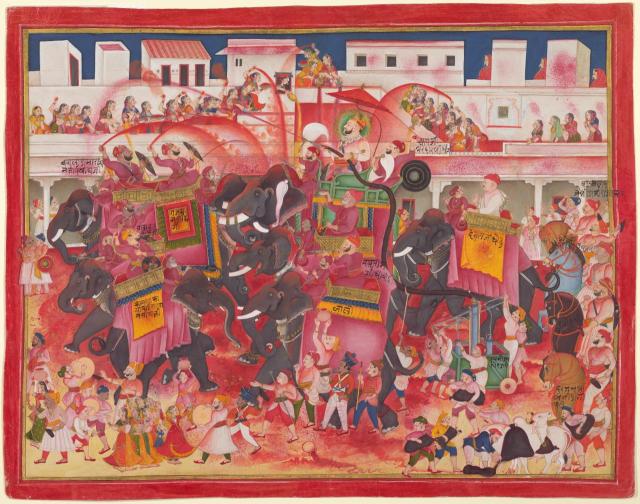
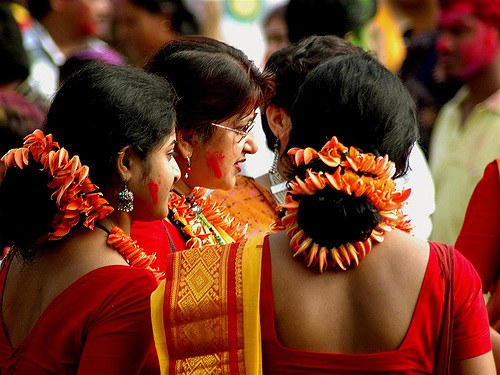
A quick trawl through Holi in Indian art.

madanika03aw2

First up, sculpture at the Chennakeshava temple at Belur. A bit of water sport preparation at the feet of the madanika (photograph via Sandeep).

Miniature paintings often feature the ever popular theme of Radha and Krishna playing Holi.  This set is from Kangra, about 1800. A lot of costume details in there from dress to caps to jewellery.  And the predominant spring palette of India, shades of red and yellow.

A continuation of the Kangra tradition by a modern painter.

The theme in early 20th century art:

holi2

  1. Jamini Roy (above)
  2. Abdur Rahman Chughtai (below). There is also a sari inspired by the painting.

holi3


Kings at play:

holi5

  1. Maharana Swarup Singh of Mewar at Holi (1851) (above)
  2. Ram Singh of Kotah, 1844 (below)

holi1

In photographs:

Holi festival 1945

The festival in 1945 celebrated by a group of Koli girls:

holiholi4

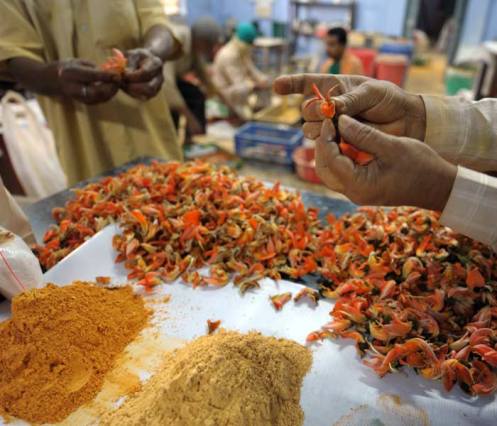
This exercise would last for around twenty days and every day we would go and check if both woods and flowers were drying properly.  A few days before Holi, the dried flowers would be put in sacks and tied. These would be put in very large tubs of water along with some lime and the beautiful colour of Palash would colour the water, ready to be used for Holi. [X]

Pics of palash flowers: Sanjib Ganguly and Jadavpur Lab via AFP.  Along with preparing the powder from the flowers for the coloured water, the wood of the tree would be dried for Holika dahan.

Happy Holi all!

Posted in 12th century, 1800s, 1840s, 1850s, 19th century, Ancient India, Art, art recreation, Bengal, Costume, costumes in art, Culture, Dance, Early 19th century, fashion, Hinduism, historical art, historical costume, indian art, Indian Costume, indian festivals, Indian men, Indian Mythology, Indian Women, miniature paintings, Paintings, Pakistani Art, Royalty, Sculpture, vintage art, vintage fashion, women in art | Tagged , , , , , , , , , , , , , , , , , , , , , | 2 Comments

ACK aircraft series

flying.jpg

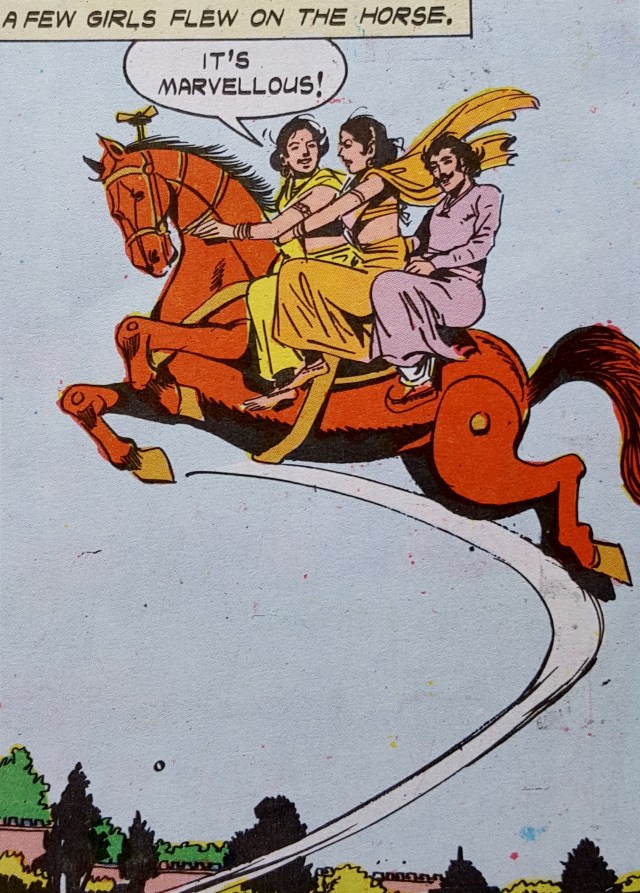
Still waiting on Indian aviation delivering a mechanical flying horse.

Have a good week!

Panel from Amar Chitra Katha’s The Secret of the Talking Bird.

Posted in 1980s, Amar Chitra Katha, Costume, costumes in art, Folk, Folk Tale, Girls, historical fashions, Illustration, indian art, Indian comics, Indian Costume, Indian Illustrators, Vintage, vintage art, vintage comics | Tagged , , , , , , , , | Leave a comment

The costumes of Devdas (1936)

Devdas may well be summarised by these three screen captures:)

Saratchandra was 17 when he wrote Devdas, it is likely the author himself thought the novel an immature work in later age.  Despite it being a “youth novel” and  despite the success of the 2002 film version, it is unlikely that any modern young person identifies with any of the principal protagonists of the novel.  Yet the fact that nearly a century after his creation Devdas lives on as one kind of an archetypal Indian hero is surely a testimony to the enduring power of this teenage work that is also  strange and singular.  It is also a novel that taps into the Indian imagination – it is not surprising that of all translations, it was the English version that was a latecomer. For this and many other reasons I like Devdas.

And of all the film versions, it is the 1936 version that I most enjoyed – the Hindi version i.e.. Coming as it did about 20 years after the publication of the novel, it is probably also closer to the mores of the society of the novel.  And yet it is also very much of its time, its costumes in particular are very much of the 1930s.  That it, it does not aim to authentically recreate an earlier milieu but a glamourised version of it for the audience of the 1930s.

Though Paro (played by Jamuna) gets to wear a few fancy 1930s saris post her marriage, for the most part she wears the filmi version of village simplicity.   Unlike in later versions it is not the Bengal style sari but the six yard drape that was modern in this decade. The last screen grab is of Paro in her wedding attire, this is a Benares sari worn in the seedha pallu style.

The dichotomy of pure and indigenous i.e. Indian and imitative and questionable i.e. Western that we sometimes see with women’s clothing even today was applied to male clothing perhaps up until the 1950s. It is kind of specific to the colonial experience, crossing over to the other side indicated both social status and loss of cultural identity

The ‘citification” of Devdas (played by K.L. Saigal) is brief. For awhile in Calcutta embarrassed by his country cousin status he wears a suit. But once he returns and sets in motion the plot by rejecting Parvati the city fades away, except for the kotha milieu, and Devdas resumes his Indian attire. In keeping with the Bengali setting Devdas is often in a dhoti but Northern influences like the achkan and topi are also seen.

Also Parvati didn’t like the citification one bit.

In the 1930s, men often wore a shirt-kameez with a dhoti or paijama or salwar which was often wide at the bottom.  This could be worn with a jacket and if required headgear. Similarly footwear could be shoes or mojris.

Chandramukhi (played by Rajkumari in this version) by virtue of her profession is usually the most splendidly clad character in Devdas. 1930s glamour with its sequinned and zari borders and the incorporation of modern motifs can be seen in a lot of the saris that Chandramukhi wears. These are worn with the blouses of the time, neither body fitting like the 1950s or loose like the previous decades but more like gently contouring the upper part of the body. I can’s say if it is Art Deco but screen grabs 2 and 3 have interesting geometric patterns – I really like the sari of pic 2. She also wears a lot of Chandelier earrings which were very popular in the 1930s.

I am not adding too many notes on the hair and makeup but the sleek hairstyles and the strong, stylised make up are very much of the decade.

One of the ways in which Devdas (1936) differs from versions that came later is in scenes that capture the ambience and camaraderie of the kotha in which Chandramukhi works. Rather than the set pieces of later films, the kotha here is more like a living space. There is a brief dance sequence but this is not performed by Chandramukhi and there is a good deal of emphasis on the accompanists.

For the short dance sequence (mistakenly labeled as Chandramukhi’s dance) you can see that the costume is a ghagra and a diaphanous dupatta. This is quite different from courtesan representations, both in costume and dance, in subsequent films like the 1955 version*.

For the men, the costume of the singer is colourful and rakish (pic 3) while men who seem to be long time customers are in an achkan or dhoti-kurta.

This is part of a series that looks at costumes in films.

For other Devdas versions see here.  Also a shoe inspired by Devdas or at any rate Louboutin’s love of Indian cinema.

*This fitted Anarkali version is the standard courtesan dress in many films and probably dates from the late 19th century.

Posted in 1910s, 1930s, 20th century, Accessories, Actor, Bengal, Bengali cinema, Cinema, Colonial, Costume, costume design, Courtesan, Culture, Dancer, Early 20th Century, fashion, film costumes, Film Costuming, Hairstyles, Indian Cinema, Indian Costume, Indian fashion, Indian men, Indian Women, regional styles, Romance, Sari, Sari Blouse, sari history, Vintage, vintage costume | Tagged , , , , , , , , , , , , | Leave a comment

The Spring Post

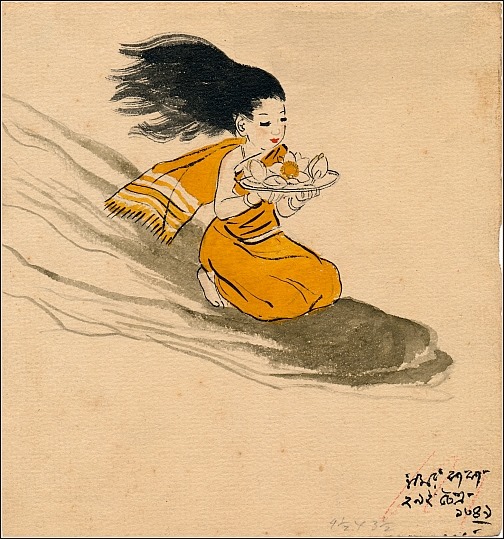
A little late for this, probably should have posted around mid-February but I still have time till Holi so here goes! Everything is yellow and the fiery red of palash (though in our cities you see a lot more gulmohur and the occasional silk-cotton tree).

wp1

पीली पीली सरसों फूल  (Yellow are the mustard flowers)
पीली उड़े पतंग (The flying kite is yellow)
ओ पीली पीली उड़ी चुनरिया (The chunariya that flies is yellow)
ओ पीली पगड़ी के संग  (along with the yellow turban)
– opening lines of the spring/basant song from Upkar.

Vasant Panchami or the beginning of the spring season is on the 5th day of the waxing moon of Magh i.e. 12 February 2016 and is celebrated in the Northern part of India.

The colour yellow is associated with the day, be it clothes or rice coloured with saffron.

Also the day for worshipping Saraswati in some parts of the country e.g. Bengal. And in days past the day for a festival in honour of Kamadeva aka the God of Love, though the celebration shifted with time from April to the beginning of spring and is no longer celebrated.

Painting credit: Samar Ghose via Satyasri Ukil Barishkar.

PS: Obviously I love spring posts.

wp2

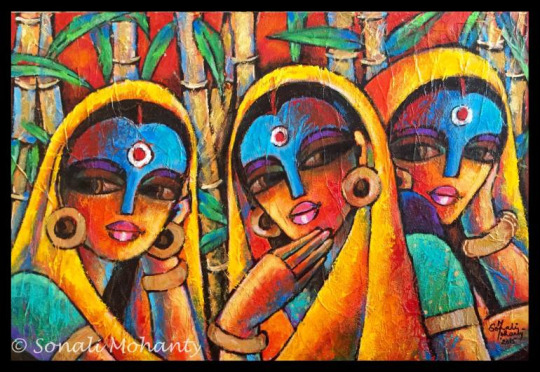
Spring arrives in the month of Phalgun, accompanied by honey-makers, and passes through green bamboo groves where the southerly wind blows.

Song of the Seasons, Fireflies in the Mist,  Qurratulain Hyder.

Painting: Sonali Mohanty.

wp3

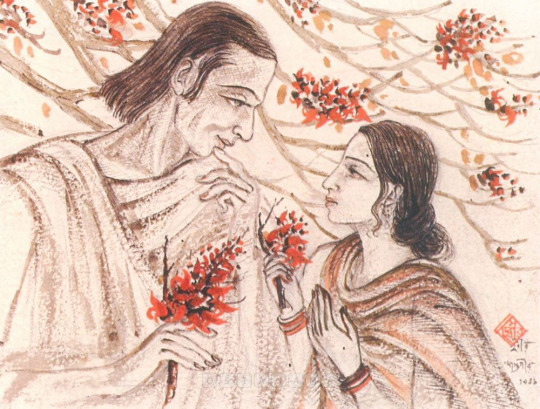
She herself turned to be a bouquet of Palash
When she presented me with one
While within the green foliage her heart
tense with passion trembled in silent whispers
concerting to the warm south breeze.
That was the first Falgun  [X]

Lovers, Sudhir Khastgir (1946)


Posted in 1940s, 1950s, 20th century, Art, Bengal, costumes in art, Culture, Flora, Flowers, indian art, Indian Dress, Indian Literature, Literature, Love, Paintings, Poetry, Rural, Sari, Sari Blouse, Seasons, Vintage, vintage art | Tagged , , , , , , , , , , , , , , , , , , , | 4 Comments

For my mother

20160226_144204

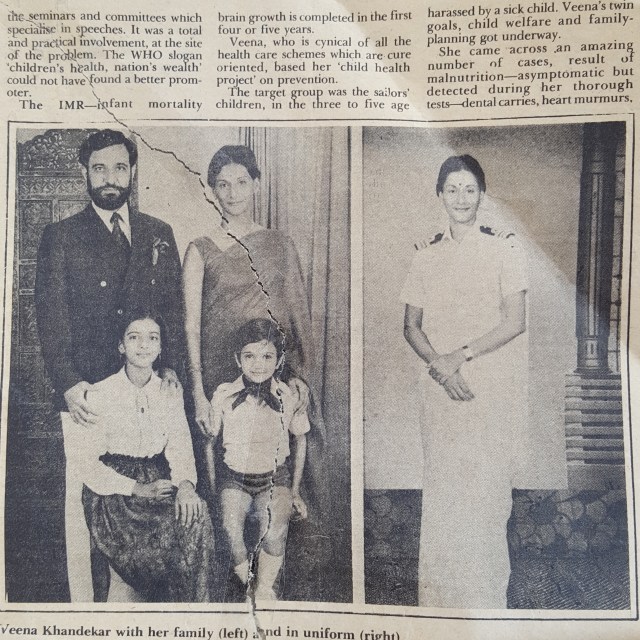
I don’t post much personal stuff but today is my mother’s death anniversary and once in awhile I like to remember her in a public way:) The post does however tie in with the themes of my blog, retro style as well as female achievement.

My mother was a freelance journalist back in the 1980s – mostly pieces for the afternoon papers like Mid-day and the Afternoon Despatch & Courier (ADC). This cutting is from a profile on Surgeon Lieut-Commander Veena Khandekar for the ADC. The Lieut-Commander was awarded the Vishisht Seva Medal, the first woman in the Indian Navy to be so awarded.

Always fun to see the backdrop too – how many families had the folding screen room divider?!

Unfortunately the cutting is a bit torn and incomplete, I think the year is 1985.

Posted in 1980s, Family, fashion, India, Indian Awards, Indian Dress, Indian Navy, Indian Women, Maharashtra, Military, retro, Sari, Sari Blouse, Uniforms, women doctors, Women in Uniform | Tagged , , , , , , | 2 Comments

The Period Drama Post

A look at a few contemporary period dramas in regional cinema, almost all are set in the 20th century.

मी वेगळी आहे विन्या (I am different, Vinya). 

The staging of a play in Ravi Jadhav’s short, Mitraa, during which Sumitra realises she is attracted to Nama. The film is based on Vijay Tendulkar’s 1981 play Mitrachi Goshta (A Friend’s Story) which is set in the 1940s and deals with a lesbian relationship.

The short is part of a film comprising 4 shorts based on poems, Bioscope.

Stills from Shala (School). This Marathi film that won a National Award for Best Marathi Film is set in a school in small town Maharashtra in the 1970s around the time of the Emergency. On point shirts for the young boy, frocks, plaits, flowers. The teacher in still 1 is a bit 60s but was probably still modern for the milieu.

SourceBook Review.

Timepass, a Marathi movie set in the 1990s, features a few “tapori” fashions of the time like cutoff, frayed sleeves, singlets, jeans with patches and bright colours. And for it’s heroine the frilly dress, salwar-set and the traditional sari ensemble for the “sarvajanik”.

And books :). The book titles are Pratiksha (Wait) and Fati Patang (Torn Kite).

We were meticulous. The hairstyles, the fabric they used in their clothes, the jewellery, the language… we wanted to get everything right. [X]

Subramaniapuram is set in 1980s Tamil Nadu.  The plain nylon davanis with matched blouses, the gold chain and pendant, the wide collar shirts and the facial fuzz, all very much of the time.

See also okadhalkanmani’s gif sets of the film.

Pic 1: NTR and Jamuna in Bhoo Kailas (1958).

Pic 2: Siddharth and Vedhika in Kavviya Thalaivan (2014) which is set in the world of an early 20th century Tamil drama company.  Such drama companies would often perform mythological/historical plays.

X and X.

1980. Kerala. Summer. A world with bell bottoms, sideburns, landmaster taxis, romantic radio songs… 

Also 1970s/80s saris. And hair oil.  Stills from Manjadikuru, set in the Kerala of the 1980s.

I might have had that dress and hairband as a kid…..

In the stills: Sridevika, Sidharth, Vyjayanthi, Firoz, Sindhu Menon and Rijosh (X)

Stills Source.

I’m no more afraid.
Earlier I thought that society had made a prison for women.
But now I realise, I am not only a woman, but a human being.
i cannot be imprisoned. I am free.
Kumudini.

Stills from Jogajog (2015).  The adaptation shifts the time period of the 1929 novel to 1970s-1980s Bengal. A lot of beautiful handlooms in the film, mostly Bengali but also from Orissa (see this 1980s discussion). One of the themes of the film, the conflict between a marginalised cultured aristocracy and the emergence of an energetic but crude new business class is seen in the male costumes. Subdued kurtas for the former and a lot of safari suits, chains and the like for the latter.

Stills showing more of the clothes at the film’s facebook site.

Two movies that draw on Rabindranath Tagore’s life.

The first, Kadambari, is on his sister-in-law Kadambari Devi who committed suicide at an early age. Pics 1 and 2 are of Konkona Sen-Sharma and Parambrata Chatterjee as Kadambari and Rabindranath in the movie.

The second, Jeevan Smriti, is a documentary based on Tagore’s life and made for Doordarshan for the author’s 150th death anniversary by Rituparno Ghosh. The documentary spans Tagore’s life from his childhood to his death.  Raima Sen and Samadarshi Dutta play Kadambari and Rabindranath.

Both films draw on the many images of the Tagore family for costuming, the latter more so it would appear from the stills.

Bymokesh Bakshi is probably the most filmed fictional detective in India. A number of the films/serials are obviously made in Bengal, pic 2 for e.g. is of Jisshu Sengupta as the detective in the fourth installment of a recent Byomkesh series.

There have been two versions in Hindi. Pic 1 is of the series made in the 1990s with Rajit Kapur as Byomkesh.  The second is the recent film with Sushant Singh Rajput as the detective. The movie’s many stylistic touches extend to the characters costumes, though not overtly.  Byomkesh for e.g. is often in a jacket instead of a shawl, in pic 3 he also wears the shirt tunic popular in North India. And shoes. Anguri Devi in the last pic wears the sequin sarees of the time. For Satyavati there are a lot of handlooms all worn in the then modern style of 6 yards. And refreshingly no puff sleeve blouse or lace. Instead there are thesimpler styles of the 1940s.

There are of course many more. Some I have omitted because the costuming is very inaccurate.  By and large though regional cinema tends to get the “look” right. Any more movies please feel free to comment!


Posted in 1880s, 1940s, 1950s, 1960s, 1970s, 1980s, 1990s, 20th century, Actor, Bengal, Bengali cinema, Costume, Early 20th Century, fashion, fictional detectives, Film Costuming, Indian Cinema, Indian Costume, Indian Dress, Indian fashion, Indian men, Indian Women, Late 19th century, Lesbianism, Literature, Love, Malayalam Cinema, Marathi cinema, Novels, Period Drama, Regional cinema, Regional period drama, regional styles, retro cinema, retro fashion, Sari, Sari Blouse, Sets, South India, Tamil Cinema, Vintage, Vintage Blouse, vintage costume, vintage fashion | Tagged , , , , , , , , , , , , , , , , , , , , , , , , , , , | 3 Comments

A short list of Indian period dramas

While doing posts on contemporary regional Indian period movies, I made a rough list of Indian period films. These are listed below. Some are historicals but the bulk fall into the 19th and 20th century.  The list is fairly rough so feel free to add more, especially if they are in languages other than Hindi. Does not include the staple of Indian cinema for long aka mythologicals or films based on the epics. For South Indian mythologicals do check out cinemachaat – they have a number of reviews.

Pic 1: Vidyapati (1937), Pic 2: Jeevan Smriti (2013)

Pre-Mauryan

Amrapali (1966)

Maurya Empire/Buddhist/Post Buddhist

Vidyapati (Bengali?/Hindi, 1937)
Ashok Kumar (Tamil, 1941)
Veer Kunal  (Hindi, 1945)
Ashad Ka Ek Din (Hindi, 1971)
Siddhartha (English, 1972)
Utsav (Hindi, 1984)
Trishagni (Hindi, 1988)
The Cloud Door (Hindi, 1994)
Kama Sutra: A Tale of Love (English, 1996)
Asoka (Hindi, 2001)
Anahat (Marathi, 2003)
Mirch (Hindi, 2010) (in part)
Rudhramadevi (Telugu, 2015)

See also wikipedia.

Early Medieval India

Razia Sultan(a) (Hindi, 1961 and 1983).

Mughal Period/Post Mughal 

Pukar (Hindi 1939)
Anarkali (19351953, 19551966, various languages)
Meera (Tamil/Hindi, 1945)
Mughal-e-Azam (Hindi, 1960)
Taj Mahal (Hindi, 1963)
Ghashiram Kotwal (Marathi, 1976)
Jodhaa Akbar (Hindi, 2008)
Urumi (Malayalam, 2011)
Aravaan (Tamil, 2012)
Bajirao Mastani (Hindi, 2015)
Rama Madhav (Marathi, 2014)

See also wikipedia.
Colonial India/Early 20th century/Pre-independence

Devdas (various languages, 1928-2013)
Pioli Phukan (Assamese, 1955)
Charulata (Bengali, 1964)
Chameli Memsaab (Assamese, 1975)
Shatranj ke Khilari (Hindi, 1977)
Junoon (Hindi, 1977)
Umrao Jaan (Hindi, 1981, 2006)
Massey Sahib (Hindi, 1985)
Mogamul (Tamil, 1995)
Vanaprastham (Malayalam, 1999)
Hey Ram (Tamil/Hindi, 2000)
Pinjar (Hindi, 2003)
Noukadubi, Bengali, 2011)
Makaramanju (Malayalam, 2011)
Bal Gandharva (Marathi, 2011)
Paradesi (Tamil, 2013)
Rang Rasiya (Hindi, 2014)
Kaaviya Thalaivan (Tamil, 2014)
Taptapadi (Marathi, 2014)
Rajkahini (Bengali, 2015)

1950s

Lootera (Hindi, 2013)

1960s

Hazaaron Khwaishein Aisi (Hindi, 2003) – starts in the 60s and spans the 70s and 80s. 
Shadows of Time (Bengali, 2004)

Parineeta (Hindi, 2005)
Vaagai Sooda Vaa, (Tamil, 2011)
Bombay Velvet (Hindi, 2015)

1970s

Border (Hindi, 1997)
Hazaar Chaurasi Ki Maa (Hindi, 1998)
Om Shanti Om (Hindi, 2007)
Kaalbela (Bengali, 2009)
Natarang (Marathi, 2010)
Once Upon a Time in Mumbaai (Hindi, 2010)
Shala (Marathi, 2011)
Barfi! (Hindi, 2012)
Dutta vs Dutta (Bengali, 2012)

1980s

Subramaniapuram (Tamil, 2008)
The Dirty Picture (Hindi, 2011)
Manjadikuru (Malayalam, 2012)
Dwaar (Assamese, 2013)
Amara Kaaviyam (Tamil, 2014)

1990s

Timepass (Marathi, 2014)
David (Tamil, 2013)
Haider (Hindi, 2014)
Dum Laga ke Haisha (Hindi, 2015)

Also see short wiki list. 


Posted in Actor, Ancient India, Bengali cinema, Bollywood, British Raj, Colonial, Costume, fashion, Film Costuming, historical costume, History, Independence, Indian Cinema, Indian Costume, Indian fashion, Islamic Dress, Medieval India, Movies, Mughal India, Old Bollywood, Regional cinema, Regional period drama, regional styles, retro, Sari, Sari Blouse, South Indian Cinema, Vintage, vintage cinema, vintage fashion | Tagged , , , , , , , , , | 4 Comments

The Shawl Post

I did a series of posts on shawls on tumblr that started in the early winter. We are past that now but still in winter so rug up for the ride:) Unless you are in the Southern Hemisphere i.e.

s11

In early winter
It’s hard to tell what people like
or even what they hate.
Like the company of good men
Fire forever gives pleasure. Vajjalagga

The early winter of Magh/Pausha is Hemanta or a wet winter while the late winter of Phalguna is sisira or a dry winter (the corresponding Tamil terms are munpani – early dew – and pinpani – late dew).

The use of heavier clothing, staying indoors, oil massages, the replacement of cooling scents like sandal and camphor with saffron and musk and the like are all referred to in old Indian texts.  While the uttariya, the upper stitched drape, is often worn throughout the year a shawl or chaddar is added in winter and can be seen in several miniature paintings like the one today of a early 1800s Kangra lady warming herself before a brazier.

Patterned fine wool or wool-silk mixes or sometimes silk referred to as पत्रोर्ण (patrorn) were used for garments and likely also as shawls in Ancient India though in sculpture the depiction of shawls is more often than not on men.

The Mogols and Indian women as well as men, wear them in winter round their heads, passing them over the left shoulder as a mantle. There are two sorts manufactured: one kind with the wool of the country, finer and more delicate than that  of Spain; the other kind with the wool, or rather hair (called touz) found on the breast of a species of wild goat which inhabits Great Tibet. Jean- Baptiste Tavernier.

In his brocade robes, priceless jamawar shawls, ropes of pearls and jewels flashing from his chest and turban, he was a fine figure of a man and commanded respect wherever he went. Description of Dwarkanath Tagore in Jorasanko,  Aruna Chakravarti.

Shawls are synonymous with Kashmir and words like pashmina, cashmere, toosh and kani still denote luxury. Jamawar shawls have a long tradition (they are tapestry kind of shawls, the technique probably introduced by the Mughals in the 15th century).  The bold, close motifs and the use of gold and silver threads in Mughal and 18th century India gave way to a predominance of mango (or paisley) motifs and the like with the European market,  Their importation into Europe at the end of the 18th century eventually gave way to cheaper imitation versions of Jamawars produced quickly on Jacquard looms (hand made shawls took at least 16 months to make). Both originals and imitations are still around.

shawlfur

Kashmir shawls are mentioned and much valued in Akbar’s time and also seen in later Mughal paintings – often with a fur stole – as seen in the above portrait. However it is the many portraits of the 18th and 19th century that routinely depict Indian men in jamawars. The shawl was however worn by men and women  in India unlike in Europe where it appears predominantly as an article of women’s clothing.

In the pic set:

Pic 1: Bengal Gentleman, late 18th/early 19th century
Pic 2: Jotindra Tagore,19th century
Pic 3: Fragment of a shawl, early 19th century.
Pic 4: Gentleman, Maharashtra, 19th century.
Pic 5: Young man, Lucknow, 19th century.
Pic 6: Presumably 19th century.
Pic 7: Woman wearing Cashmere shawl, presumably late 19th century.

Piece on the craftsmen behind the shawls.

A bit on its European past. Examples of the shawl with Regency and Victorian attire (X and X).

It’s use in  a man’s coat in Qajar Iran.

Chittara-pattu for the body
Sunfe-ra-dhatu for the head
It is the costume of our Kullu
A town to be beholden. Folk song quoted in Textiles, Costumes and Ornaments of the Western Himalayas, Omacanda Handa.

Of course Kashmir is not the only centre for wool products like shawls. Wool products have a long history in Himachal Pradesh – in particular from Chamba, Kullu and Kinnaur. Places like Rampur in Bashahr/Kinnaur (which gives its name to the Rampuri Chaddar) were well known in the 19th century and each region had characteristic patterns and weaves.

The basic costume of the Kulu with the pattu being made of wool has remained the same and is described here. Pattu, described as the local tweed, often tended to be “khudrang” (neutral tones/black, white with chittara being a black and white check) but are also said to be colourful with motifs specific to the region. The colourful version can be seen here, though this is one of the “tourist” ensembles for portraits. The more superior wools were often used for shawls which tended to be coloured with motifs incorporated.

All Kullu pics of 1956/1957 via photodivision.  Pic 4 of Chamba also photodivision.

In Calcutta, Ray is typically dressed in Bengali traditional clothing, pajama/kurta, or dhoti, and a shawl depending on the weather. Bengal Film Practitioners: Art, Intellectualism and Morality, Victorian Maya Mukerji.

The Uttam era, they said, when a spotless white dhoti, kurta and chappals were the epitome of elegance—reinforced, in winter scenes, by a regal shawl—was over.  Mahanayak, Swapan Mullick.

He quickly rang up Rajiv Gandhi to borrow a churidar pyjama, kurta, and shawl. It was perhaps the first time that he had worn the outfit that was to become his favourite clothing. Description of Amitabh in In the Afternoon of Time, Harivanshrai Bachchan (1976).

The Rajiv Look — clean shaven, shawl across the shoulder, Ray-Bans and lots of teeth.  India Today, 2001.

In the early 20th century the kurta-paijama worn with a shawl in colder weather appeared as a gentleman’s dress for anyone who did not want to adopt the Western suit but wanted an updated version of traditional garments. Of course the shawl was not the only warm garment – there was the frock-coat like achkan and the sleeveless jacket. But the shawl had a certain cachet and ranged from the cheaper woollen ones from Punjab mills to hand made pashminas. Alternatively you could use a cotton chaddar sort of garment.

The drape of the shawl differed but the shawl across the shoulder tended to dominate in later decades.

Even standard  woollen shawls were relatively costly, their wearing therefore indicated a well-to-do man. I don’t know the exact date of this estimate but it is useful comparison of costs for middle class attire:
Good dhoti cost 15 annas, medium quality sari 1 rupee and 7 annas, and a standard warm shawl 3 rupees and 9 annas. 

Still from a luxury item in the form of a jamavar that denoted status, in the early and mid 20th century highlight the shawl also denotes simplicity and an intellectual.  The style was particularly associated with Bengal in its time. The ensemble persists in the country and is still seen on politicians, bridegrooms and older gentlemen, of the last Amitabh is probably its most ubiquitous wearer.

Pics: Gandhi and associates in Noakhali, Dharmendra in Anupama, Sardar Patel, Laksmiswar Sinha via ebay; An Associate of Rabindranath Tagore.

Though the wool shawls are famed, there are probably as many shawl types in India as there are regions. Shawls can be anything from simple wraps to enveloping chaddars and depending on the climate thick cotton or wool and everything in between. The country has opulent Banarasi shawls, monchromatic Uttarkhand weaves, distinctive weaves and patterns like in Nagaland and Kutch and coloured acrylic mill shawls seen on India’s streets every winter.  Pattern and motif – and of late paste gems -often appear though plain shawls are not uncommon.

Capes, cardigans, coats and so on are around but there is probably nothing easier than wrapping yourself in a shawl in an Indian winter to keep out the cold.

In the pics: 1)  Girl in Wakro, Arunachal Pradesh who wove the shawl she is wearing 2) Toda woman in 1956, their shawls are quite distinctive 3) Phulkari shawl from the Punjab 4) Dilip Kumar – probably a Kashmiri shawl with a patterned border 5) Smita Patil – this may be a simple Kutchi shawl 6) Woman at Pushkar fair wearing a mill type shawl with motifs 7) Weaving of a dohru shawl 8) Imran Khan of Kashmir Shawl Atelier 9)  Agyesh Madan (this may be a Kullu shawl) 10) Rengma Naga man in a shawl – see more at wearabout 10) weaving of a Naga shawl.

And to end the post a favourite Bendre painting of a Arunachal woman weaving.

Posted in 1800s, 18th century, 1940s, 1950s, 1970s, 19th century, 2016 posts, 20th century, Bengal, Costume, Culture, early 18th century, Early 19th century, Early 20th Century, fashion, Girls, historical costume, historical fashions, India, Indian Costume, Indian Dress, Indian men, Indian Textiles, Indian Women, Islamic Dress, Late 19th century, Mughal, North East, photodivision, Politicians, regional styles, retro, Sets, shawls, Vintage, Vintage Dress, Vintage Men, vintage style, Weaving, winterwear | Tagged , , , , , , , , , , , , , , , , , , , , , , , , | 6 Comments

2016

A bit late but Happy New Year everyone!

ny1

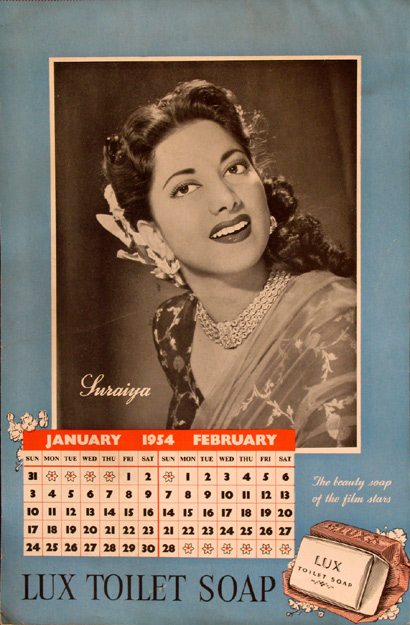
Lux calendar for 1954 with Suraiya featured for January/February.

ny2

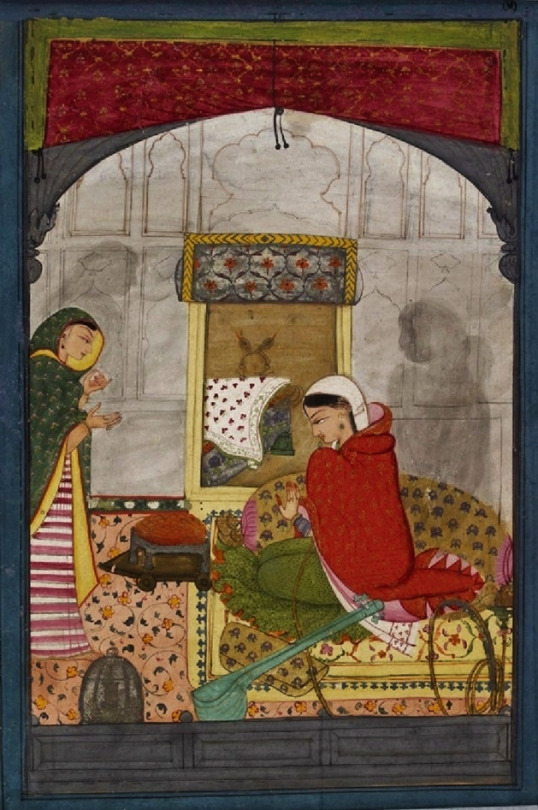
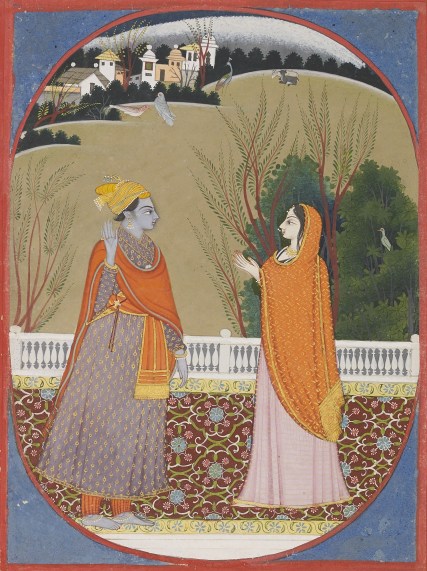
A Painting from a Barahmasa series – The month of Magha (January/ February), Garhwal, 1780-90.

Source.

Posted in 18th century, 1950s, 2016 posts, Actor, Cinema, costumes in art, Culture, fashion, historical art, historical costume, historical fashions, indian art, Indian fashion, Indian Singers, Indian Textiles, Indian Women, mid century, miniature paintings, Movies, Old Bollywood, retro fashion, Sari, Sari Blouse, vintage fashion, vintage photography, women in art | Tagged , , , , , , , , , , , , , | Leave a comment