There is nothing as much of its time as the period film – see successive Jane Austen adaptations for e.g. I am therefore not terribly fussed about authenticity in period films, though it is always pleasurable if filmmakers do their homework and you get a film that feels truly authentic.
First off the bat, I really liked Lootera. As you will see, it is a work of love and not a movie that puts its 1950s heroine in a Manish Malhotra sari for the modern audience:). The post is intended as a simple comparison between the way it was in the 50s and the way we wish to perceive it today. This perception is subjective yet even my aunt – an easily satisfied movie viewer – felt it wasn’t always 1950s in tone. So I will also try and isolate elements in the movie costuming that could lead to this feeling.
Lootera is set in a specific year, 1953. In which year the West Bengal Estates Acquisition Act was implemented, the effects of which form a crucial part of the film. The heroine, Pakhi (Sonakshi Sinha), is the daughter of a zamindar. Though not explicitly stated in the film, the family is probably orthodox Hindu and not Brahmo (for the contrasting dress of women from the zamindar families and Brahmo women, see for e.g. the characters played by Meena Kumari and Waheeda Rehman in Sahib Bibi aur Ghulam. Though of course the film is set in an earlier time). But Pakhi has been to Santiniketan, an institute founded by Tagore, a Brahmo, and is no doubt influenced by it. The setting is a small town/village in Bengal. Such specificity in itself makes it a bit hard for the costuming department. In fact I myself take liberty in comparing it with the decade and not the year.
While the male protagonist is possibly from UP/Bihar (Varun Shrivastav, played by Ranveer Singh), the film is also an ode to 1950s Hindi cinema, specifically some of Dev Anand‘s film noir. Styling for the key male characters therefore derives from the “petty gangster cool” characteristic of Dev Anand’s 1950s films. So there is a little bit of dissonance in this because the costuming for the female characters is not always film inspired.
With that background, first up the plain sari. Which features in Lootera. This was very much around in the 1950s, albeit not always with a “matching” blouse. Rather, as someone on tumblr earlier noted, they tend to be brocade/art silk and brilliant for contrast (pic 4 comes closest). There is also a single occurrence of the brooch, a staple of Indian period films. It was sort of dying out by the 1950s. Then again it is Manikpur:)
Brocade blouses, closed neck blouses, V neck blouses with patterned neckline borders are all seen in the 1950s and they also feature in Lootera. I like that.
In the above set, a number of saris have gold/zari borders. While very much a trend in the 1920s and 1930s, they are of course seen in every decade after. And in a number of non-film photographs of the 1950s, many of the handlooms with which we are now familiar appear. It is a quibble particular to me, but the woven Mangalgiri with zari kind of sari that seems to be used in Lootera always seems contemporary Indian urban to me. The 1950s saris tend to be more like this.
I post quite often about the necklines of the 1940s/1950s. The square neck/sweetheart neckline here echoes those trends. The yellow sari and blouse is probably the closest to images I routinely see of films of the decade. A definite plus in my book.
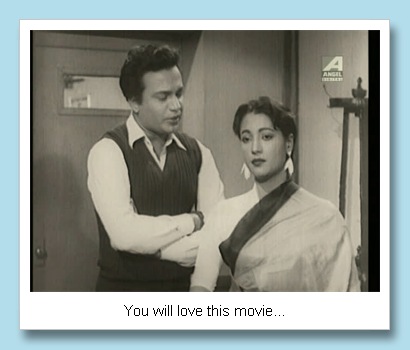
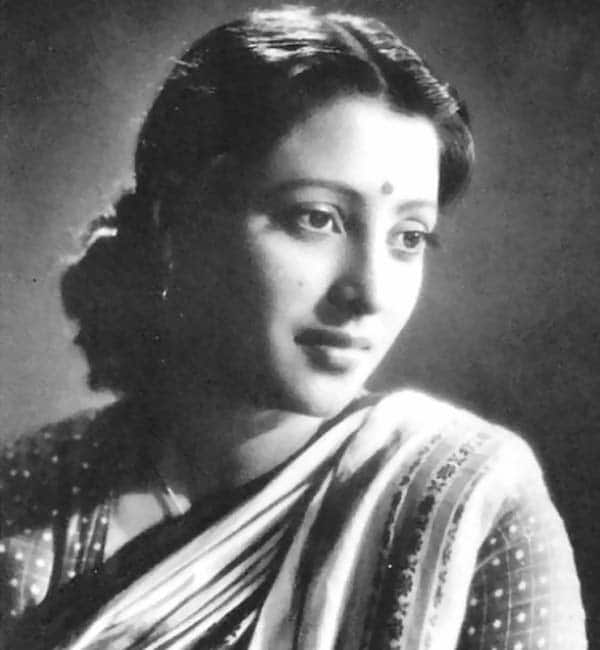
Simpler printed blouses were also common in the 50s. In fact in pic 1 below on Devyani (Shirin Guha) paired with a Bengal cotton sari it echoes Suchitra Sen. The film also uses Bengal cotton saris now and then (on Devyani in pic 3, on Sakhi in pic 4). The printed silk (I am assuming then too a Santiniketan staple) appears. As does a black sari which kind of looks like Kalakshetra saris (pic 6). I am not sure if it was intentional but it certainly adds an “artist girl of the 50s” touch 🙂
Of course there is the Occasion = Banarasi brocade! These saris seem to be under a cloud these days what with net saris and the world’s gemstones on it.
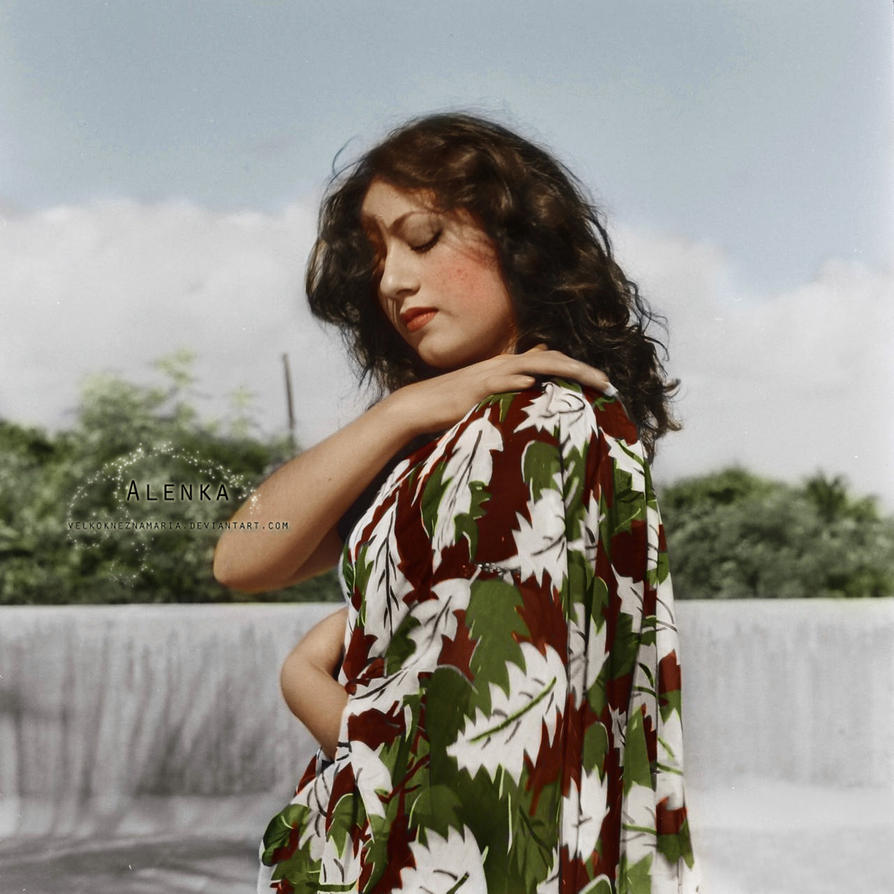
On the whole therefore the costumes for the women do in one way or the other evoke the 1950s in India. If I had to tinker with it, I would change the way blouses and saris are paired. And though Bengal tended to stick to handlooms, I think a few synthetic saris or printed cottons wouldn’t have gone amiss. What looks to us like the 200 ₹ sari now was actually quite coveted in its time (worn here by Madhubala for e.g.). To be fair, the film does use plain synthetic saris. Also in a minor vein, the open neck and 3/4 sleeve blouse (see below) while around in the 1950s isn’t something I would necessarily use to evoke the decade.
The bindi was actually not common in the 50s for unmarried girls, especially in Bengal and North India. This may seem surprising to us but the tradition of wearing a bindi from girlhood is seen more in South India. I found the use of the bindi for Pakhi in all the Manikpur scenes a bit jarring but in all fairness I must point out that it was not uncommon amongst Santiniketan students. That tucked in sari pallu should also have been present though:)

Santiniketan (1955)
Similarly as far as I know the nose ring is not common in Bengal. If this is incorrect, please let me know!

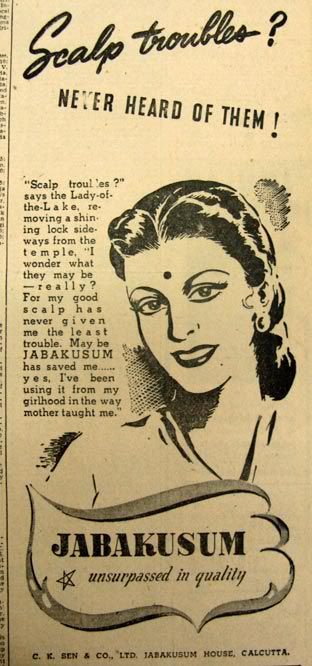
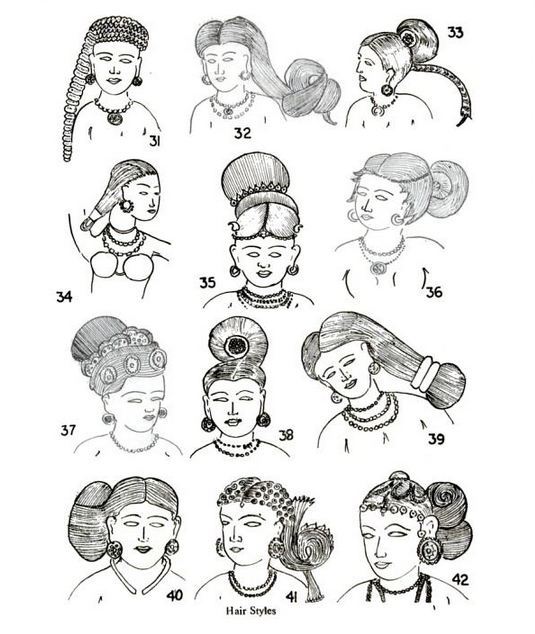
There is also the hair. Which of course is hard to get right in period dramas. Hair in the 50 was styled but in that very “Jabakusum tel” way (Jabakusum tel=Hair oil with hibiscus extracts). The bun common in this decade is a simplified version of the old Indian coiffeurs. The single thick braid was common, though not in Bengal. For young women, ribbons were common. Often, especially in Bengal, hair was left loose. In fact it wasn’t particularly styled, partly because a cloud of hair is often described in our poetry as attractive. I think the movie does try to get this right but sometimes you are left thinking coned or not coned. There is also the makeup which tends towards the modern. I suspect the use of powder kind of got popular with this decade. The make up below for e.g. is fairly typical of the 50s:

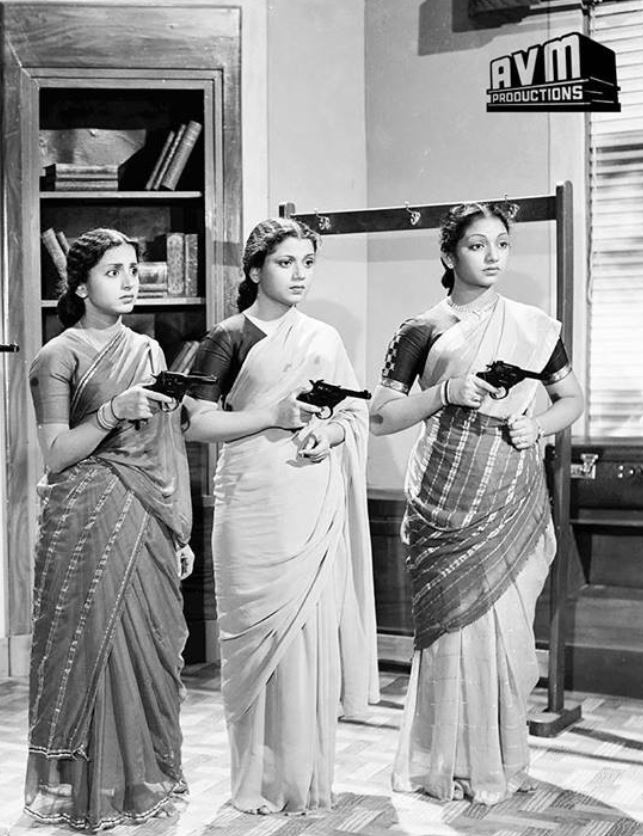
Also saris tend to be draped far more casually in the 50s. Even though this is the case with Lootera i.e. it is not the modern draped to an inch style, it still looks more formal and less lived in.
As a rough comparison (and very rough indeed given the film is set in a boarding house in Calcutta and the main character is middle class), here is Suchitra Sen in the 1953 Sharey Chuattar (below). A number of elements will be familiar if you have followed the 50s posts. And now I wonder why Pakhi didn’t wear the Bengal sari drape even once! The wedding sari (last pic) as you can see is also quite different.

Low Bun

Square Neck Blouse

Print Sari

Loose hair

Ribbon!

Stripey Blouse; Plain Sari

Sari worn bengal style

Wedding!
On to the men! In the 50s suits were common. The trouser was kind of baggy and high waisted; white shirts were common. Shoes tended to be classic or sandals were worn. This photograph, from Linus Pauling‘s 1955 visit, is an e.g. As also of Dev Anand on the sets of Baazi.


However, the film is in fact part homage to Dev Anand’s films of the 1950s which featured conmen who fall in love and reform plots. Plus the actor himself had a constructed urban and debonair persona. The costumes for the conmen is intended to evoke this. If you look at the costuming for the characters of Varun and Devdas in this context, it is fairly accurate. And of course there is the 1950s pomade. Props for the shirt pockets but I am not sure those shoes and the straw boater and the uber layering were quite the go in 1953!

Straw Boater?!

Was concealed shirt buttons a thing?!

Shoes!
For comparison, Dev Anand in movies like Jaal, CID and Baazi and with his wife, Kalpana Kartik.
KN Singh was very KN Singh. Being KN Singh is fairly easy:)
The movie also had a few nice touches by way of props etc. E.g. the niche with the mirror, a copy of Illustrated Weekly (second pic). And of course vintage car!
To sum up, Lootera is true to the decade (1950s) and time but also departs from it in significant ways for a contemporary audience. In fact the least 1950s part of it is the soundtrack, a given for all Indian movies which seem unable or do not want to to recreate the sound of the decade. But this is not to criticise the movie at all which is well made and has a good amount of attention to detail. The costumes, even when inaccurate, are beautiful to look at. The purpose of the post as I said is to help contrast the actual clothing of the decade with the way it is reimagined in 2013. Long as it is, I hope the post shows this clearly!
PostScript: This took forever. Many thanks to my new music crush, 10cm, for providing a very unlikely sound backdrop. Take it away, Americano and Han River Farewell!





 Indra Dugar
 Vintage Indian Clothing