The Mughals-1

It’s probably accurate to say that an indigenous form of the Islamic clothing brought in by the Mughals (a mix of Turkish and Persian influences) took shape during the reign of Akbar and Jahangir.  This period also sees the style (imo) at its most balanced and elegant, particularly during Jahangir’s reign (1605-1627).

A slip of a young woman dressed in a pink -tinted *peshwaj*, a filmy overgarment speckled with blossoms and worn in conjunction with her blush-yellow *paijama*, a long golden *patka* ornamented with flowers, and a translucent *odhni*. She assumes a coy pose, tilting her head and glancing across her body, one hand pinning a stretch of her golden *odhni* against her narrow waist and the other lifting the hem of her relaxed *peshwaj*. (Pic 1: Young Woman By Muhammad Ali, Born in Iran, Active in India 1600-1620).  The components of a woman’ garment usually seen in Indian miniature paintings in the 17th and 18th century. A little more on the peshwaj here. The paijama is the tight fitting trouser, the patka the sash and the odhni aka dupatta is the pale green wrap. The shoes look like mojris. Apart from the anklets, all other accessories are fairly discreet.

Pic 2: Portrait of Prince Salim 1620-30. The 17th century Mughal costume for men consisted of the 1) jama, a garment that was fitted till the waist and worn crosswise and fastened at the side with a lower skirt like portion that fell below the knees 2) the tight paijamas for the legs 3)  the patka (sash) which here is secured with a jewelled belt 4) the chadar aka shawl and 5) the turban. The jama and chador were usually fine muslin, fine enough to see underlying jewellery. The shoes seem to correspond to the salimshahi, a type of shoe introduced by Jahangir aka Prince Salim, flat heeled with a pointed front end (often curved) and without a backstrap (perhaps a precursor of the modern mojri).

Pic 3: A portrait of a Rajput nobleman, attributed to the Mughal master Manohar, mounted on a royal album page, Mughal, circa 1610-20. [X].  The clothing of this Rajput noble is similar to that of Jahangir, by the emperor’s time there was an intermingling of Persian and Rajput influences in Northern Indian clothing. While not always adhered to strictly, the ties of the jama on the shoulder are different – tied on the right side for Muslims, on the left for Hindus as in today’s pic.  Note the very light, translucent muslin used for the jama – reputedly spun over the wet months in Bengal. The lightness of the material allows the paijama (literally leg garment) to be showcased. The paijama’s decorative aspect – often floral or striped – is offset by the patka or sash and the turban.

Very thin muslin seems to have had its heyday in the early 17th century in the Mughal court, making way for thicker patterned cottons for men (the linked painting also appears to have a bit of a throwback to Central Asian boots as opposed to mojris like in today’s pic, it is possible that the crossed collar is also Central Asian in origin).

PS: So light an upper garment would require some manscaping I think:)

The chakdar jama seen in the two pics above is similar to the standard jama except that the hem falls in 4 to 6 points. Commonly shown in paintings from the time of Akbar and Jahangir (late 16th/early 17th century), it is speculated that it is derived from the clothing of the Rajput courts. You can see the style in later paintings too, e.g. this one from 1750. Also see X.

For info on the yogini of pic 1 go here. Pic 2 is a portrait of Karan Singh I of Mewar. Karan Singh has a double patka or sash, which is sometimes seen in portraits.

Gauri Ragini, First Wife of Malkos Raga, 1605-6Pic 1 above: Gauri Ragini, First Wife of Malkauns Raga, 1605-6

Early 17th century depiction of a ghaghra-choli (aka gathered skirt and bodice).  The odhni or dupatta is extremely translucent and patterned and probably muslin. Usually in this period the garment appears in Rajput or mythological themes, the peshwaj and paijama  being more common in Mughal paintings. The patka (the white piece anchored to the skirt) is not always present in paintings depicting the ghaghra-choli. Why it is added is unclear, explanations range from hiding the join (the ghaghra presumably resulted from joining the ends of the antariya, which was in any event worn with a sash with a centre pleat) to controlling the volume of the skirt.   Black tassels or pompoms often appear in miniature paintings.  See also Keshavdas’s Rasikapriya illustrations, Malavi Ragini, Gita Govinda circa 1630.

wp1

The ghaghra with the patka was still around in the early 19th century (see Thanjavur company painting in pic 2 above) though the odhni is draped in a style that is familiar from the modern sari.

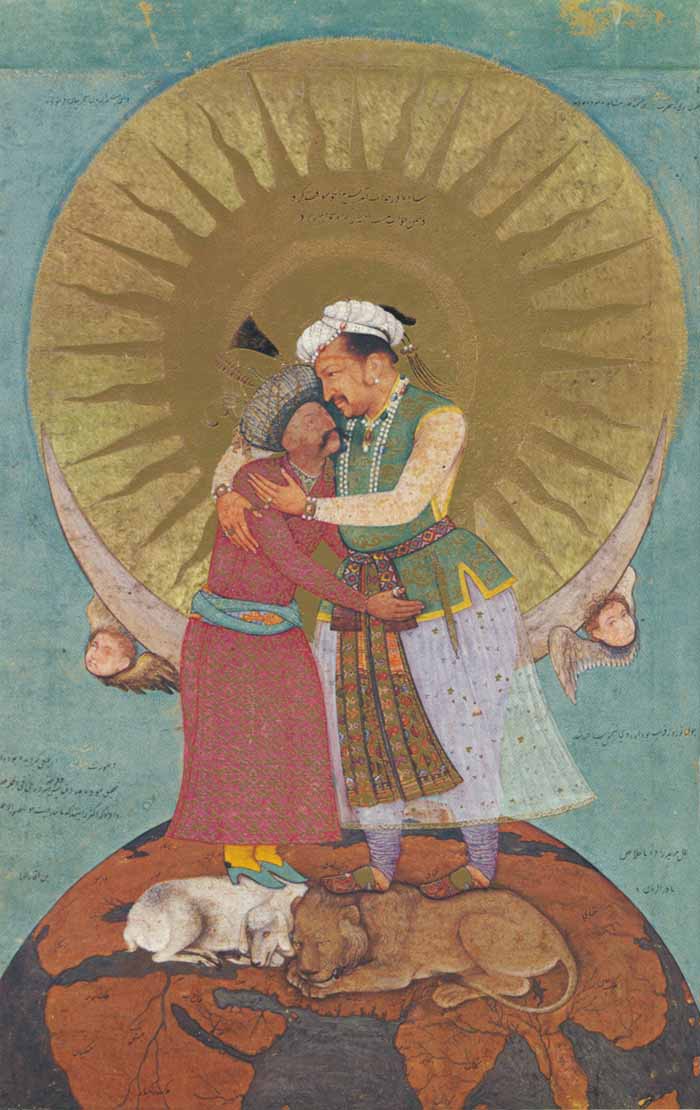
The first four Mughal emperors in the pics above. The cross collar was present in early Mughal attire but the tunic was worn loose and with a long overgarment. By Akbar’s reign this was changed to introduce a skirt like lower feature for the jama or tunic and the side fastening was doubled (doshala). This was worn with a fitting paijama, much like a churidar, which also differed from early Mughal attire. As mentioned in a previous post, the patka (sometimes two) was added to the garment.  Another change was in the turban, the Akbari pagri (turban) consisting of closely and tightly wound layers of cloth to which a sarpech could be added, much in the manner of the Rajputs.  For the sleeveless jacket designed by Jahangir called the nadiri (novelty) see the painting of the emperor embracing the king of Persia, Shah Abbas. The multiple side ties of Jahangir’s jama or tunic are also seen in this painting.

The emperors: Babur, Humayun (painted c 1650), Akbar (seen here with a courtier) and Jahangir (seen with his father Akbar).  See also: The earliest datable Mughal painting

Posted in 1600s, 1610s, 1620s, 16th Century, 17th century, Art, churidar kameez, Costume, Culture, Deccan, Dress Reform, dupatta, fashion, ghaghra, historical art, historical costume, historical dress, historical fashions, History, India, indian art, Indian Dress, Indian fashion, Indian History, Indian men, Indian Women, Islamic Art, Islamic Dress, Islamic style, Mughal, Paintings, Royalty, Women | Tagged , , , , , , , , , , , , , , , , , , , , , | 4 Comments

Republic Day

“The concept of this procession and exhibition and everything else should be to demonstrate both the unity and great variety and diversity of India…..Each State should represent some distinctive feature of it’s own in the tableaux or in the exhibition or both. Thus the procession would be a moving pageant of India in its rich diversity.” Jawaharlal Nehru in 1952. Quote on Republic Day celebrations from Beyond Belief: India and the Politics of Postcolonial Nationalism, Srirupa Roy.

Today, India’s 66th Republic Day, will see about 25 tableaux from States and Central ministries and departments.

In these 1958 pics the then Prime Minister, Mr. Nehru, poses with Republic Day contingents.  Pics include contingents from the East, North, Centre, Islands, South and West of the country (Manipur, Bihar, Madhya Pradesh, Andaman & Nicobar, Madras, Kerala, Maharashtra and Rajasthan).

Source: photodivision

Posted in 1950s, Asia, Central India, Costume, Culture, Dance, Folk, Folk Dance, India, Indian Dress, Indian History, Indian men, Indian Textiles, Indian Women, Photography, Politicians, regional styles, Tamil, Tribal, Vintage, vintage costume, vintage photography | Tagged , , , , , , , , , , , , , , , , , , | Leave a comment

Home Science in India and the 1950s

Home Science teacher trainees in Poona in 1957 learn to make rangolis to ‘brighten up” traditional meals, pound rice, scrape coconut, use a “model kitchen” and much more…..including making some kitchen music.

Lots of nine-yard saris in there.

[X]

Posted in 1950s, Culture, Deccan, fashion, Girls, India, Indian Dress, Indian Textiles, Indian Women, regional styles, retro, retro fashion, Salwar Kameez, Sari, Sari Blouse, Vintage, vintage fashion, vintage photography, vintage sari, vintage style, Women | Tagged , , , , , , , , , , | Leave a comment

The Bindi Post

x1

The tikli or spangle is worn in the Hindustāni Districts and not in the south. It consists of a small piece of lac over which is smeared vermilion, while above it a piece of mica or thin glass is fixed for ornament. Other adornments may be added, and women from Rājputāna, such as the Mārwāri Banias and Banjāras, wear large spangles set in gold with a border of jewels if they can afford it.  The Tribes and Castes of the Central Provinces of India, 1916. [X]

AKA stick on bindis have a bit of a history. Bindi illustrations of 1916 in Pic 1 are quite varied and interesting.

The extract described one method of making bindis/tiklis/tikka before the ubiquitous stick-on glitter bindi packets of today. These tiklis served as a substitute for sindoor or vermilion in marriage ceremonies though both could be used. Pic 1 is from the text and illustrates the kinds of tiklis that could be achieved with the method described, given the lac base I assume these were then stuck on in some manner.  Pics 2 and 3 (2 from the1950s and 3 contemporary) are probably made by a similar method or approximate the 1916 tiklis.

Per the book Lakheras and Patwas made these tiklis.

Posted in 1910s, Accessories, bindi, Central India, Colonial, Culture, Early 20th Century, fashion, Hinduism, historical fashions, Indian fashion, Indian Women, Literature, regional styles, Rural, Vintage, vintage fashion, vintage style, Women | Tagged , , , , , , , , | 2 Comments

The 1930s Post

nalini tarkhadShe wore an exquisite pink sari and the delicate gold thread embroidery on it added to the charm of both.  The vermilion mark and the tiny decorative dots of colour on her forehead and the collyrium-touched eyes added much grace to her. 16 Modern Marathi Short Stories 1961

Nalini Tarkhad in the 1930s. [X]

Other 1930s saris: X, X

Posted in 1930s, Accessories, Actor, Bollywood, Colonial, Early 20th Century, fashion, Hair, Indian Cinema, Indian Dress, Indian fashion, Indian Women, Old Bollywood, Postcards, retro, retro fashion, Sari, Sari Blouse, sari drape, sari history, Vintage, Vintage Blouse, Vintage Dress, vintage fashion, vintage hair, vintage jewellery, vintage sari | Tagged , , , , , , , , , , | Leave a comment

Bits n Bobs

Gharara/Sharara…still confused by the many definitions.

Raghu adds a few more explanations to 1950s hairstyles.

Bengal’s laterite soil makes for Japanese dye.

Please admire Waheeda – X and X.

Posted in 17th century, 1950s, 1960s, 19th century, 20th century, 21st century, Asia, Bengal, Bollywood, Cinema, Costume, Culture, East Asia, Edo, fashion, Hair, Indian Cinema, Indian Dress, Indian fashion, Indian Textiles, Indian Women, Japanese, natural dye, Old Bollywood, retro, retro fashion, Tumblr, Vintage, vintage costume, Vintage Dress, vintage fashion, vintage hair, vintage style, Women | Tagged , , , , , , , , , | Leave a comment

On the Street, India

Click for larger view.

1. Nauvari and Nath girls looking very lovely, Somaiya College, Mumbai. Taken on the college’s “Traditional Day”.

2. Mochi (cobbler) in Mumbai.  She is not alone: Bangalore, Hyderabad, Ernakulam,

3.  Anklet wearing schoolgirls. Taken in Bengaluru. These girls collapsed into a fit of giggles after I took the photo. But were complete sports about the taking of the photograph. Their normal school uniform was accessorised with  good deal of jewellery.

Posted in 21st century, Accessories, Contemporary, Contemporary Style, Costume, Culture, fashion, Girls, India, Indian Dress, Indian fashion, Indian Women, Jewellery, Personal, Photography, regional styles, Sari, Sari Blouse, Women | Tagged , , , , , , , , , , , , , , , | Leave a comment

Aya de Yopougon

3Sari Break.

Immigrant Côte d’Ivoire ladies in Paris offer up their honest opinion on leopard prints. From the utterly delightful bande dessinée I am presently reading, Aya: Love in Yop City, set in 1970s Côte d’Ivoire.

Everyone should read Aya of Yop City!

Posted in 1970s, Africa, African, Art, Authors, Comics, Contemporary, Culture, fashion, french illustrations, Illustration, retro, retro fashion, Vintage, vintage fashion, Women | Tagged , , , , , , , , , , , | Leave a comment

The Shawl Post

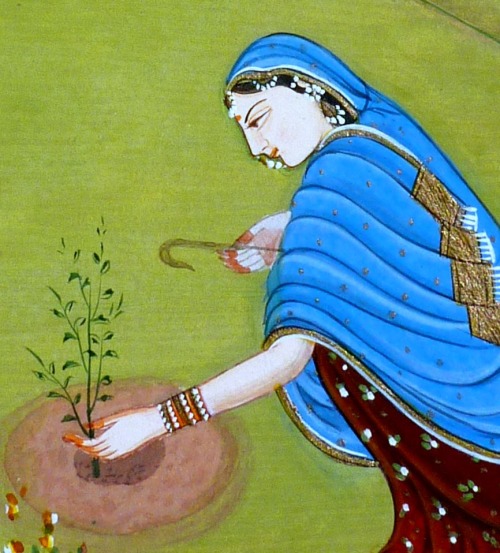
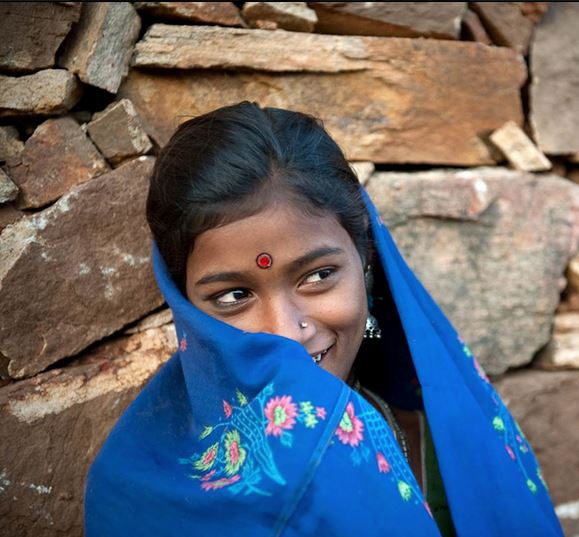
1 2The blue shawl first, a canopy of blue, The Face, Conrad Aiken

Posted in 21st century, Accessories, Asia, Contemporary, Contemporary Style, Costume, Culture, fashion, Girls, historical art, indian art, Indian Dress, Indian fashion, Indian Women, Paintings, Photography, Sets, winterwear, Women | Tagged , , , , , , , , | 2 Comments

The 1940s Film Post

இது, இது, இது எல்லாம் ஜப்பான். எல்லாம் செத்து ஒரு ரூபாய் கூட இருக்காது!

This, this, this, it’s all from Japan. And all together not more than 1 Rupee!

1940s movies can be a bit amateurish to the modern eye but they can be quite fun and as it happens also have a lot of interesting fashion titbits. E.g. this scene from En Manaivi aka My Wife (1942) which has two maids discussing clothes and employers. The maid with a parasol (Lux Padma aka R. Padma) has a generous employer who has provided her with the entire ensemble. All that fashion forwardness is from Japan*. Apart from the parasol, a stylish accessory in the 30s and 40s there is the sari brooch (horizontal pins are popular in the 30s and 40s), the soft collar, slightly puff sleeve blouse (here in satin) and the finger waved hair. All quite stylish in 1942.

The 1 Rupee price tag  for the entire ensemble wasn’t much apparently even for 1942. The other maid is in a local handloom sari worn in a style prevalent at the time (the pallu is folded down the middle and then tucked in – a style called “madi” aka fold) but one that wasn’t fashionable.

The printed sari with a jazzed up border is probably an affordable version of the saris of the 1930s and 1940s.

*In the 30s raw cotton went from India to Japan and finished textile goods were imported from Japan. The war had an impact on this but Japanese goods were still available cheaply during the war years.

Also from En Manaivi (1942).

Note the actress’s bra, this along with a number of accoutrements in many of her scenes mark her as stylish and upper class – she is pretty much the sartorial standout of the movie. The bra and the drape exposing a part of the bust seems quite daring but was fairly common in films of the decade.  And of course if its the 40s the puff sleeve blouse can’t be far away. This sari too is probably Japanese, at any rate the fabric marks it as foreign

Note also the steel cup and saucer for coffee as opposed to steel glasses suggesting a slightly westernised heroine. Flowers in the hair arranged as here were also common in AVM movies of the 1940s.

The 1940s movies seem to favour a slender type in comparison to the fuller silhouette seen in the 1950s.

For a bit on bras go here.

Notes: En Manaivi was an adaptation of a 1916 Marathi play, Govind Ballal Deval’s Sanshay Kallol. This in turn was adapted from Molière’s Sganarelle. The actress in the screencaps (I think MK Meenalochani but I cannot be sure) is playing Revathi aka Célie.

Posted in 1940s, 20th century, Accessories, Actor, Cinema, Culture, Early 20th Century, fashion, Film Costuming, Flowers, Hair, Indian Cinema, Indian Dress, Indian fashion, Indian Women, Japan, Movies, regional styles, retro fashion, Sari, Sari Blouse, sari drape, sari history, Sets, South India, South Indian Cinema, Tamil, Tamil Cinema, Tamil Nadu, Vintage, Vintage Blouse, Vintage Dress, vintage fashion, vintage jewellery, vintage sari, vintage style, Women | Tagged , , , , , , , , , , , , , , , | 12 Comments