
 C
C
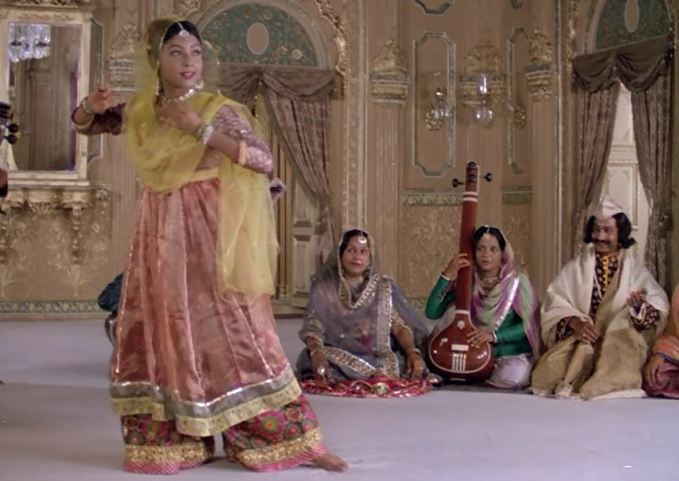
Costumes from Shatranj Ke Khiladi set in the Awadh of 1856/7. Those seriously wide trousers were apparently all the go at the time. As was gauzy wraps, paisley prints, shawls. And dance. And hookahs. And…..chess.
C
Costumes from Shatranj Ke Khiladi set in the Awadh of 1856/7. Those seriously wide trousers were apparently all the go at the time. As was gauzy wraps, paisley prints, shawls. And dance. And hookahs. And…..chess.
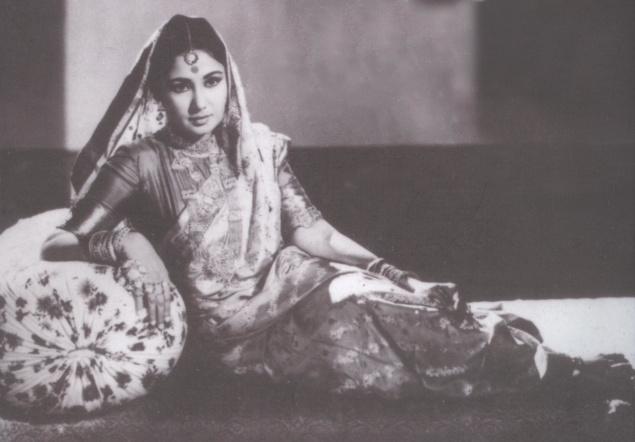

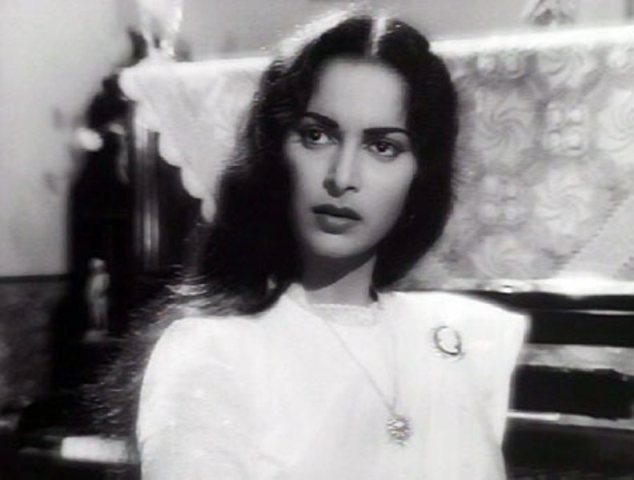


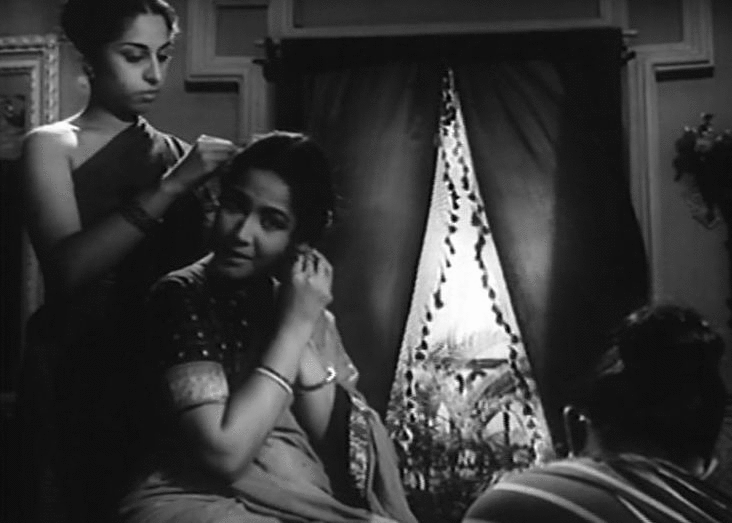
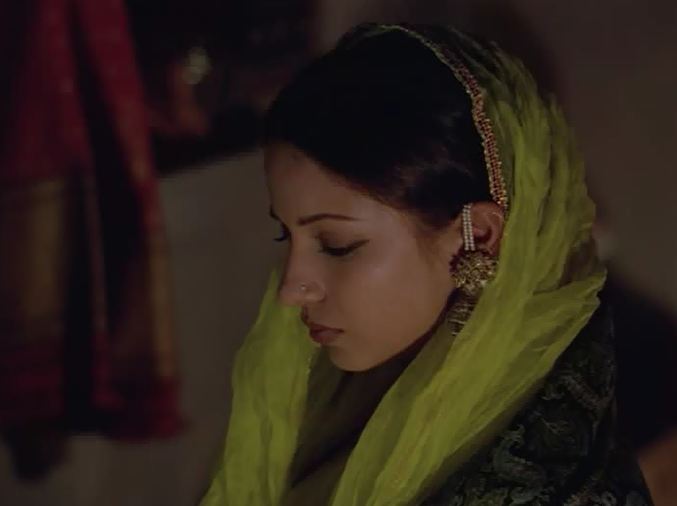
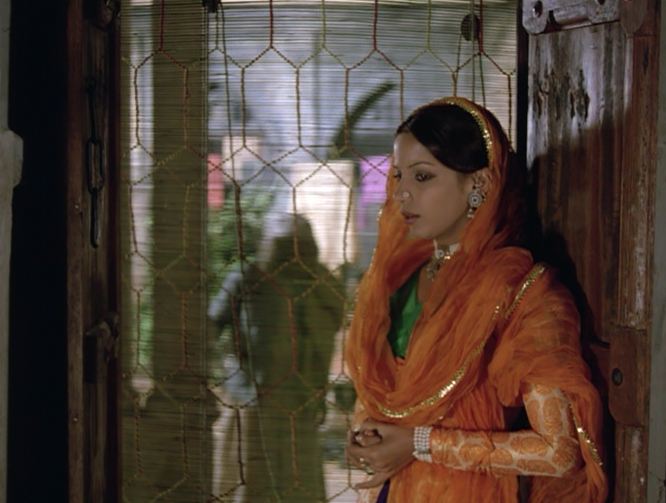
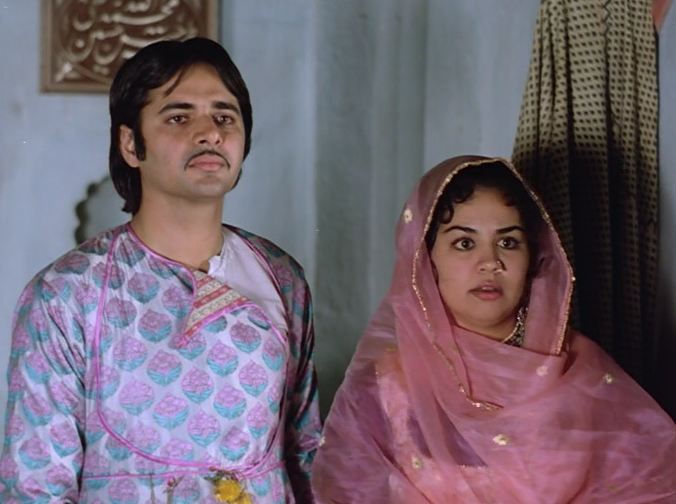
Sahib, Bibi aur Ghulam is set in 19th century Calcutta. The women who appear in the film belong to different classes. Of the two main characters Choti Bahu (Meena Kumari) belongs to the feudal, zamindari class who are presumably Orthodox Hindus. Jaba (Waheeda Rehman) belongs to a Brahmo family, at the time the reforming, modernising part of Bengal society. The film also has a few song sequences set in the dance houses that the zamindars frequent. And there are the servants in the zamindari estates, e.g. Choti Bahu’s dresser.
As the pictures indicate the women are differently attired and fairly accurately in keeping with their social status/period. Choti Bahu is in jewels and silks, Jaba’s light coloured simple saris are pinned to lace edged blouses with a brooch. The dance house/kotha sequences use Kathak costume and are presumably of the time. And as the last picture shows, the working women who served in the zamindari houses held on to the old custom of not wearing a blouse.
And a bit on Raima Sen, whose attire in these pictures have varying degrees of fidelity to the period they are set in (Chokher Bali: 1903, Naukadubi: 1920s,The Japanese Wife: uncertain) and who must surely hold some kind of record for appearances in period films.
And the absence of a blouse on Aishwarya in Chokher Bali is a correct detail – the blouse was seen as enticing and hence forbidden to a widow.
There aren’t a whole lot of period dramas in India though they turn up now and then, often in Bengali cinema with Tagore stories being remade often. I am not a stickler for detail in period drama neither do I know the finer points of period detail. Still its not hard to see that the costumes are rarely meticulously created. Part of the problem is that the handloom weaves we are accustomed to were not always in use. There was in fact a good deal of imported material in use including chiffons, georgettes, laces and the like in the early part of the 20th century. The indigenous handlooms and silks tend to be fine and plain with gold borders or stripes. Separate lace pieces for draping over the head were common in the 1900s/1920s. The way the saree was draped differed. The construction of the blouses looks different from modern day blouses. Hairstyles were different and sometimes mirrored fashions in the West, especially in the 20s and 30s. A bit of lace on a blouse and a cotton saree therefore does not equal period.
Today’s post is pictures from Gora, that has just started screening on Doordarshan and was written in 1909. I doubt that the purple sari was common though the green sari and blouse looks closer to photographs I have seen.


Just to wind up on the India/China theme, Garas aka the Chinese emboridered silk sarees with corodinated somewhat ornate blouses. Plus first pic, the one on the right seems to have a pretty spectacular bird of paradise. Gara in the second picture is heavily embroidered and offset with a lovely – possibly embroidered – blouse
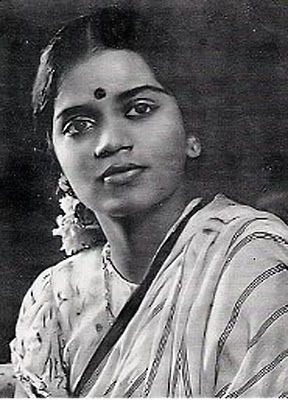
Moved my tumblr on vintage saree blouses to wordpress. The editing of individual entries is in progress and will take some time.
In the meantime I will duplicate new posts here and the ongoing tumblr is here: http://vintagesareeblouse.tumblr.com/archive
And as with tumblr, a first post on ML Vasanthakumari, the singer in a cute patterned blouse that contrasts with her striped cotton sari.

Update: Here is the Shanta Hublikar song. The blouse seems a little fancy with bow ties on the sleeves. In fact a number of blouses that Ms Hublikar wears in this movie are like 1920s/1930s dresses with the bottom part swan off. And the sari positioned to stay on the head , so common at the time.
And there are more Shanghai girls on the walls:)
And the caps. That’s Maina (Shanta Hublikar) singing in the style of/wearing a cap that reflects the different regions that her customers come from. The song itself is a parody of the kind of studio movies prevalent at the time and Ms Hublikar pretty much rocks, I have a deep girl crush on her. I love the way she is completely at ease while performing, that the performance itself is both casual and enticing and in fact has a sense of joy. And that its completely unlike the “kotha” scenes Hindi movies often subject us to.
The pic is from Neepa Majumdar’s “Wanted Cultured Ladies Only Female Stardom and Cinema in India, 1930s-1950s” which discusses the many ways Manoos/Aadmi was an intelligent, ground breaking film (there is the unhappy end but perhaps that is an outcome of the time). And it also has the cutest song where Shanta Hublikar and Shahu Modak perform a romantic song in a studio lot. Its very funny and for some reason something in it seemed to suggest French New Wave to me (because even though – or perhaps because – the characters are policewoman/prostitute, it has the spirit of fun that often attends young love).
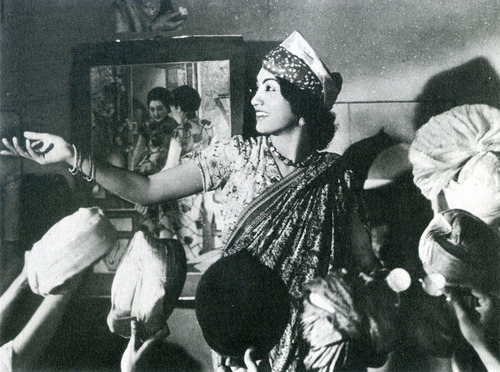
Keen spotting on the part of the blogger of the Shanghai girl in a qipao in India (see the photograph/calendar)! The actress is Shanta Hublikar playing a prostitute in Manoos – hence perhaps the simple sari and mismatched blouse.
Wonder what’s up with all the caps:)
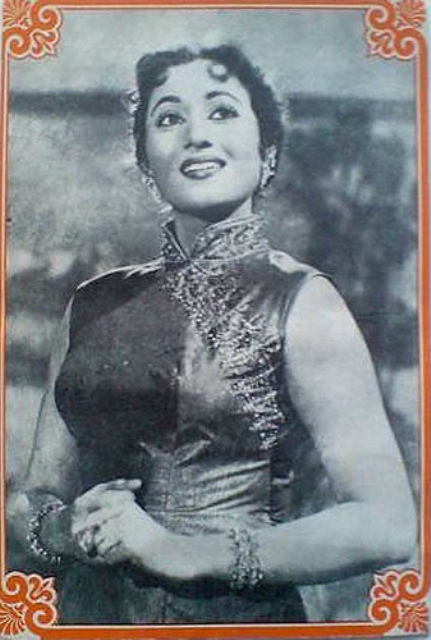
The cheongsam doesn’t seem to have influenced fashion in India (perhaps those blouses with stand-up collars?). In Indian cinema they seem to be appear only when the part is Chinese. But here is Madhubala in a cheongsam.
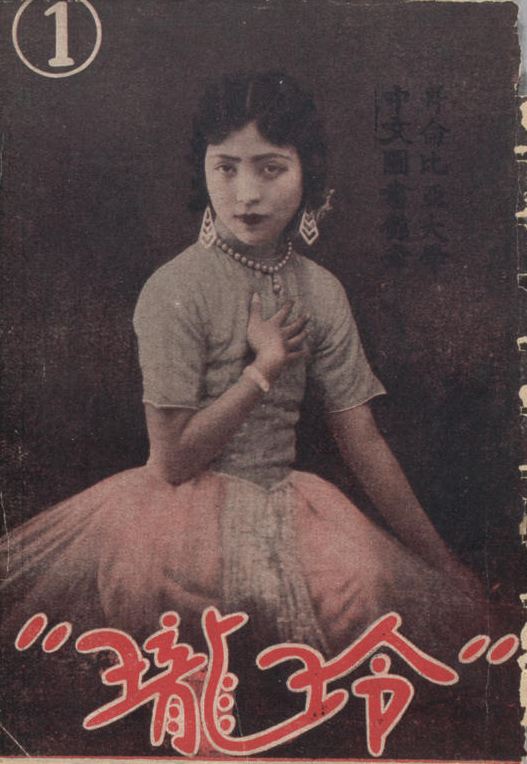
In China, the process of modernisation resulted in women adopting the male “scholar gown”, which eventually became the fitted qipao/cheongsam.
Among the magazines aimed at the new woman of the time was Ling Long magazine – there are plenty of posts on it on tumblr. The first cover didn’t feature a cheongsam but a skirt and blouse. And something in the attire and the slash of gold/zari in this cover suggested India to me.
Ling Long magazine archive here.
 Vintage Indian Clothing