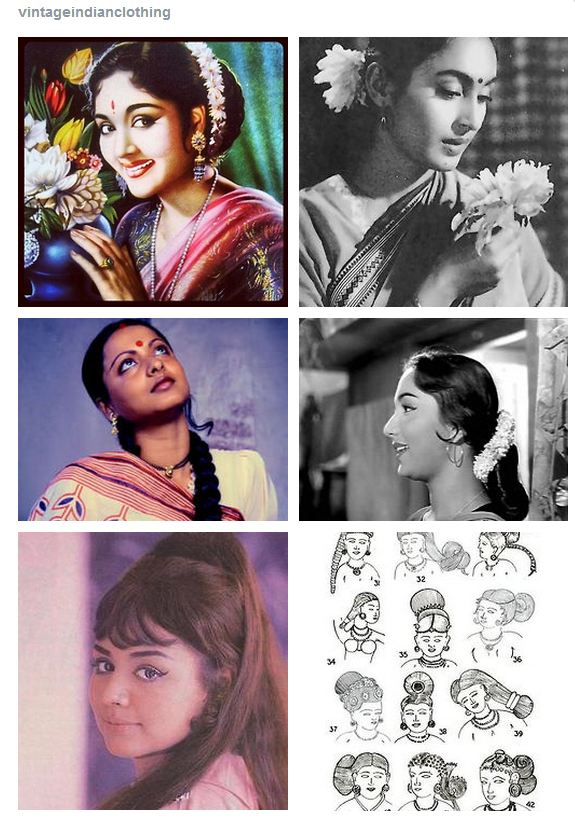
 Simple Braids, Updos and flowers in her hair.
 Nargis illustrated by colonelhathi at tumblr. I love the daffodils (aka nargis flower) at the side as a finishing touch. And divine blouse.
Here are the screencaps on which it is based. Which kind of makes the illustration even more perfect.
There are a few more illustrations at the site – they definitely need to go into a Hindi alphabet book for adults:-)
A departure from my usual posts.
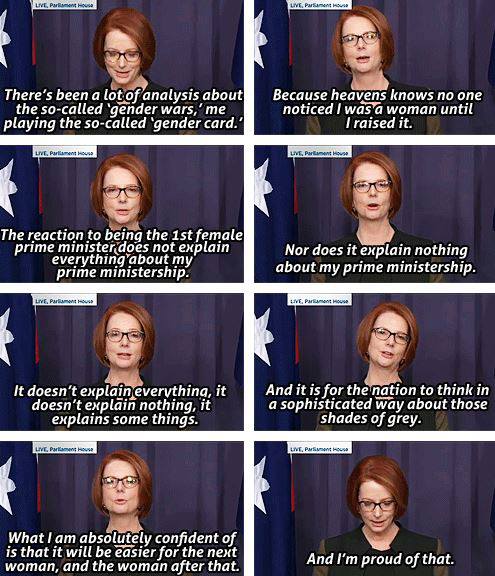
I am pretty much apolitical. But I am a woman. And this speech from Ms Gillard, Australia’s first female PM, resonated with me. Via [X]
Also Ms Gillard knits and I think it is wonderful that she had the top job and has a “feminine” hobby given that more than a few professional women feel the need to eschew this.
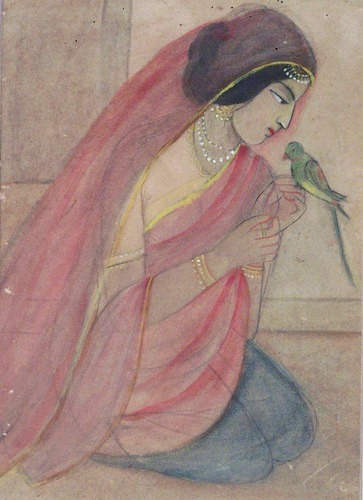
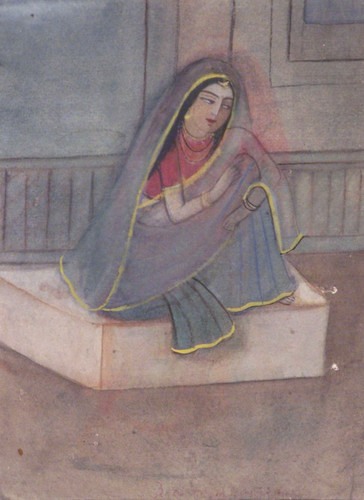
Sunayani Devi stands out not because of her degree of conformity to male peers but because of her distinct pursuit of a personal vision. Although Abanindranath Tagore and the Bengal School would have been influential, her concerns were more mythic than historicist. In addition, she was inspired by the folk pata painting style, familiar to the women in the Tagore household. Her subjects include women at their toilet, dolls, players, actors and themes from the mythic Radha-Krishna cycle. A precursor of folk art in the fine art tradition, she anticipated the more full-blown realisation of Jamini Roy (1887-1972). She also introduced a more margi, or heterodox element in an art practice that was seeking a more exclusive identity. Excerpt from Local/Global: Women Artists in the Nineteenth Century (Chapter on India by Gayatri Sinha).
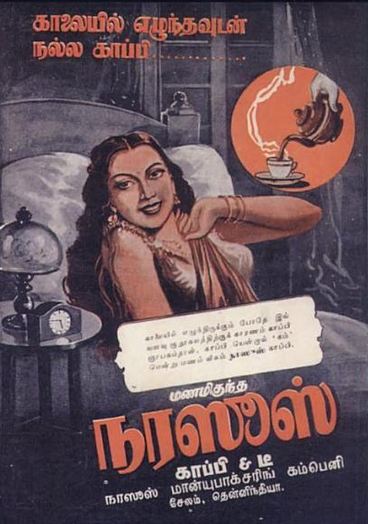
 good cup of tea or coffee makes all the difference to the start of a busy day— It drives away that sleepy, lazy feeling and peps up your energy. Make sure by buying only NARASUS— it’s always good. The Indian Review, GA Natesan, 1942.
Alas! This damned thing has got hold of women! Two cups of coffee have become the order of the day. Stri Dharma quoted in In Those Days There Was No Coffee-Writings in Cultural History.
Pic 1 is taken from AR Venkatachalapathy’s book In Those Days There Was No Coffee which discusses the rise of coffee houses and coffee culture in South India in the early 20th century (more correctly kaapi which after much discussion became a bonafide Tamil loan word). The sleeveless blouse and strategically draped slinky sari of the woman in this Narasu’s ad suggests the 1930s. The header of the ad loosely translates as “Get Up, Drink Good Coffee”, presumably a glamorous thing to do for single ladies:-)
Pic 2 is from Narasus facebook page. The company was started in 1926. Its hard to place the decade of the ad, though in my mind this is the 1940s and not the modern girls of the 1930s:)
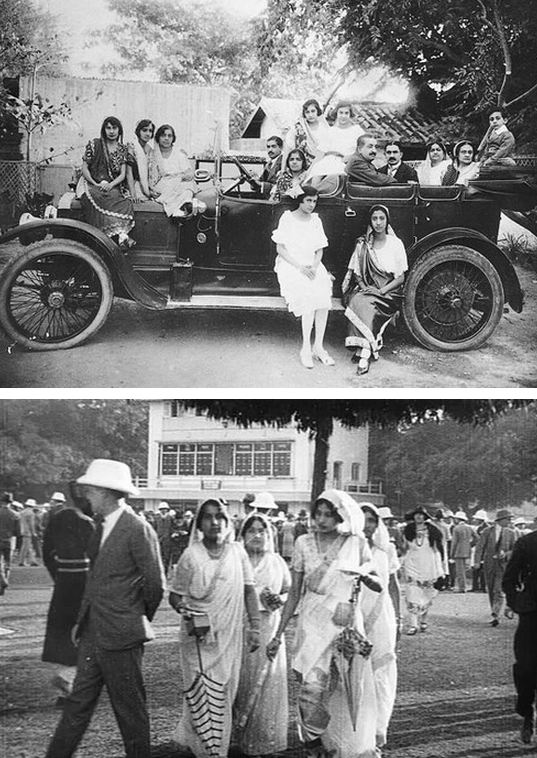
Saris in the 1920s on either side of the subcontinent 1) A Parsi family in 1925 Karachi and 2) A Calcutta Cup Race where “horses take second place to fashion” (from the film Calcutta Topical No 1-1925) . The pallu is worn over the head so often in this decade. Also still a lot of blouse. The sari drape – pic 1 is Parsi, pic 2 the version adapted in Bengal -varies, otherwise the look is similar.
Do follow link 2 and check out the pic for Delhi Extract -1938 for Delhi fashion of the time.

1. A Maratha brahmin girl from Tanjore (Tamil Nadu) holding a marigold garland 2. A Tamil girl wearing jasmine flowers in her hair and a silk sari for a temple visit 3. A Muslim lady with a headdress of jasmine blossom and pearls sewn into her hair and a silk and gold gauze dupatta worn over a coloured coat for outdoor wear 4. The daughter of a Muslim merchant from Triplicane in a red and gold bordered dupatta and silver anklets.

On top of that, the kind of fine [clothing] material they wear is not fit to go out in society, and when the material becomes wet and clings to the body, then there is no difference between being naked and dressed. Many a time a decent man hesitates to get out of the pond in such clothes, but women, displaying remarkable ease get out of the pond and walk home in their wet clothes……I don’t know when you will learn the real use of shame! (Anon. 1871)
But finally many have begun to realise the bad taste involved in the custom of wearing one transparent/fine piece of cloth (Hemantakumari Choudhury, 1901)
..all we have done at the Vidyalaya* is adopted a dress for the girls that combines the elegance of the national dress with the decency of the European(Brahmo Public Opinion editorial, July 4, 1878)
All the changes that took place in dress and the sometimes fierce discussion over these changes in Bengal.


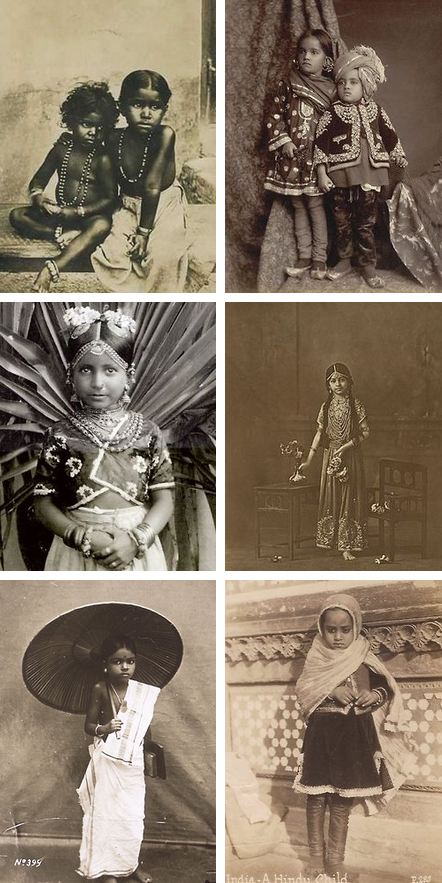
 Vintage Indian Clothing