Vintage Illustration

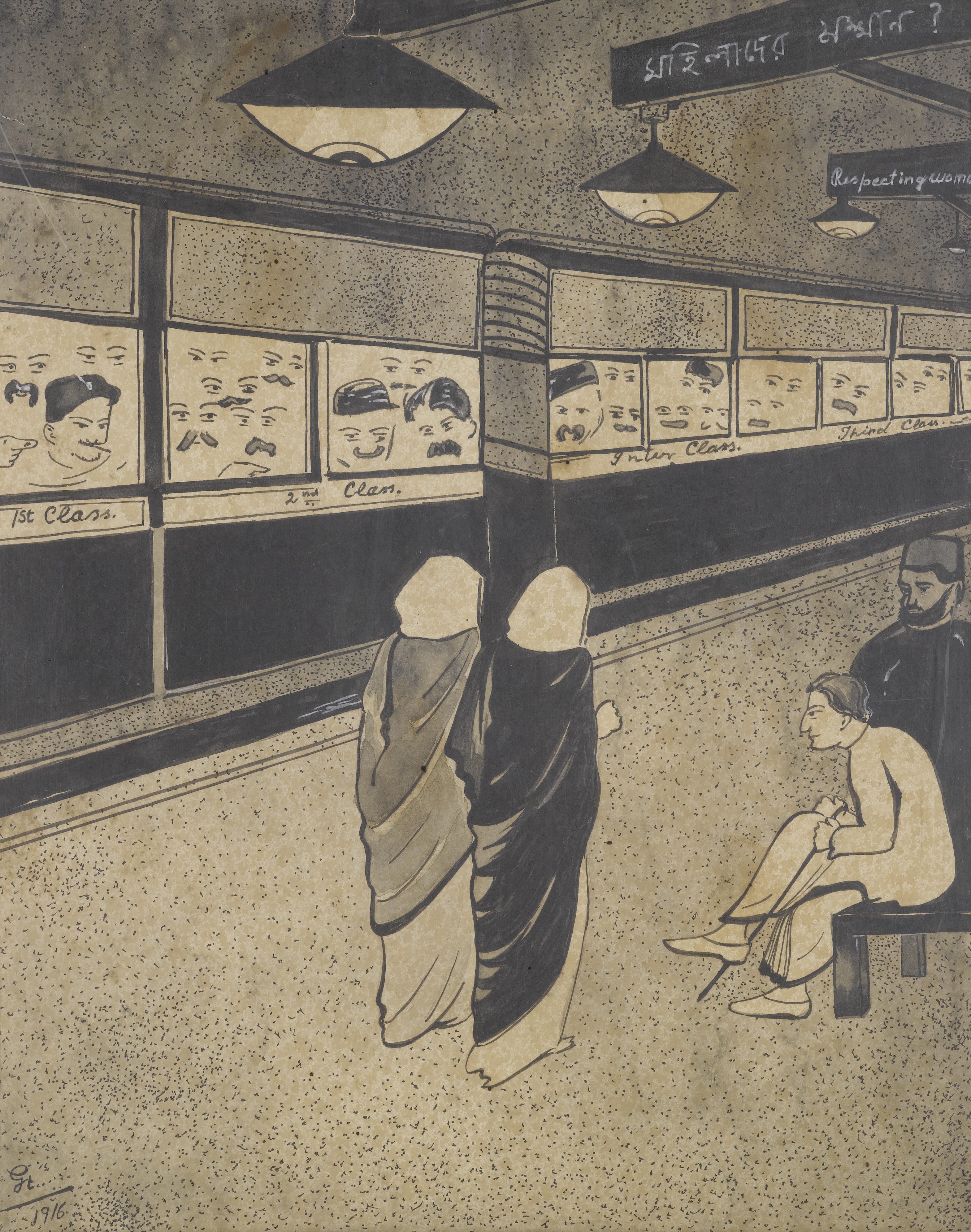
gagantagore1916sothebys Gaganendranath Tagore‘s “Respecting Women?” illustration of 1916. (via sotheby’s). Things haven’t changed vastly in a 100 odd years.

Posted in 1910s, Bengal, Early 20th Century, Feminism, Illustration, India, Indian men, Indian Women, Sari, Women | Tagged , , , , , , , | 1 Comment

The 1920s Paintings Post

vhemen1

This slideshow requires JavaScript.

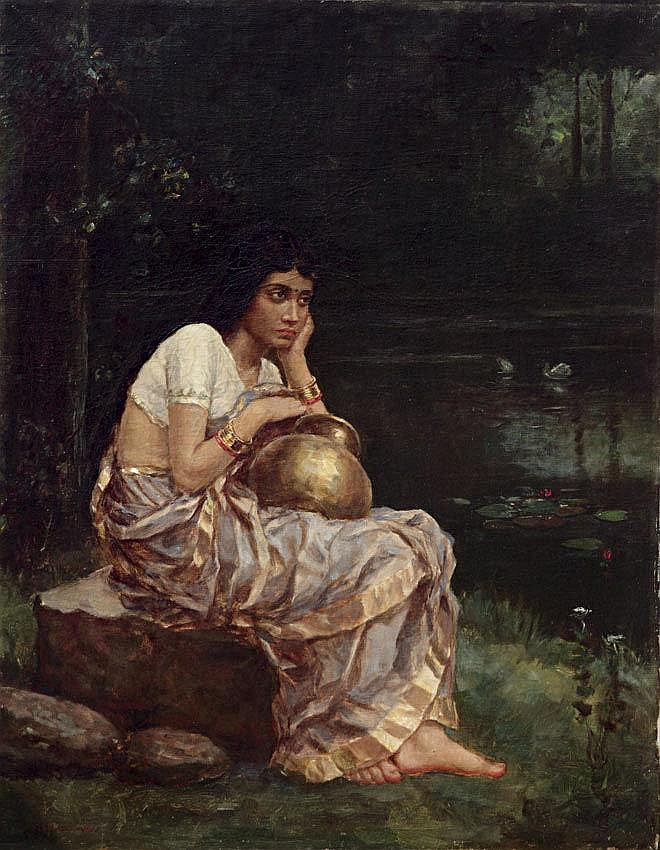
Mazumdar tended to hint at nudity by draping his models in semi-transparent or wet saris, a technique that was later adopted by Indian cinema.

Hemendranath Mazumdar‘s naturalistic oils of partially clothed, vaguely erotic looking women were unsurprisingly popular in the 1920s and 1930s. He was paid large sums for his work, which often boasted titles like Wounded Vanity, Manas Kamal, Echo of Love and Lady in Blue and Gold.

In a number of paintings Mazumdar’s models are clothed in a similar manner. The plain, gold bordered saris for one (touches of gold were common in Indian paintings from this time). Where there are blouses, they are often fairly snug and brief. There are little motifs on the blouses. And there is the jewellery – gold arm bands and bracelets and in at least two here a waist chain/belt. Hair ornaments like in painting 3. And of course the feet are bare, sometimes with hints of alta.

See also [X] [X] [X]

Sources: [X] [X] [X] [X]

Posted in 1920s, 1930s, Art, Bengal, Culture, Early 20th Century, Indian Dress, Indian Women, Jewellery, Paintings, Sari, Sari Blouse, Vintage, vintage art, vintage fashion, Women | Tagged , , , , , , , , , | 9 Comments

The colours of Telengana

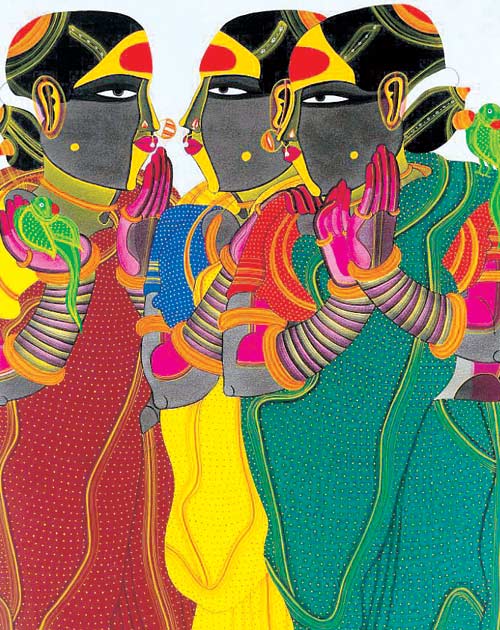
t1The vivid colours of Telengana – including turmeric and kumkum on the forehead – in Thota Vaikuntam‘s paintings.

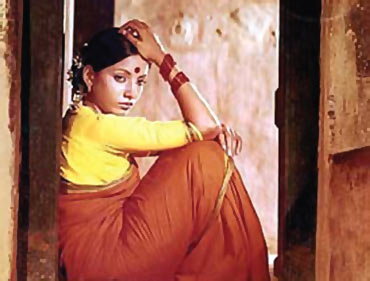
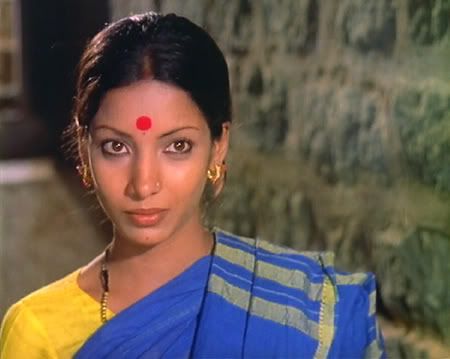
Shyam Benegal makes use of the same colour palette in films like Ankur and Nishant.

Also [X] [X]

Posted in Art, Culture, Hinduism, Indian Women, Paintings, Rural, Sari, Sari Blouse, Women | Tagged , , , , , , , , | 2 Comments

The “Sari Wrap” Post

This slideshow requires JavaScript.

Judging by portraits in the decade, a sari style like a warp was quite popular in the 1930s. It appears to be wound once so the sari border crosses or falls around the knee and then wound again to drape the sari over the shoulder as per usual.  Often teamed with a sleeveless or cap sleeve or “mega” sleeve blouse which were popular in the decade (and a change from the long sleeves of the previous decade). Of the 1930s examples, girl in blue sari painting by  Hemen Majumdar.  Other examples: Amrita Shergil and Lady Andal.

Another example of the sari style is found in Raoul Dufy‘s 1930 painting of Interior with Indian Woman. Again the sari is wound twice, the blouse has just the hint of a sleeve (if at all).  Here the sari is pinned to the shoulder and then draped over the head.  Also common in 1930 though the style was in its way out over the decade.

It appears that the pleats are formed first and the the sari tightly wound in the manner required.

An adaptation of this style can be seen in the 1960s and was wildly popular once worn by Mumtaz.  This style, seen here on Mumtaz in a 1968 film, is far more stitched and structured. Indeed Bhanu Athaiya, the designer, practically stitched her into it. As in the 30s, sleeveless blouses were popular in the 60s.

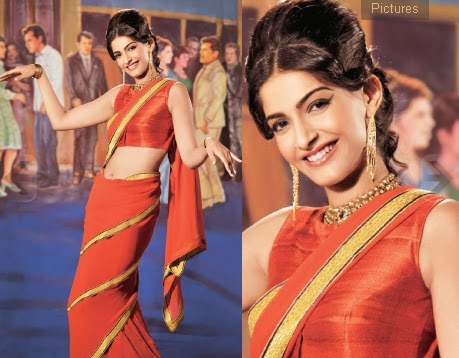
The modern take is of Priyanka Chopra channeling the “saree wrap” look (also see Sonam). Though idk, no one can top Mumu:). The link provides a bit of info on how the style should be worn: keep the “pallu” long and narrow, wrap as many times as required around the waist and then drape over shoulder.

Posted in 1930s, 1960s, Indian Cinema, Sari, Sari Blouse, Sari Dress, Vintage Blouse, Vintage Dress, vintage fashion, Women | Tagged , , , , , , , | 1 Comment

Sharara/Gharara

This slideshow requires JavaScript.

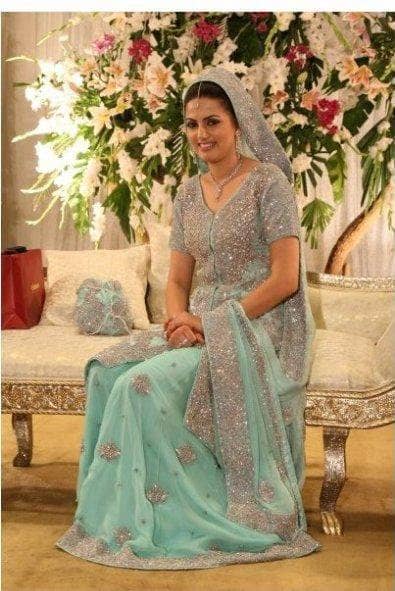
The sharara and the gharara are lower garments that are like flared pants. While a variety of such garments were in use in India in the 18th and 19th century, some of the examples shown here were fairly common wear in the 1940s-50s and often seen in movies that had a North Indian milieu. Now they seem to be part of contemporary wedding ensembles in Pakistan and also seem to be reappearing in India (including in a sari form).

There seems to be a bit of a lively discussion regarding the differences between the two (for the record for my generation the sharara was the bifurcated version that fell straight and looked liked a skirt (as in pic 3 and 5) while the gharara was fitted till somewhere above the knee (or has a band sort of thing) and then flared (pic 2 and 6) :))

Pic 1: The Bahu Begum of Avadh (18th cent.), Pic 2: The actresses of Dard (1947); Pic 3: Nimmi Pic 4: Still from Mere Mehboob (1963) Pic 5: Contemporary Pakistani Wedding Sharara  and Pic 6: Contemporary Tarun Tahiliani Gharara

Posted in 18th century, 1940s, 1950s, Costume, Early 20th Century, Islamic Dress, Vintage, Vintage Dress, vintage fashion, Women | Tagged , , , , , , , | Leave a comment

The 18th Century Hunt

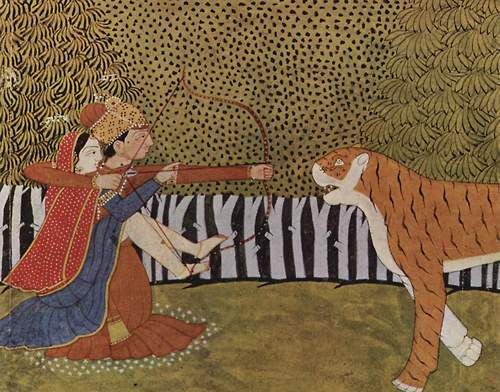
a1a2Note that in pic 1 (dated about 1775), the couple appear to be forest dwellers.  In most paintings women wear a short skirt of leaves or peacock feathers to indicate the forest setting. But the jewellery here may indicate a court lady. Such scenes seem to be commonly portrayed in the late 18th century.

Pic 2 (dated about 1799) is an illustration from Madhumalati, a Sufi Romance and much more in line with courtly paintings with the woman wearing a  long skirt and shawl ensemble.  The woman here also seems to have a less active role.  The scene depicts a tiger disturbing the lovers (Chand and Roopmala in one ref, Manohar and Madhumalati in another).


Posted in 1700s, 1790s, 18th century, 700s, Culture, hunt, Illustration, Indian men, Indian Women, Medieval India, miniature paintings, Royalty, vintae art, vintage art, vintage fashion | Tagged , , , , , , , , , , | Leave a comment

Odds and Ends

Notes from Singapore

15 August 1936 and Olympic Gold.

Jewellery for a Pretty Girl

Lipstick Ladies

and my favourite: the waist brooch for a sari.


Posted in 1930s, 1950s, 1960s, Indian Women, Jewellery, Sari, Sari Blouse, Vintage Dress, vintage fashion, Women | Tagged , , , , , , , , , | Leave a comment

Africans in India

This slideshow requires JavaScript.

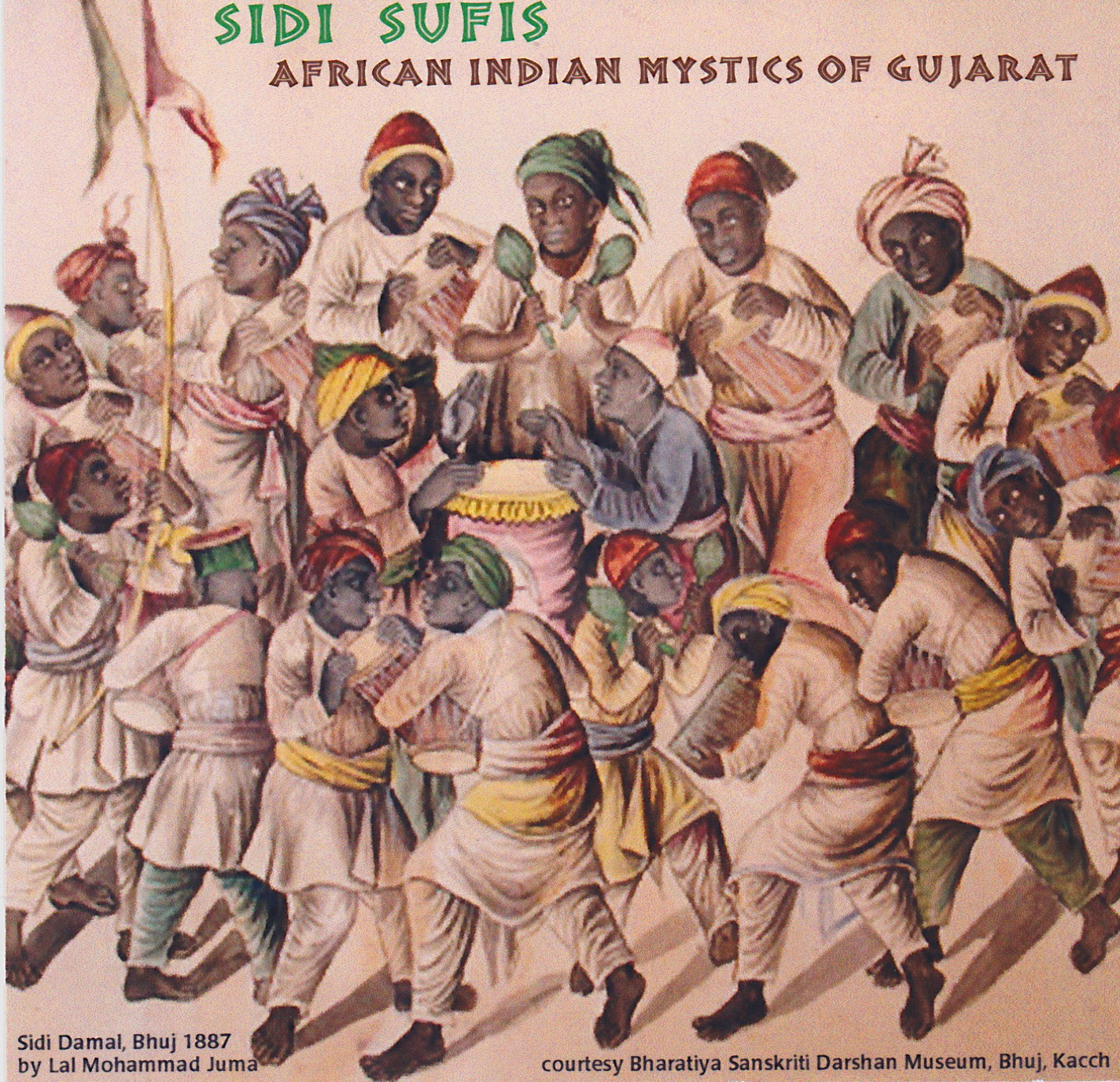
Given proximity, its not very surprising that there has been an African presence in India from very early on.  Pakistan for e.g. has a large number of people of African origin, as does Gujarat (the Siddis).

As early as in the 13th century, Africans in India had a political presence. Apart from ruling small principalities in Janjira and Sachin, it was in medieval Deccan that they had a powerful role as military commanders and prime ministers , e.g. Malik Ambar in Ahmednagar and Ikhlas Khan in Bijapur (both from Ethiopia).  Ikhlas Khan in particular, linked as he was to the Adil Shahis, was much painted. See also [X] [X] and [X].  Pic 3 is of a lyre player, an instrument not commonly played in India but apparently common in East Africa.

The dress is similar to portraits of the time of male rulers, the jama (long tunic), shawl (worn Deccani manner), a sash/belt and tight trousers/chudidar.

There also appears to be a book on Africans in the Deccan. And also in [X].

Portraits of contemporary Indian Africans, especially the Siddis. Very few have any remaining roots in Africa and attire is very much in keeping with present Indian dress.  A link that discusses amongst other things their musical traditions which have an African influence.

[X], [X], [X], [X]

Posted in 16th Century, Africa, Asia, Costume, History, Indian men, Islamic Dress, Men, Politics | Tagged , , , , , , , , , | 1 Comment

The Epic Post

p1

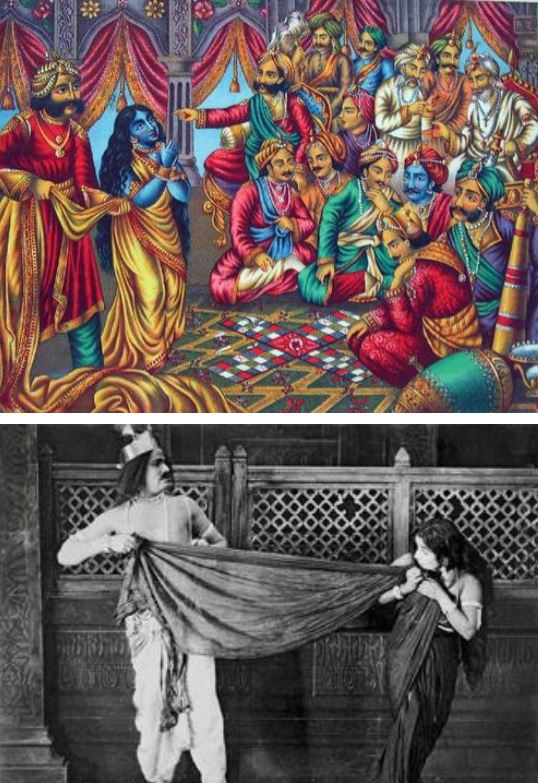
One of the central and much discussed events of the Mahabharata involves the sari – the loss of Draupadi in a game of dice and her disrobing in the royal assembly. Draupadi is in seclusion, her single garment stained with menstrual blood, before being dragged out into the assembly by the second of the Kauravas, Dushasana.

The episode in itself recurs over time in India’s art, film [X] [X] and literature. Also [X] [X] The early versions of Mahabhrata, while clear that Draupadi is humiliated in court and has none to defend her, are not clear on the divine intervention of Krishna or whether a disrobing took place [X] [X]. However, the tale as presently told in India and the version that is best known has Draupadi’s sari endlessly unfolding due to Krishna so she is never publicly disrobed

This particular episode is also frequently retold in Indonesia and is the subject of a recent movie as well as illustrations.

In Mahasweta Devi’s Breast Stories, the eponymous heroine of Draupadi, a tribal woman and a rebel, faces up to her abusers and remains “publicly naked at her own insistence”.

p2

Adorned with golden ornaments, and arrayed in yellow silk, Sita appeared in the air like a flash of lightning.

The divine raiment given to her by the holy Anasuya, with the ornament and the necklace, shone with peculiar radiance…and she threw out her veil in like manner.

Ravana flies off with Sita, who from midair lets fall her wreath of flowers, her golden silk shawl, and her lovely ornaments — the last retrieved by five monkeys on a mountain peak.

The central event of the Ramayana is the abduction of Sita by Ravana, his subsequent fight with Jatayu, followed by Sita’s captivity in Lanka.  Most texts mention Sita wearing golden silk (though this is the period of exile and Sita is commonly portrayed in simpler clothes, also pic 1)  when abducted by Ravana.  In all versions she rips a portion of the cloth, ties her ornaments in it and throws it to the ground. 

A number of paintings depict the fight between Ravana and Jatayu and sometimes detail the throwing of the garment and jewels.

Pic 2 by Raja Ravi Varma, Pic 3 Kalighat, Pic 4 a wayang illustration.
Posted in Ancient India, Asia, Cinema, Costume, Culture, Epics, Hinduism, History, Indian Dress, Women | Tagged , , , , , , , , , , | Leave a comment

The Girdle Post

This slideshow requires JavaScript.

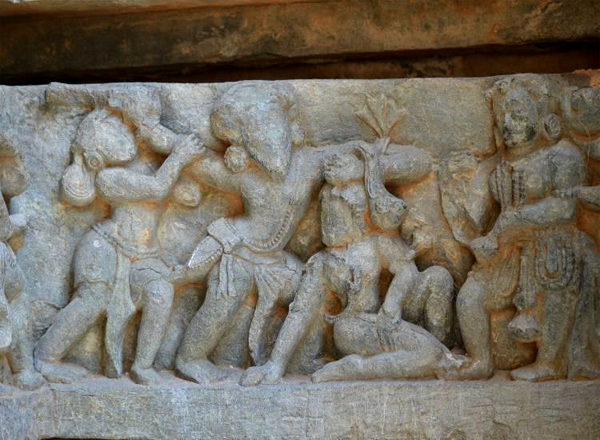
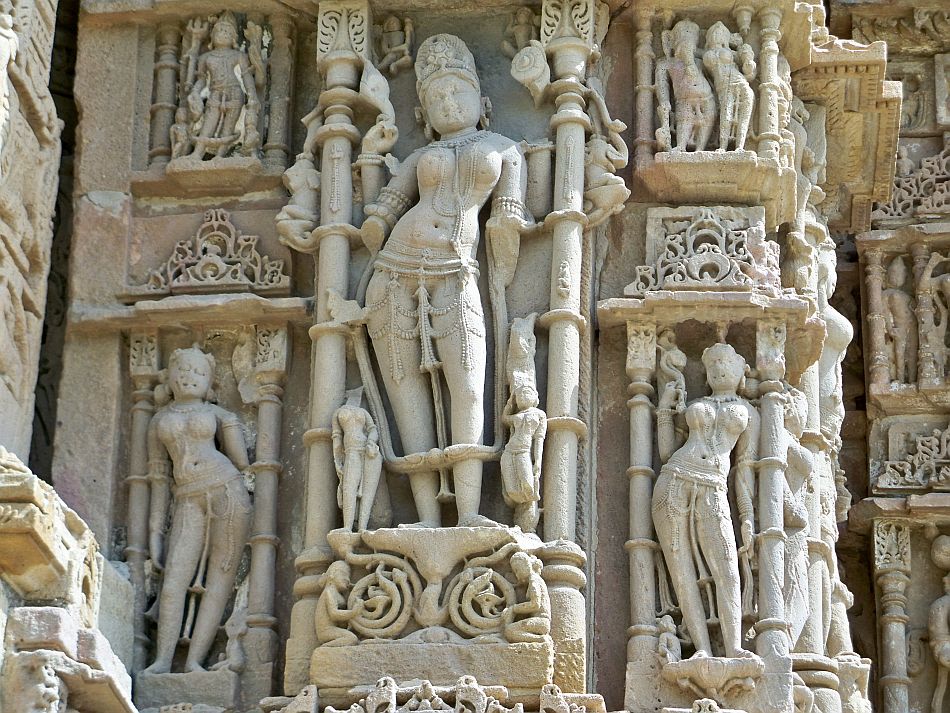
Girdles have been in use in India for a very long time, since possibly the early chalcolithic age.

The kanci aka girdle, is often a broad golden belt used to secure the sari to the waist, to which are often added medallions, loops, tassels and bells. In early sculptures there are often multiple layers. As also in this pic of the actress Simi.

Examples of simple belts/girdles used to secure the sari at the waist below. The more common regional terms for the kanci are kayabandh/kamar bandh in the north, oddiyanam in Tamil Nadu. where it is commonly used in dance costumes, mekhala etc.

Pics: 1. A painting of a dancer by MV Dhurandhar 2) A Lala Deen Dayal photograph. 3. TP Rajalakshmi [X] 4) Balasaraswati photographed by Marilyn Silverstone.

Posted in Indian Dress, Indian Women, irdle, Jewellery, kanci, lt, ndia, Vintage, vintage fashion, Women | Tagged , , , , , , , , | 2 Comments