And some of the discarded influences – like jaunty caps – need to come back.
And some of the discarded influences – like jaunty caps – need to come back.
A saree break.
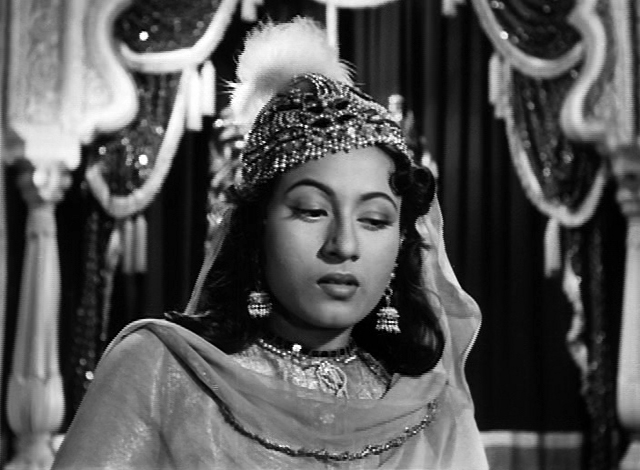
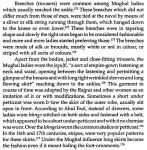
The previous modifier of dress – especially in North India – was of course Islamic rule. There is a great deal of variation within this from fitted tunics to serious trouser flares. These styles live on – the description here of an empire gown seems to correspond for e.g. to modern “Anarkalis”.
All of it involves a great degree of diaphanous layering bringing to mind the sweet liquefaction of a Herrick poem.
Still from Junoon.

In the 70s. A knotted choli is distinctly modern for the time.

A look at beauty queens today.
Reita Faria in the sleeveless blouse and the sari drape of the 60s which left the upper part of the garment loose over the arm.
An article on her here.

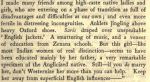
Since I started this blog, I have come across an astonishingly large number of “British Raj” romances. A few of these deal with “inter-racial” romances which were generally taboo subject matter. One of these is Lilamani. Apart from it being an Empire sort of project of the East and West, will they ever meet, how should they meet etc. kind it also has a lot of descriptions of sarees. However Ms Diver seems to be as harsh as Tagore on girls who were too “Westernised” as the book extract shows.
Lilamani on the other hand knows how to dress well (per the author) and here on the book cover she has a cute little blouse and a pallu neatly pinned to hair.
The novel is at the link below:
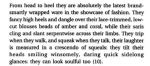
Though the Tagores had been at the forefront of dress reform in Bengal and in devising a new form of saree and blouse suitable for appearing in public, by the time Shesher Kabita came to be written in 1928, you can sense a distinct disapproval on the part of Rabindranath Tagore for the new Westernised woman. This passage describes the hero Amit Rai’s sisters, Cissie and Lissie. His fiance, Ketaki “Katie” Mitter meets with similar disapproval.
Several decades later you can’t help feeling a little sorry for them….perhaps fuckyeahindianflapper.tumblr.com is in order! Or at the very least Cissie and Lisse are definitely the Calcuttan counterparts of Eloise and Ramona and need to be similarly illustrated.

Cissie and Katie in a new film adaptation of Shesher Kabita. The few pictures around don’t seem entirely authentic but its hard to tell at this stage.

The modern girl in another Tagore’s illustration is again the subject of satire. This is from Gaganendranath Tagore’s cartoons. At least for a period of time socks and shoes worn with a sari seems to have been very popular.
(Source: artnewsnviews.com)

The corset is a mutilation, undergone for the purpose of lowering the subject’s vitality and rendering her permanently and obviously unfit for work.
British India at times seems like a marriage of opposites, the often uncomfortable melding of extreme corsetry with pure fluidity. To me this seemed like a modern take on those very contradictions.
Up in the Air, a cosy scence of domesticity with Mrs. Shastri in a saree draped UP style.
Also Mr Lal Bahadur Shastri’s Birthday

 Vintage Indian Clothing